Most Australians will ask whether the dingo is native, and you'll get a confident yes. Ask a taxonomist, and the answer gets a lot more complicated. The dingo sits in an unusual grey zone — arrived with people, older than almost anything else people brought with them, and now so woven into the Australian landscape that entire ecosystems depend on it. So which is it: native animal or introduced species? The honest answer is both, depending on how you define "native", and that debate matters far more than semantics.
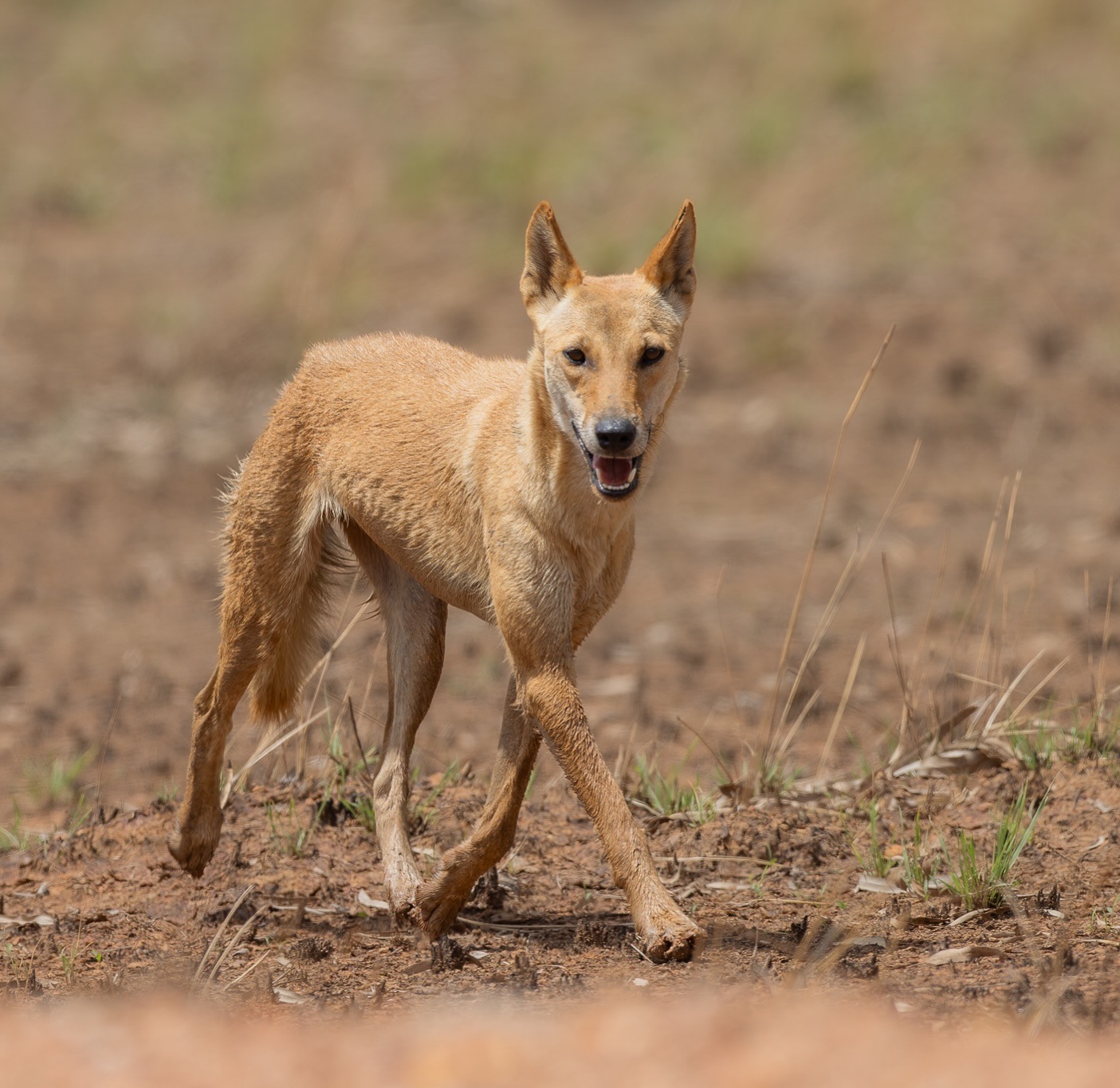
Canis familiaris dingo. Image: David White
Dingo facts
Before we get into the argument, here's the short version of who the dingo actually is.
- Scientific name: Canis dingo (sometimes classified as Canis lupus dingo, a dingo debated among taxonomists almost as much as its origin story).
- Size: Around 15–20 kilograms, standing roughly knee-height, with a lean, athletic build suited to covering long distances.
- Diet: An opportunistic carnivore, taking everything from insects and reptiles to wallabies and, on the coast, even fish and turtle eggs.
- Social structure: Dingoes live in family groups with a stable breeding pair, unlike the loose, often unrelated packs formed by feral domestic dogs.
- Lifespan: Around 5–10 years in the wild.
- Distinctive feature: Dingoes rarely bark like domestic dogs. Instead, they howl, a long call used to communicate across their territory.
You can learn more about the behaviours of dingoes here.
Are dingoes native to Australia?
Genetic and archaeological evidence puts the dingo's arrival in Australia somewhere between roughly 3,500 and 8,000 years ago, most likely carried across from South-East Asia by seafaring people as a travelling companion, long before European settlement. Because humans brought them here, ecologists using the strict, technical definition of "native" classify the dingo as an introduced species, Australia's first, arriving thousands of years before any other.
But most legal and cultural definitions land somewhere else entirely. Because dingoes were established across the continent long before Europeans arrived, and because Traditional Owners have deep cultural relationships with dingoes, they're widely treated as native fauna under Australian law and conservation policy, even while ecologists debate the finer points using new frameworks for what "counts" as native.
Why does the label matter so much? Because it decides how dingoes are treated. Where they're classified as native and protected, harming them is an offence. Where they fall under the catch-all term "wild dog" alongside feral domestic dogs and hybrids, they can legally be poisoned, trapped or shot as pest animals. One word in a piece of legislation can be the difference between protection and persecution.
Why is it important to protect dingoes?
Dingoes do a job almost nothing else in Australia can do anymore: they're one of the continent's last remaining apex predators, and apex predators shape everything beneath them.
By preying on and outcompeting introduced red foxes and feral cats, dingoes can suppress the numbers of two of the most destructive predators ever introduced to Australia. Through predatory and competitive effects, dingoes alter the abundance and behaviour of these introduced mesopredators, along with browsing herbivores like rabbits, and that pressure ripples outward through the food web. Fewer foxes and cats generally means better survival odds for the small native mammals, birds and reptiles they'd otherwise hunt. Fewer overgrazing herbivores means healthier, denser understorey vegetation, which in turn shelters more wildlife. This kind of top-down effect on an entire ecosystem is known as a trophic cascade, dingoes controlling populations lower down the food chain, which flows on to protect plants and other animals.
Some researchers have found the dingo's suppression effect on feral cats is inconsistent or absent in certain landscapes, and studies have shown real-world results can differ from the theory. What's far less contested is that when dingoes are removed through control programs, the consequences are measurable. In tropical savanna ecosystems, sites where dingoes were poisoned showed more activity from feral cats and grazing herbivores, alongside sparser vegetation and fewer native rodents, compared with sites left alone. Take the top predator out, and the whole structure of the ecosystem shifts.
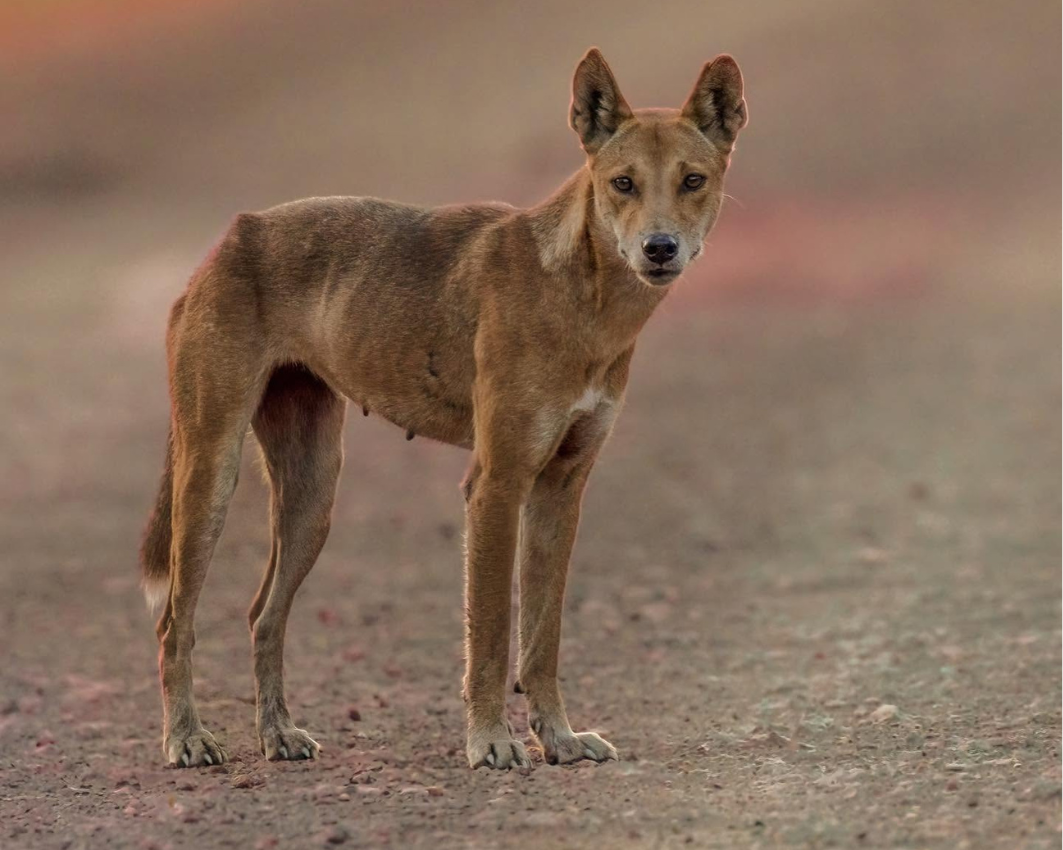
Image: David White
For an organisation like ours, working to protect rainforest habitat piece by piece, that's the real lesson of the dingo. Conservation was never just about saving one flagship species. It's about protecting the whole system of relationships — predator, prey, plant and place — that keeps a landscape functioning the way it evolved to.
Dingo habitat
Dingoes are remarkably adaptable, found across roughly 80% of the Australian mainland, from arid deserts and open grasslands to tropical savanna woodland and the fringes of rainforest in Far North Queensland. They favour open forest, woodland and grassland where they can hunt and range widely, generally sticking to the edges of dense rainforest rather than its deep interior, where prey is harder to access, and territories are harder to patrol.
That habitat is under sustained pressure. Land clearing for agriculture and development fragments the open country dingoes rely on, while lethal control programs — baiting, trapping and shooting to protect livestock — remain widespread across their range. Even in areas where dingoes are protected, the ongoing presence of stray and feral domestic dogs continues to raise long-standing concerns about interbreeding diluting the species' genetic distinctiveness, though how significant this threat is in the wild remains an active area of scientific debate, with some newer DNA research suggesting hybridisation is far rarer than once assumed and that most wild canines across the country are largely pure dingo
What can be done to help protect dingoes?
- Support habitat protection. Every hectare of woodland, grassland or forest fringe kept intact and connected is habitat dingoes and the species they help regulate depend on. This is exactly the kind of on-ground protection our land purchases are designed to deliver.
- Back the science. Genetic research identifying genuine dingo populations, as opposed to hybrids, underpins smarter, more targeted conservation policy. Supporting organisations that fund or advocate for this research helps decisions get made on evidence, not assumption.
- Advocate for better terminology and policy. Evidence-based classification helps ensure genuine dingo populations get the legal protection they're entitled to.
- Never feed dingoes. Fed dingoes lose their natural wariness of people, which endangers both dingoes and visitors and often ends in the animal being destroyed.
- Spread the word.

Image: Steven Nowakowski
Dingo facts for kids
A few fun ones to share with the young naturalists in your life:
- Dingoes don't bark; they howl, and can hear other dingoes howling from kilometres away.
- A baby dingo is called a pup, and litters usually have around five pups.
- Dingoes are excellent swimmers and have even been spotted paddling between islands.
- Unlike pet dogs, dingoes usually only have one litter of pups a year.
- Scientists think dingoes travelled to Australia on boats with seafaring people thousands of years ago!
The bigger picture
The dingo's story is really a story about how nature doesn't fit neatly into human categories: native, introduced, pest, protector. What matters isn't which box we put it in, but whether the ecosystem it belongs to stays whole enough to keep functioning. That's the work we do every day in the Daintree and across Far North Queensland: protecting habitat so every part of the system, from the rainforest canopy to the apex predators patrolling its edges, has somewhere left to belong.