PROJECT SNAPSHOT
Action: Purchase & Protect
Location: Lot 1 Cape Tribulation Road, Diwan (RP739800). Daintree Rainforest, Far North Queensland, Australia.
Size: 3.466 hectares (34,660 square metres).
Vegetation Type: Regional Ecosystem 7.11.1a comprises mesophyll vine forest, while Regional Ecosystem 7.3.10c consists of mesophyll vine forest with scattered Archontophoenix alexandrae (feather palm) in the sub-canopy. The biodiversity status of Regional Ecosystem 7.3.10c is 'Endangered' and it is classified as 'Of Concern' under the Vegetation Management Act 1999.
Threatened Species: Southern Cassowary (Casuarius casuarius johnsonii), Spiral Ginger (Cheilocostus potierae), Noah's Walnut (Endiandra microneura), Climbing Pandanus (Freycinetia percostata), Tassel Fern (Phlegmariurus phlegmarioides), Daintree Ryparosa (Ryparosa kurrangii).
Endangered Ecological Community: The lowland tropical rainforest of the Wet Tropics ecological community is listed as Endangered under the Australian Environment Protection and Biodiversity Conservation Act 1999.
Please, donate now and help purchase & protect Lot 1 Cape Tribulation Road.
→ Make a Tax-Deductible Donation Now
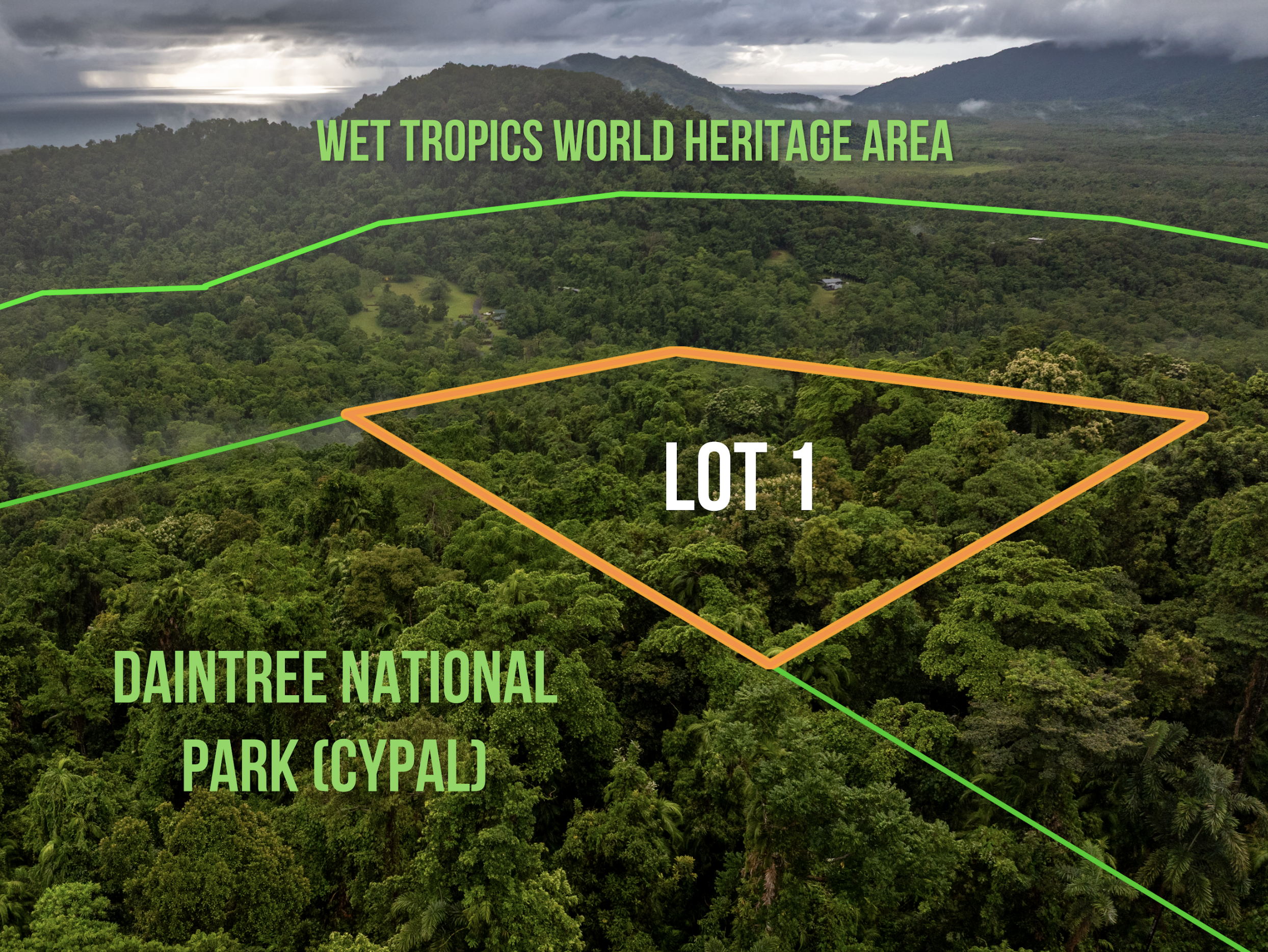
Lot 1 adjoins the Daintree National Park / World Heritage Area.
Help Save Lot 1 Cape Tribulation Road
We have a rare opportunity to secure a living example of ancient Gondwana rainforest — a place where Cassowaries roam and “green dinosaurs” still grow.
Located at Diwan in the heart of the Daintree Lowland Rainforest, Lot 1 Cape Tribulation Road is a 3.466-hectare property that holds extraordinary ecological value — and it’s at risk unless we act now.
A Living Link in the Landscape
Lot 1 Cape Tribulation Road sits within a critical wildlife corridor, connecting:
- Thornton Peak and upland rainforest to the west
- Mount Hutchinson and coastal systems to the east
- The Cooper Creek mangrove ecosystems
This property maintains a vital habitat linkage zone, allowing wildlife - especially the endangered Southern Cassowary — to move safely through the landscape.
During a recent ecological survey, Cassowary tracks and scats were recorded, confirming the property is actively used by this iconic and endangered rainforest specialist.
Home of the “Green Dinosaur”
This property embodies the spirit of the Daintree as the oldest continually existing rainforest on Earth.
Providing habitat for ancient lineages of plants that have survived since the time of the dinosaurs.
Among them:
- Green Dinosaur (Idiospermum australiense) – one of the most ancient flowering plants on Earth
- Primitive rainforest species with direct evolutionary links to Gondwana
- Cassowary food trees like the Daintree Satinash
These rainforests are not just biodiversity hotspots - they are a living museum recording the evolutionary history of plants on Earth.
Rainforest biodiversity hotspot
The survey by our botanist recorded:
- 258 native plant species
- Predominantly Lowland mesophyll vine forest (Regional Ecosystem 7.11.1a)
- Areas of Mesophyll vine forest with scattered Archontophoenix alexandrae (feather palm) in the sub-canopy, Regional Ecosystem 7.3.10c. The biodiversity status of this rainforest type is 'Endangered' and it is classified as 'Of Concern' under the Vegetation Management Act 1999 and in 2021, just 14,000 ha remain.
- Lot 1 is located within a wetland protection area (WPA). These buffer areas protect wetlands of high ecological significance (HES) in the Great Barrier Reef (GBR) catchments.
The rainforest is largely old-growth, with large, mature trees indicating long periods of minimal disturbance.
→ Make a Tax-Deductible Donation Now
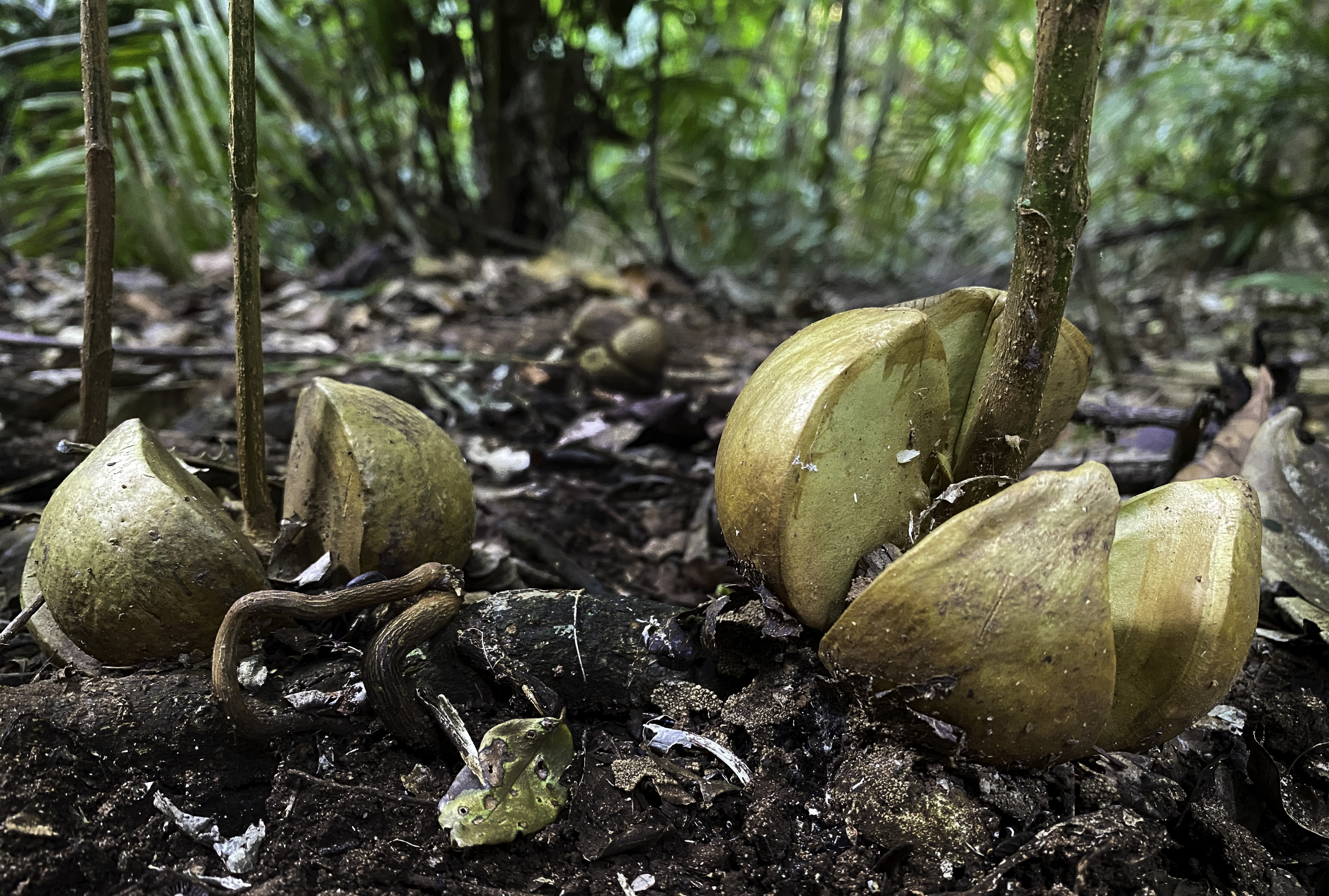
The Green Dinosaur (Idiospermum australiense) found on Lot 1.
Threatened and Significant Species
Five plant species listed as threatened species under state and national legislation were recorded during our survey:
Spiral Ginger (Cheilocostus potierae). This species was identified on the edge of Lot 1 and Cape Tribulation Road. Its existence on the site is considered tenuous based on road maintenance activities.
Climbing Pandanus (Freycinetia percostata). On Lot 1, it is restricted to the eastern and southern portions associated with swampy vegetation. It is quite abundant in the immediate vicinity.
Tassel Fern (Phlegmariurus phlegmarioides). This species is an epiphyte that grows high in the canopy. It was identified from a fallen piece on the forest floor. It is unclear how common it is on Lot 1.
Noah’s Walnut (Endiandra microneura). This tree produces large yellow fruit that is dispersed by the Southern Cassowary. The species is restricted to the Daintree River and Cape Tribulation areas below 250m. Lot 1 it was observed as an occasion but not a common tree.
Daintree Ryparosa (Ryparosa kurrangii). It is common on Lot 1 with notably large specimens as well as younger specimens.
And the Black Palm (Normanbya normanbyi). Listed a Vulnerable on the International Union for the Conservation of Nature (Red List of Threatened species).
In addition, seven regionally significant species occur here — including plants found in only a small part of the Daintree.
Green Dinosaur or Idiot Fruit (Idiospermum australiense). A small number of large Idiospermum were identified from the north-eastern area of Lot 1. This area adjoins the main Cape Tribulation road and can be easily observed. There is, however, some edge effect being experienced by the trees due to recent storms and road edge maintenance. Many seedlings were identified in at least two separate areas on Lot 1.
Boonjee Blushwalnut (Beilschmiedia volckii) is a large canopy tree in the Laurel family. This eventually large tree was identified on Lot 1 by a single seedling. It produces oval-shaped black fruits to 7cm across. These fruits are dispersed by the Southern Cassowary and Musky Rat-kangaroos. The species has only been recorded in the Daintree four times previously. This record represents the furthest north of the species' known range.
Millaa Ebony (Diospyros pluviatilis). A small understorey species typically common on the Atherton Tablelands, with a few records from the Daintree Rainforest in the Cow Bay district. Only a handful of specimens were observed on Lot 1. It has only previously been collected 4 times in the Daintree.
Daintree Cleistanthus (Cleistanthus oblongifolius). This understorey tree is restricted to the area between Daintree and Rossville. It also occurs in SE Asia and the Solomon Islands. This tree was once known until recently as Cleistanthus myrianthus. It was recorded as an occasional tree on Lot 1.
Velvet Tuckeroo (Cupaniopsis diploglottoides). A small, slender understorey tree restricted to lowland rainforests between Rossville and the Daintree village. A total of 6 trees were identified on Lot 1.
Cooper Creek Haplostichanthus (Polyalthia xanthocarpa). An understorey shrub grows to about 2m and is restricted to the Mossman Gorge, Daintree - Cape Tribulation lowlands; however, it is often locally abundant. On Lot 1, this species was common.
Daintree Satinash (Syzygium monospermum). The Daintree Satinash was identified on Lot 1 as mature trees and seedlings. The large fruits of this tree are borne off the leafless trunk and are favoured by the southern Cassowary. It is restricted to the lowland rainforest between Julatten and Cape Tribulation.
→ Make a Tax-Deductible Donation Now
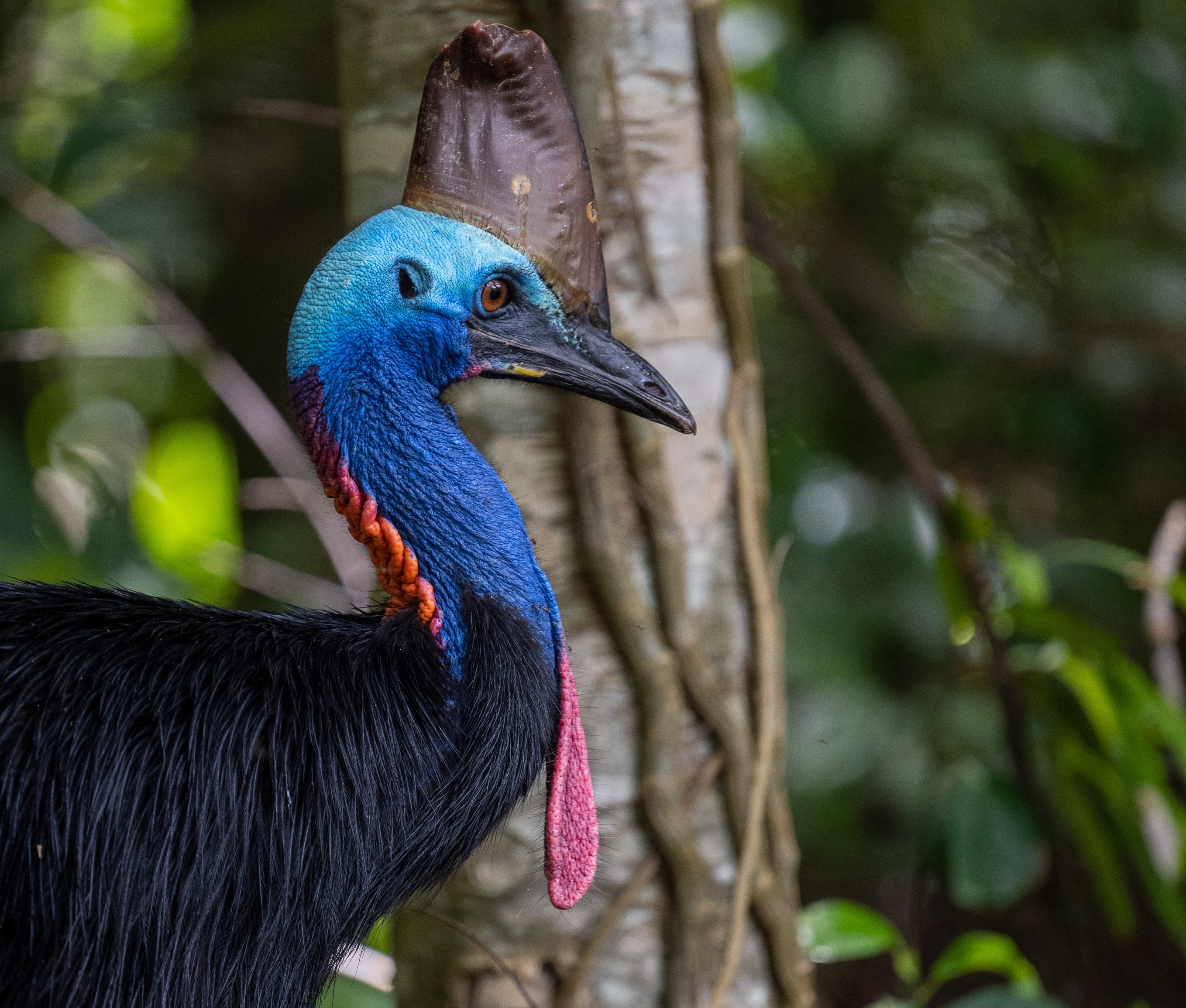
Lot 1 provides critical habitat for the Southern Cassowary.
Wildlife in Action
The survey focused on recording the species of plants; however, we also recorded:
- Active Orange-footed Scrubfowl incubation mounds
- A Buff-breasted Paradise Kingfisher nesting in a termite mound
- Green Tree Snake and Keelback Snake sightings
Why This Land Must Be Protected Now
- Cassowary habitat is disappearing across the Daintree
- Lowland Tropical Rainforest in the Wet Tropics is listed as an Endangered Ecological Community under the EPBC Act.
- Properties like this are rare, strategic, and irreplaceable
- Once developed, these values are degraded or lost forever
Our Vision
By securing Lot 1 Cape Tribulation Road at Diwan, we will create:
- A protected sanctuary for Cassowaries and rainforest wildlife
- A refuge for ancient plant lineages
- A restored and thriving lowland rainforest ecosystem
- A powerful symbol of conservation — protecting Earth’s oldest continually existing rainforest
We also see this as an opportunity to support sustainable, nature-based tourism in the Daintree.
Lot 1 is a known Cassowary sighting hotspot, and with careful planning, we intend to create a safe, low-impact access point where:
- Tour operators and self-drive visitors can stop
- Vehicles can access the site safely off Cape Tribulation Road
- Visitors may have the rare chance to observe a Southern Cassowary in the wild
Done right, this will:
- Enhance visitor experience without disturbing wildlife
- Reduce unsafe roadside stopping
- Build a deeper appreciation for Cassowaries and rainforest conservation
- Help demonstrate how protection and sustainable tourism can work hand in hand
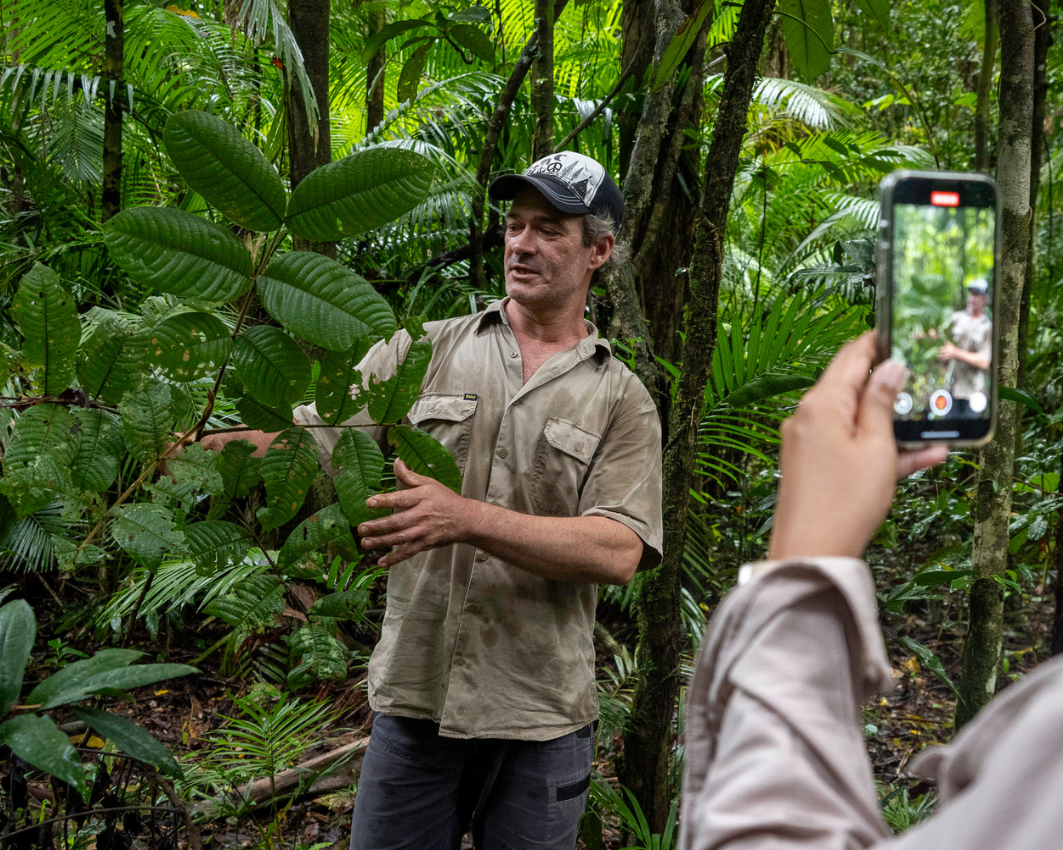
The survey identified 258 species of native plants.
Restoration Ready
While much of the rainforest is intact, a small cleared area and the roadside edges have been disturbed and contain weeds.
With protection, we can:
- Restore cleared areas with native rainforest species
- Protect endangered plants at risk from road impacts
- Control invasive weeds
- Manage feral pigs causing significant damage
How You Can Help
We need your support to purchase and protect this extraordinary property.
Your donation will help:
- Secure the land forever so it can be managed for conservation
- Commence restoration and weed control
- Protect endangered species
- Expand the Daintree’s protected rainforest network
Donate today and help purchase and protect Lot 1 Cape Tribulation Road.
→ Make a Tax-Deductible Donation Now
Why Buyback Works
Lot 1 Cape Tribulation Road at Diwan sits within a zone under the Douglas Shire Planning Scheme that allows it to be developed. Without permanent protection and active conservation management, the remnant rainforest and its endangered ecological communities remain vulnerable to:
- Destructive or inappropriate land use
- Weed invasion and edge effects
- Habitat degradation over time
- Fragmentation pressures across the wider landscape
Planning controls reduce risk; they do not eliminate it. The only way to guarantee long-term protection of these ecological values is to secure the property for conservation and manage it accordingly. That is what land buyback achieves.
Land buyback is the only guaranteed way to:
- Prevent further destructive or inappropriate development and land use
- Halt the fragmentation of critical rainforest habitat
- Permanently protect and manage land for conservation so it can be assessed for inclusion in the Daintree National Park (CYPAL)
Since its inception, Gondwana Rainforest Trust has successfully purchased and protected 36 properties in the Daintree, contributing to the long-term protection of this vital rainforest landscape. Your contribution joins a proven track record of conservation success.