We've provided answers to the most frequently asked questions for the purchase and protection of Lot 1 Cape Tribulation Road at Diwan in the Daintree Lowland Rainforest.
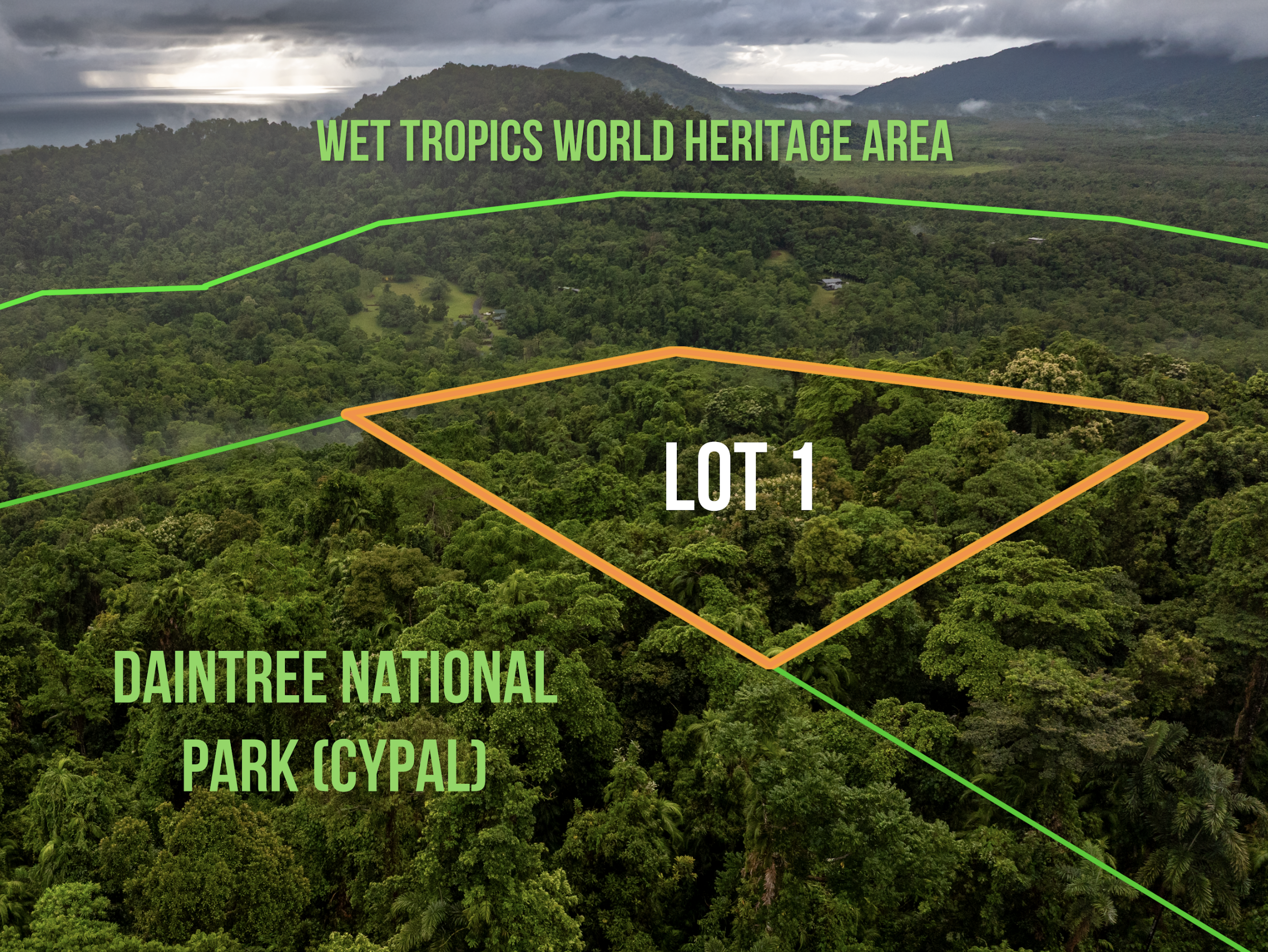
Lot 1 adjoins the Daintree National Park and sits adjacent to the Wet Tropics World Heritage Area.
Where is the Daintree Rainforest?
The Daintree Rainforest is a large area of tropical rainforest in Far North Queensland that extends from Mossman Gorge (80km north of Cairns) to Cape Tribulation (110km north of Cairns). It includes large areas of rainforest-clad mountains. Between the Daintree River and Cape Tribulation, the rainforest is continuous from the mountain to the sea and when many people speak of the Daintree, they are often referring to this area, which is known as the Daintree Lowland Rainforest.
Why is the Daintree important?
The Daintree Lowland Rainforest is the oldest rainforest on Earth, having existed continuously for over 120 million years. It holds exceptionally high biodiversity and conservation value and is the largest continuous area of tropical rainforest remaining in Australia. Rainforests once covered much of Australia; however, as conditions became drier, the rainforest contracted to remnants mostly along the east coast. The flora of the Daintree contains an almost complete record of the evolution of plant life on Earth, including extremely ancient flowering plant families found nowhere else. The Daintree Lowland Rainforest also provides a refuge for many unique species of fauna, including the Southern Cassowary, Bennett's Tree-kangaroo, and Musky Rat-kangaroo.
The International Union for the Conservation of Nature had this to say about the Daintree Lowland Rainforest: "Within the region, the Daintree River to Cape Tribulation coast has a special status. It is the last surviving, essentially intact, tropical lowland rainforest in Australia. It has one of the highest diversities of plant families anywhere in the world. Its rarity, fame and superlative beauty make it one of the foundations of the region's economy. It is the only place in the world where two World Heritage Areas meet." - IUCN
In November 2021, the Australian Government listed the Lowland Tropical Rainforest of the Wet Tropics ecological community in the Endangered Category under the Environment Protection and Biodiversity Conservation Act 1999. The listing is effective as of Friday, 26 November 2021 and includes the Wet Tropics of North Queensland, from near Ingham (just south of the Cardwell Range) in the south to the north around Cape Tribulation. While now listed as endangered, the Daintree Lowland Rainforest is still not fully protected. Freehold properties in the Daintree lowland remain at risk from rural residential development.
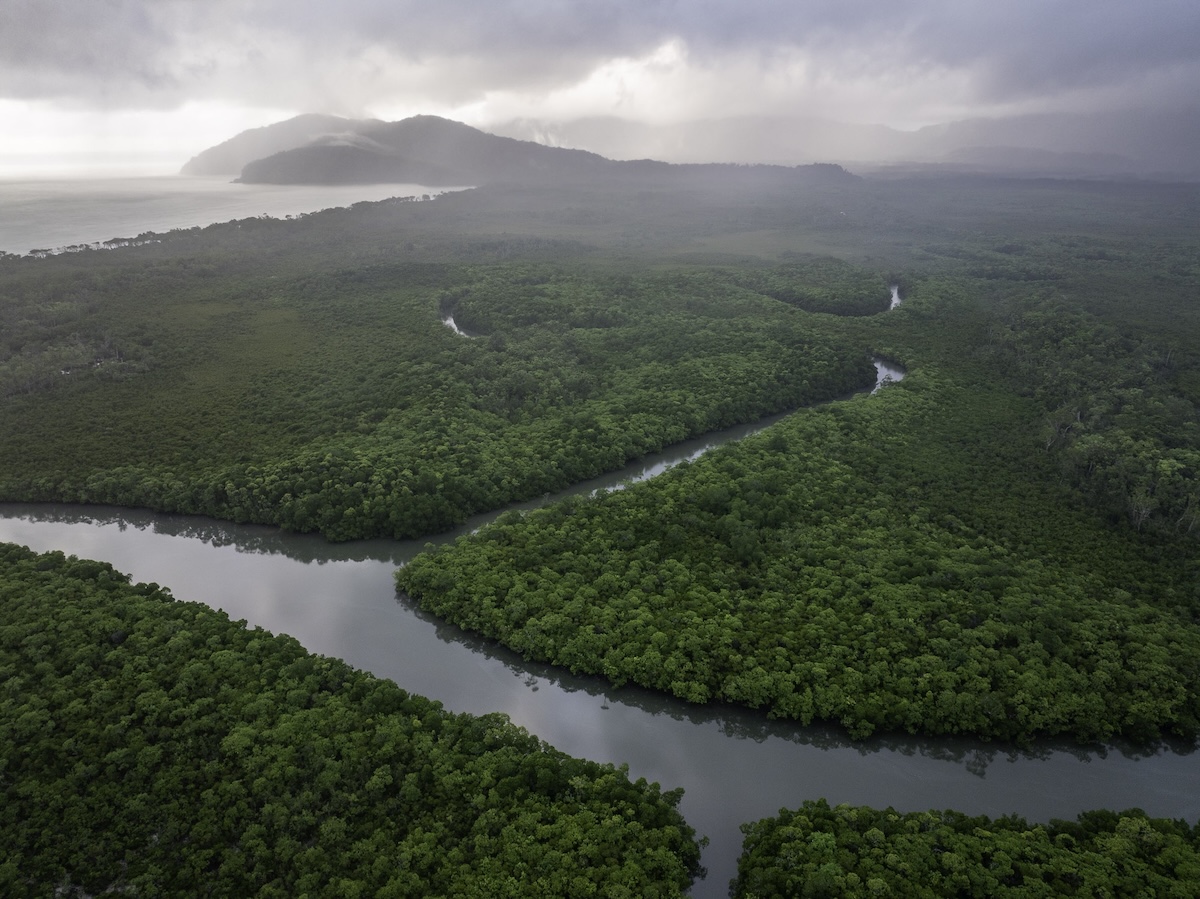
The Lowland Tropical Rainforest of the Wet Tropics is an Endangered Ecological Community.
Isn't the Daintree protected as a National Park and World Heritage Area?
Two-thirds of the Daintree Lowland Rainforest between the Daintree River and Cape Tribulation was excluded from inclusion in the Daintree National Park and World Heritage Area that was declared in 1988. In 1982, a pro-development Queensland State Government rezoned leasehold and freehold land in the Daintree Lowland Rainforest, enabling a developer to subdivide it into 1,136 blocks. This resulted in the building of over 50km of roads and the clearing and development of high conservation value rainforest for housing. The freehold land between the Daintree River and Cape Tribulation has World Heritage values and should be protected in the Daintree National Park.
Please, make a tax-deductible donation now to help purchase and protect Lot 1 Cape Tribulation Road.
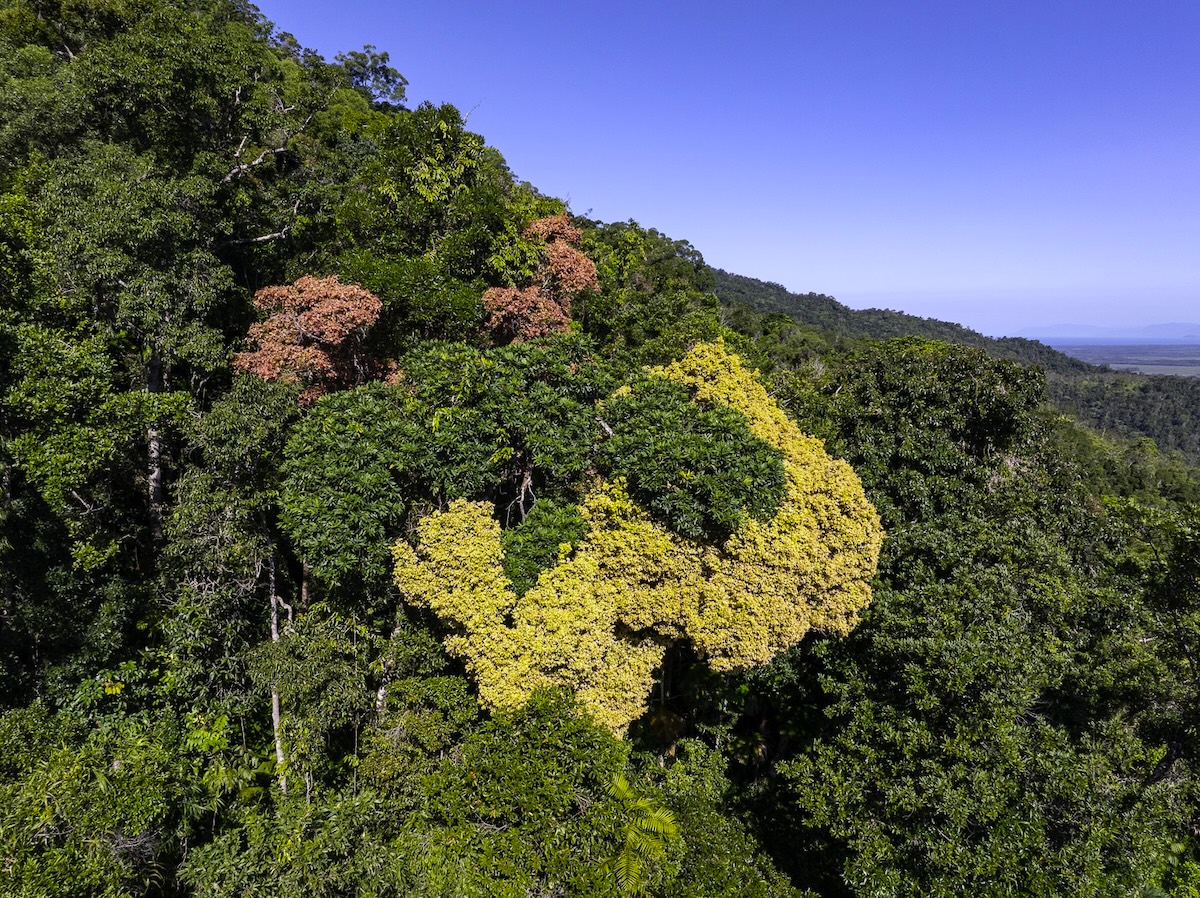
Canopy trees in the Daintree Rainforest.
What are the threats to the Daintree Rainforest?
Since the 1980s, there has been constant pressure applied to further develop the Daintree Lowland Rainforest. This includes calls for a bridge over the Daintree River, upgrading of roads, and the supply of mains electricity. This would only create conditions supportive of further inappropriate development. In 2020, we identified 207 undeveloped freehold properties in the Daintree lowlands that we now aim to purchase and manage for conservation. Building more houses on these properties would further fragment the rainforest. For that reason, continued land purchase for conservation is essential.
Recovering from the impacts of fragmentation
Fragmentation occurs when a continuous forest is broken into smaller sections that become disconnected from the whole. Rainforest ecosystems function best as an unbroken whole, and connectivity is one of the most critical requirements for maintaining ecological health. Disturbance paves the way for invasive weeds and pests to colonise the exposed and degraded areas.
Common human-induced causes of fragmentation include road construction, housing, infrastructure, and other forms of development. When fragmentation occurs, wildlife are hindered in their natural movements and may lose the ability to navigate through the landscape. This affects seed distribution and other ecological processes that sustain biodiversity.
Past developments in the Daintree for agriculture, housing and roads have led to significant clearing, fragmentation, and degradation of this ancient ecosystem, breaking up once-intact rainforest into smaller, disconnected patches. As a result, a significant percentage of the remaining lowland rainforest now occurs within 100 metres of a rainforest edge—exposing it to the damaging "edge effect."
By addressing fragmentation and restoring wildlife linkages, we can strengthen the health and resilience of rainforest ecosystems. Connected rainforests are better equipped to respond to climate flux and natural disasters. Biodiversity, security and forest connectivity are intrinsically linked.
You can make a tax-deductible donation now to help purchase and protect Lot 1 Cape Tribulation Road.

Lot 1 provides critical habitat for the Southern Cassowary.
About Lot 1 Cape Tribulation Road
Lot 1 Cape Tribulation Road (RP739800) is a freehold property of 3.466 hectares (34,660 square metres) created through the subdivision of land in 1982. It is located on Cape Tribulation Road at Diwan (the nearest intersection is Carbeen Road) in the Daintree Lowland Rainforest. The Douglas Shire Council has Lot 1 Cape Tribulation Road located in a zone where development may occur, provided approval is sought and given. Read more about development in the Daintree.
The acquisition of the land will ensure it is managed for conservation and prevent the potential for inappropriate development to occur. The funds raised for this project will be used for the purchase and protection of the land, and also the initial restoration of the rainforest where clearing and disturbance have occurred in the past. Approximately 3 hectares is very high conservation value remnant vegetation providing habitat for 5 Threatened Species of plants. Some decades ago, an area of less than half a hectare was cleared; however, attempts at development were abandoned, and it has fallen into an overgrown state. This previously cleared land can and will be restored to rainforest once acquisition has occurred.
Our Tourism Vision
We also see this as an opportunity to support sustainable, nature-based tourism in the Daintree.
Lot 1 is a known Cassowary sighting hotspot, and with careful planning, we intend to create a safe, low-impact access point where:
- Tour operators and self-drive visitors can stop
- Vehicles can access the site safely off Cape Tribulation Road
- Visitors may have the rare chance to observe a Southern Cassowary in the wild
- Visitors can see the Green Dinosaur (Idiospermum australiense)
Done correctly, this will:
- Enhance visitor experience without disturbing wildlife
- Reduce unsafe roadside stopping
- Build a deeper appreciation for Cassowaries and rainforest conservation
- Help demonstrate how protection and sustainable tourism can work hand in hand
The property is located in Douglas Shire Council's Precinct 5 - within the Conservation Zone – Low impact rural production and tourism enterprise precinct.
The property is located at the base of Thornton Peak and water running off the mountain and the rainfall of 4.5m makes it very wet. This makes it poorly suited for tourism and may be why it has not been developed in the past.
Conservation values of Lot 1
A survey in February 2026 by our ecologist and botanist identified 258 species of native plants on the property. This includes 5 plants listed as Threatened Species. View Survey Summary
The vegetation on Lot 1 is predominantly Regional Ecosystem 7.11.1a Mesophyll vine forest. Lowlands and foothills on metamorphics. Very wet and wet rainfall zones. The Queensland government specifically states that this vegetation type has “Special Values” as habitat for threatened plant species.
Regional Ecosystem 7.11.1a is categorised as Essential Core habitat for the Endangered Southern Cassowary (Casuarius casuarius johnsonii).
A Matters of State Environmental Significance (MSES) report confirms Lot 1 Cape Tribulation Road is mapped as Core Essential habitat for the Endangered Southern Cassowary (Casuarius johnsonii). Evidence of Cassowary footprints in the soft creek sand and scats was observed in the forest during survey efforts. Cassowaries have been observed on the property in recent months.
Mapping by the Queensland Government indicates a second ecosystem on the property, this being RE 7.3.10c Mesophyll vine forest with scattered Archontophoenix alexandrae (feather palm) in the sub-canopy. A preclearing regional ecosystem associated with swampy ground existed in the southeast corner. Seasonally inundated lowland alluvial plains. Palustrine. This forest type is listed as Of Concern and prior to the clearing, 60,000ha is estimated to have existed and in 2021, just 14,000 ha remain. Elements of RE 7.3.10c were noticed in the field due to the increasingly heavy wet soil and creek line in the southern corner; however are of regrowth in nature
Threatened Species
Five species of plants found on Lot 1 Cape Tribulation Road are listed on the Queensland Nature Conservation Act 1992 and / or the National Environment Protection and Biodiversity Conservation Act 1999.
Seven other species were identified on Lot 1 as regionally significant. Additionally, there are a number listed as “Special Least Concern” under the Queensland Nature Conservation Act.
Plant species listed as Threatened found during the survey:
- Spiral Ginger (Cheilocostus potierae). This understorey species is listed as Endangered under the Nature Conservation Act 1992.
- Noah's Walnut (Endiandra microneura). This tree is listed as Near Threatened under the Nature Conservation Act 1992.
- Climbing Pandanus (Freycinetia percostata). This climbing plant is listed as Vulnerable under the Nature Conservation Act 1992.
- Tassel Fern (Phlegmariurus phlegmarioides). This epiphyte is listed as Vulnerable under the Nature Conservation Act 1992.
- Daintree Ryparosa (Ryparosa kurrangii). This tree is listed as Near Threatened under the Nature Conservation Act 1992.
Regionally significant plants occurring on Lot 1:
- Boonjee Blushwalnut (Beilschmiedia volckii). This eventually large tree was identified on Lot 1 by a single seedling. It is known from the vicinity; however, few records in total over a small region of lowland rainforest. This record represents the furthest north of the species' known range.
- Daintree Cleistanthus (Cleistanthus oblongifolius). This understorey tree is restricted to the area between Daintree and Rossville. It also occurs in SE Asia and the Solomon Islands. This tree was once known until recently as Cleistanthus myrianthus. It was an occasional tree on Lot 1.
- Velvet Tuckeroo (Cupaniopsis diploglottoides). A small, slender understorey tree restricted to lowland rainforests between Rossville and the Daintree village. A total of 6 trees were identified on Lot 1.
- Millaa Ebony (Diospyros pluviatilis). A small understorey species typically common on the Atherton Tablelands, with a few records from the Cow Bay to the south of Lot 1. Only a handful of specimens were observed on Lot 1. In the field, it can at times be overlooked for the more common Polyalthia xanthocarpa.
- Idiot Fruit or Green Dinosaur (Idiospermum australiense). At least 2 large Idiospermum were identified on Lot 1. Many seedlings were identified in at least two separate areas on Lot 1.
- Cooper Creek Haplostichanthus (Polyalthia xanthocarpa). An understorey shrub grows to about 2m and is restricted to the Mossman Gorge, Daintree - Cape Tribulation lowlands. On Lot 1, this species was common.
- Daintree Satinash (Syzygium monospermum). The Daintree Satinash was identified on Lot 1 as mature trees and seedlings. The large fruits of this tree are borne off the leafless trunk and are favoured by the southern Cassowary. It is restricted to the lowland rainforest between Julatten and Cape Tribulation.
Ancient plant families. Hopes Cycad (Lepidozamia hopei). Many specimens of Hope's Cycad occur on Lot 1 Cape Tribulation Road. This species of Cycad is the largest growing in the world and was once utilised by Aboriginal people as a food source. It has evolutionary links dating back some 200 million years and, along with other ancient species, forms some of the reasons why the Wet Tropics World Heritage area has been afforded protection within the National Parks estate.
The diversity of rainforest Laurels, an ancient lineage of trees within the Beilschmiedia, Cryptocarya, Endiandra, Litsea and Neolitsea genera, was a notable feature of Lot 1 Cape Tribulation Road, all of which produce fruits that are food for the Southern Cassowary.
Other values of Lot 1:
The vegetation on Lot 1 Cape Tribulation Road offers a linkage across the landscape in way of vegetated waterways from the mountainous foothills to the floodplain. The property is situated within the Daintree River catchment, draining south into the Coral Sea and the Great Barrier Reef. It has habitat connectivity with Thornton Peak (1374 m asl) to the immediate west. The terrain is flat in the east and rising to the base of Thornton Peak. Two small creeks flow from the property, one in the extreme southeastern corner and another through the centre.
The rainforest on the upper slopes of Lot 1 is in very good condition, with old-aged specimens of many rainforest trees indicating little to no disturbance in places. Lot 1 offers extremely good wildlife habitat linkage from that of Thornton Peak, the headwaters of McKenzie Creek in the west, to Mount Hutchinson and the Cooper Creek wetlands and mangrove ecosystem in the east.
Lot 1 is important in maintaining a vegetated wildlife corridor across the landscape, as the property is a component of a significant and extensive tract of forest that runs from the mangrove wetland delta of Cooper Creek to Thornton Peak mountains to the immediate west.
Critical habitat for the Southern Cassowary
The vegetation of Lot 1 Cape Tribulation Road provides essential habitat for the Southern Cassowary, which is listed as Endangered under the Queensland Nature Conservation Act 1992. There was evidence of the Endangered Southern Cassowary in the form of scats and tracks.
Other wildlife: There were active mounds of Orange-footed Scrubfowl (Megapodius reinwardt) and an active Buff-breasted paradise kingfisher (Tanysiptera sylvia) termite mound with chicks was observed. A Keelback Snake (Tropidonophis mairii) and a Green Tree Snake (Dendrelaphis punctulatus) were observed.
Please, make a tax-deductible donation now to help purchase and protect Lot 1 Cape Tribulation Road.
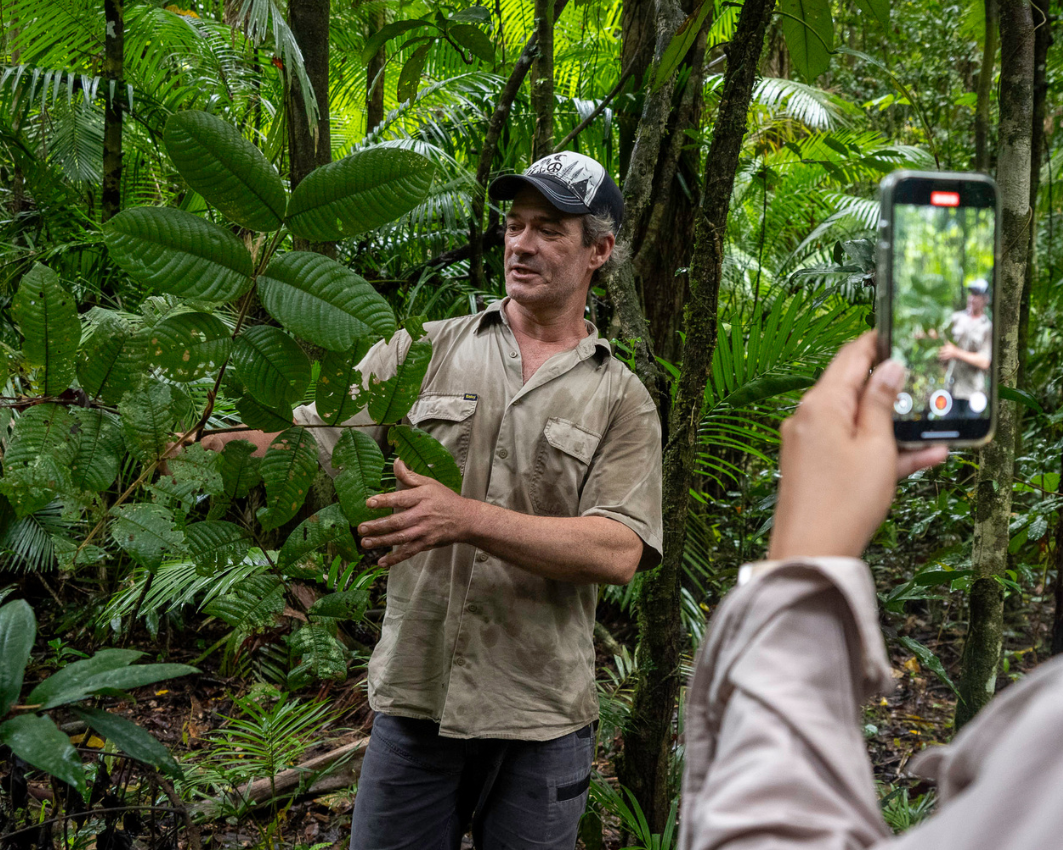
The survey identified 258 species of native plants on Lot 1.
Endangered Ecological Community
As of November 2021, the entire lowland tropical rainforest of the Daintree was listed in the Endangered category of the Threatened Ecological Communities list under the Environment Protection and Biodiversity Conservation Act 1999 (Cwlth) (EPBC Act). This listing is reserved for ecological communities that the Commonwealth Threatened Species Scientific Committee (TSSC) considers to have a high or greater chance of extinction in the wild in the medium-term future or earlier. Revegetated or replanted sites or areas of regrowth are not excluded from this listed ecological community, provided they meet key diagnostic characteristics such as soil type, rainfall, elevation, diversity, canopy features and structure. The members of the TSSC are appointed by the Minister for the Environment. As of February 2022, the TSSC consists of 12 experts from relevant academic fields.
Please, make a tax-deductible donation now to help purchase and protect Lot 1 Cape Tribulation Road.
How are properties assessed for acquisition?
Properties are assessed by a trained ecologist who has tertiary qualifications in horticulture, botany, and rainforest science. Our target list of properties has been developed by an ecologist who holds a Bachelor of Environmental Science (Hons) specialising in Wildlife Ecology and Threatened Species Management. Each property we negotiate to purchase has been given a priority acquisition score based on regional ecosystem classification, biodiversity status, protected area connectivity, canopy coverage, corridor function, proximity to settled lots, settlement risk, the existence of encroachments and encumbrances, likelihood of being added to Queensland's Protected Area Estate and value for money in the current market. We are also mindful of the cultural significance of the land and how it complements the broader landscape. We only purchase properties freely offered to us for sale or that are available on the open market.
Do you purchase properties that have regrowth rainforest on them?
Yes. Lot 1 Cape Tribulation Road has both regrowth and remnant native vegetation on the property.
What about feral animals?
The main feral animal problem in the Daintree is pigs. The Douglas Shire Council has a trapping program that removes 600 pigs per year. There are very few, if any, feral cats in the Daintree due to the number of large pythons that prey on them.
What about weeds?
The environmental weeds on Lot 1 Cape Tribulation Road, will be removed once the property is acquired, as we are raising funds for both land acquisition and management.
What about the risk of bushfires?
The risk of fires in this location is low, as this is one of the wettest places in Australia, and rainforest vegetation is less likely to burn. This is managed by removing exotic grasses and other flammable plants.
Please, make a tax-deductible donation now to help purchase and protect Lot 1 Cape Tribulation Road.
Who is managing this project?
This project to purchase and protect Lot 1 Cape Tribulation Road in the Daintree Lowland Rainforest is managed by Gondwana Rainforest Trust.
We are registered with the Australian Government (ASIC) as a Company Limited by Guarantee (a non-profit organisation) and with the Australian Charities and Not-for-Profits Commission (ACNC).
Who will own the land?
Properties are acquired by Gondwana Rainforest Trust (ABN 49 628 358 323). We are registered with the Australian Government (ASIC) as a Company Limited by Guarantee (a non-profit organisation) and with the Australian Charities and Not-for-Profits Commission (ACNC). Our Constitution details that we must use all money raised for charitable purposes. Our constitution restricts our activities to rainforest conservation activities. We ensure the land has the highest level of protection and that they are managed for conservation. To achieve this, the properties are assessed for being declared a Nature Refuge or for inclusion in the Daintree National Park (CYPAL - Cape York Peninsula Aboriginal Land) estate.
Please, make a tax-deductible donation now to help purchase and protect Lot 1 Cape Tribulation Road.
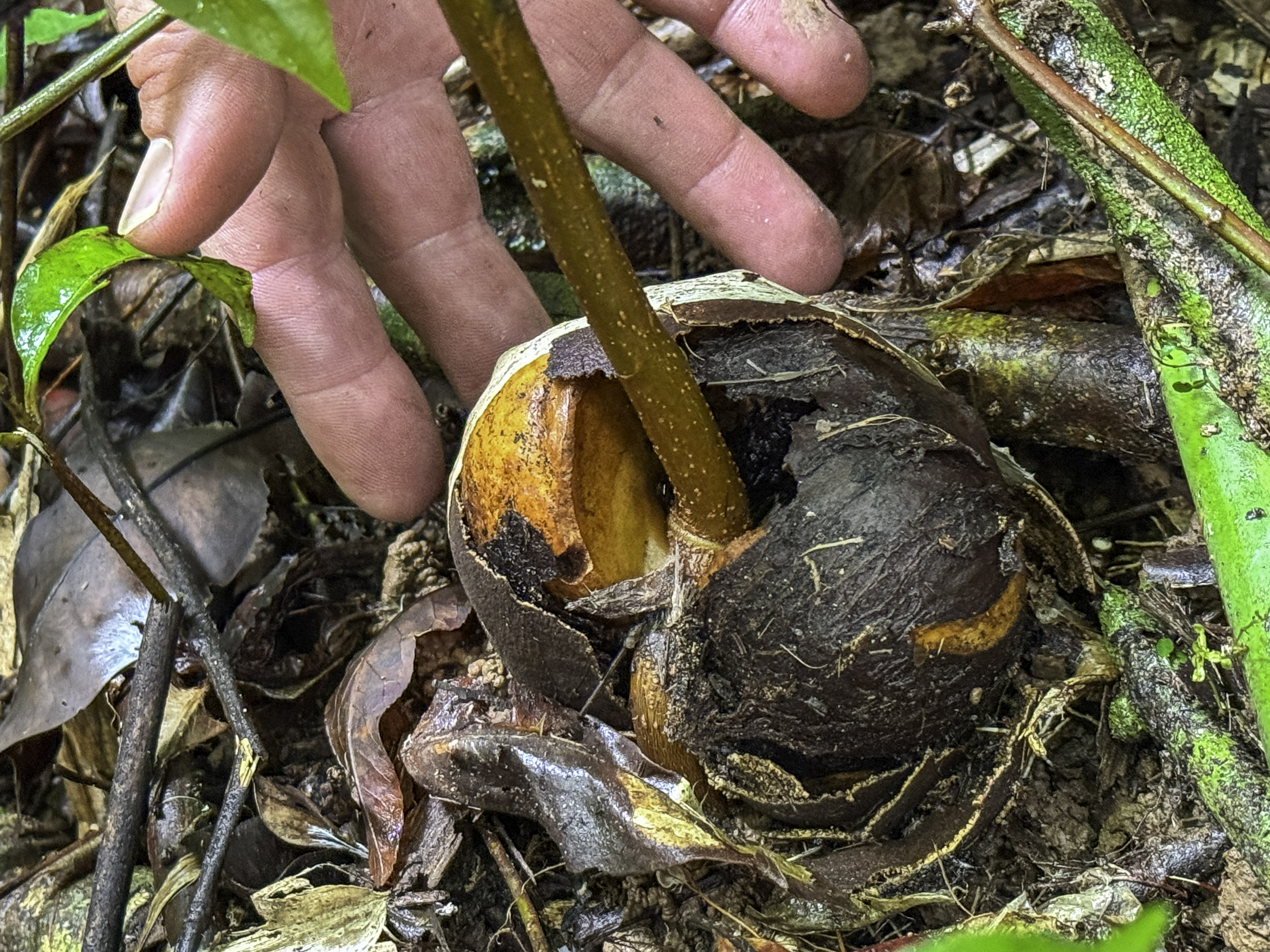
The Green Dinosaur (Idiospermum australiense) found on Lot 1.
What about neighbouring properties?
The property shares a boundary with two freehold properties, is adjoining to the Daintree National Park (CYPAL) and is adjacent to the Wet Tropics World Heritage Area. We have also purchased four other nearby properties at Diwan for conservation.
Will I be able to visit the properties?
Visitation may be arranged by prior agreement, subject to ecological and logistical considerations.
Has this type of buyback been done successfully before now?
Yes, in the past six years, we have purchased 36 Daintree Rainforest properties for conservation. Since 1992, non-profit organisations have purchased ninety properties for conservation.
Carbon credits
This property is not eligible for carbon credits issued under the avoided deforestation method and the restoration planned is not large enough to qualify for sequestration methodologies.
Please, make a tax-deductible donation now to help purchase and protect Lot 1 Cape Tribulation Road.
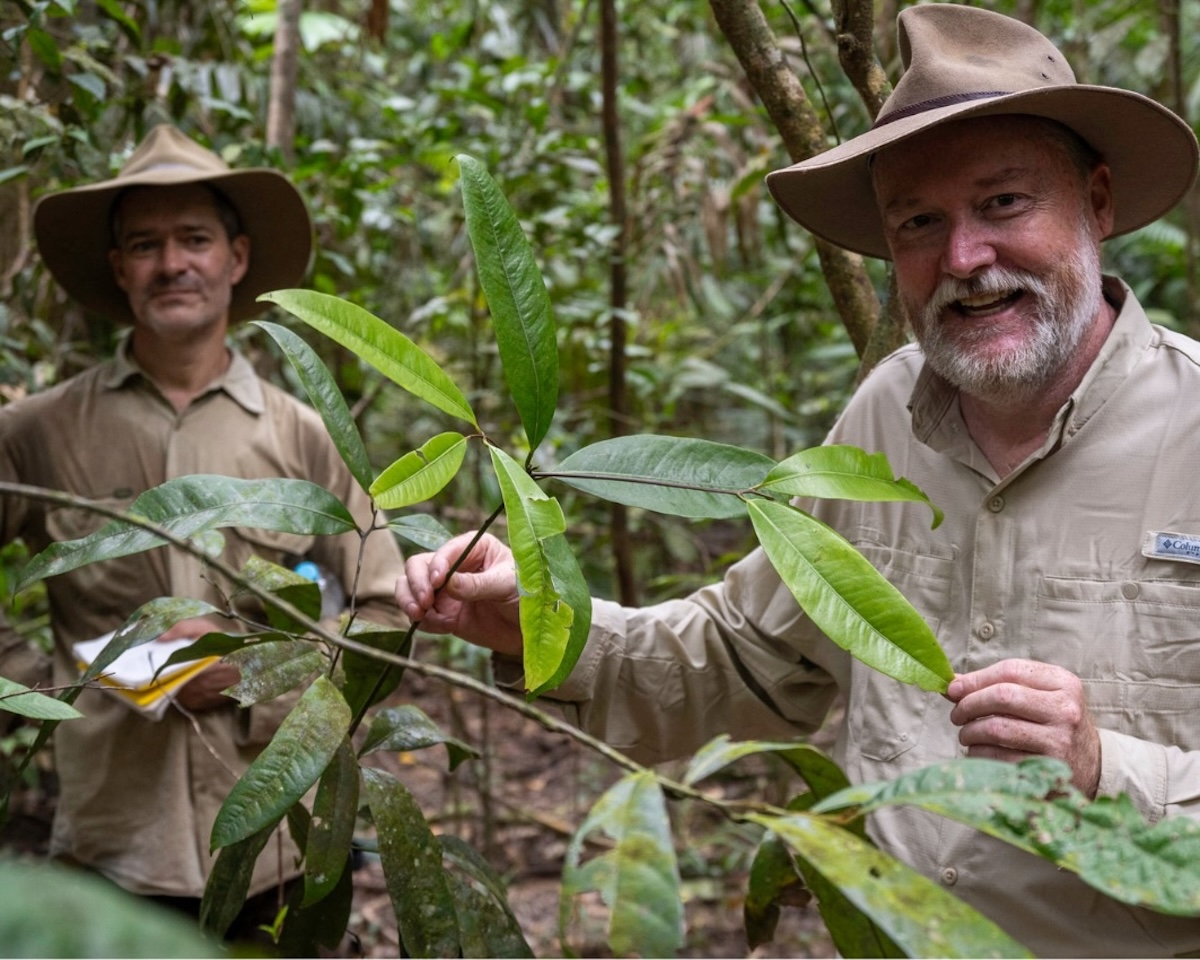
Noah's Walnut (Endiandra microneura) is found on Lot 1.
How will the land be purchased?
Properties are acquired in the same manner as other freehold properties in Australia. A contract for sale is exchanged, a deposit paid and a settlement date set. The purchaser and the seller will both have a conveyancer acting on their behalf.
The current owner wants to see the natural values of the land preserved and has decided to sell the property to Gondwana Rainforest Trust rather than on the open market. A deposit was paid in March 2026, and we are now raising the funds to complete the purchase.
A total of $481,500 will be raised for the project. A proportion of the funds raised for this project will be added to the Trust’s Revolving Fund to finalise the acquisition of the property and to support the purchase of other high conservation value land. The balance of funds will be used to support restoration works that enhance and protect the environmental values of the property.
As a charity, we are providing the opportunity for people to make donations to support the purchase and protection of land. We are unable to structure an opportunity for people to be joint owners, to have a share, or to have their name on the title.
Gondwana Rainforest Trust Revolving Land Fund
The Gondwana Rainforest Trust Revolving Land Fund (the Revolving Land Fund) is supporting the acquisition of Lot 1 Cape Tribulation Road. The Gondwana Rainforest Trust Revolving Land Fund exists for one purpose: to acquire and hold land to prevent damaging land use and secure it for conservation.
The Revolving Land Fund was created to address the financial challenges faced by conservation non-profits when purchasing land, including:
- When more properties are available than funds immediately on hand
- When long-term planning is needed beyond a typical fundraising cycle
- When land prices are high and time is required to raise the necessary funds
- When sales require fast settlement that outpaces standard fundraising efforts
By overcoming these barriers, the Revolving Land Fund provides finance for land purchase where we would otherwise miss out on protecting critical properties. Learn more about the Revolving Land Fund here.
How much will it cost?
The funds raised will be used for the purchase and protection of the land and to enhance the environmental values of the property. To purchase and protect Lot 1 Cape Tribulation Road at Diwan, we need to raise $481,500.
We receive pro-bono support for conveyancing and we are exempt from government transfer fees (stamp duty).
Please, make a tax-deductible donation now to help purchase and protect Lot 1 Cape Tribulation Road.
What happens if the target is exceeded?
If the fundraising target is not achieved, what will happen to my donation?
All funds raised will be applied to rainforest land purchase, protection or restoration within the Daintree region in line with the Trust’s constitutional purposes. Donations are used exclusively for charitable rainforest conservation activities.
Please, make a tax-deductible donation now to help purchase and protect Lot 1 Cape Tribulation Road.