Dollar match is extended!
Your gift will be matched dollar-for-dollar. Thanks to our generous dollar match supporters, gifts up to $145,000 will be doubled until our total fundraising target is met.
PROJECT SNAPSHOT
Action: Purchase, protect and regenerate Daintree's Botanical Ark.
Location: Lot 2 Old Forest Creek Road (RP737266), Forest Creek, Queensland, Australia.
Size: 12 hectares (120,000 sqm).
Vegetation Type: Regional Ecosystem 7.11.40a: Complex sclerophyll communities containing Palustrine (listed as 'of concern' with less than 600ha remaining); Regional Ecosystem 7.11.2a: Palustrine Notophyll to Mesophyll vine forest (listed as 'of concern' with less than 100ha remaining), Regional Ecosystem 7.3.5a: Palustrine Melaleuca quinquenervia open forest, woodland and shrubland (listed as 'endangered').
Threatened Species: Southern Cassowary (Casuarius casuarius johnsonii), China Camp Laurel (Beilschmiedia castrisinensis), Gray's Walnut (Endiandra grayi), Noah's Walnut (Endiandra microneura), Climbing Pandanus (Freycinetia percostata), Giant Climbing Pandan (Freycinetia marginata), Iron Malletwood (Rhodamnia sessiliflora), Daintree Myrtle (Rhodomyrtus effusa), Ant Plant (Myrmecodia beccarii), Daintree Gardenia (Randia audasii).
Endangered Ecological Community: Lowland tropical rainforest of the Wet Tropics ecological community is listed as endangered under the Australian Environment Protection and Biodiversity Conservation Act 1999.
→ Make a Tax-Deductible Donation Now
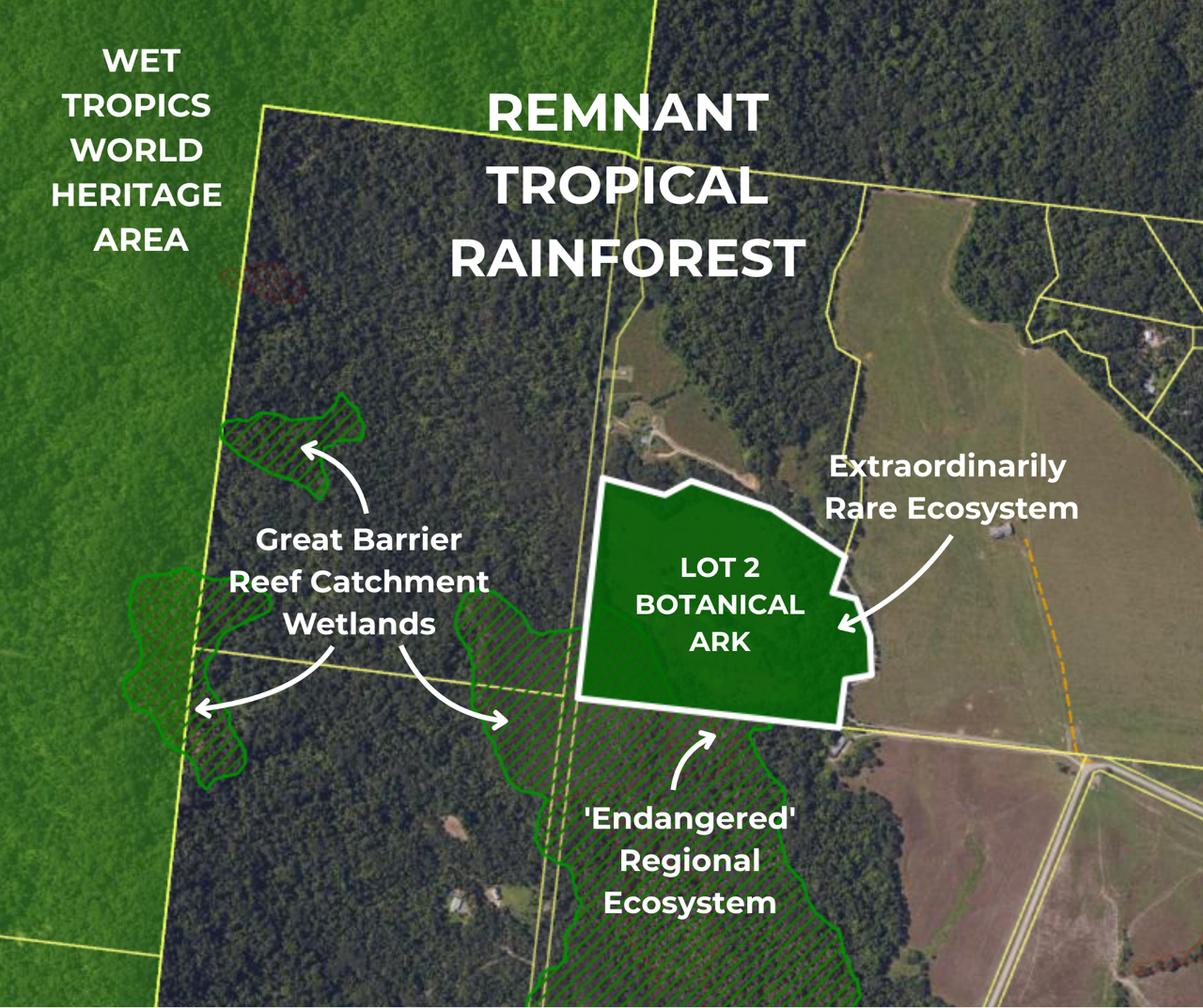
Help Protect this Botanical Ark in the Daintree Rainforest
When we first stepped onto Lot 2 Old Forest Creek Road, its beauty and ecological significance were undeniable. Before purchasing any property in the Daintree, we conduct detailed surveys. What our ecologist and botanist found here is nothing short of extraordinary: a 12-hectare botanical ark sheltering 233 native plant species, including nine officially threatened species and others so rare they exist only in a handful of places on Earth.
A Sanctuary of Rainforest Diversity
Lot 2’s unique blend of rainforest and open woodland makes it a biological crossroads:
-
Notophyll and Mesophyll Vine Forest (RE 7.11.2a): Dense, lush rainforest critical for the survival of the Southern Cassowary, with less than 100 ha remaining. This ecosystem features include Alexander Palms and Fan Palms.
-
Open Sclerophyll Woodland (RE 7.11.40a): Rare and retreating, with fewer than 600 ha remaining in the region. The ecosystem features include Broad-leaved Paperbark.
- Melaleuca quinquenervia open forest, woodland and shrubland (RE 7.3.5a) - Listed as 'Endangered' due to its very limited remaining extent after clearing for agriculture. Once widespread across coastal floodplains, but now reduced to small, fragmented remnants, mostly in protected areas or private conservation reserves.
→ Make a Tax-Deductible Donation Now
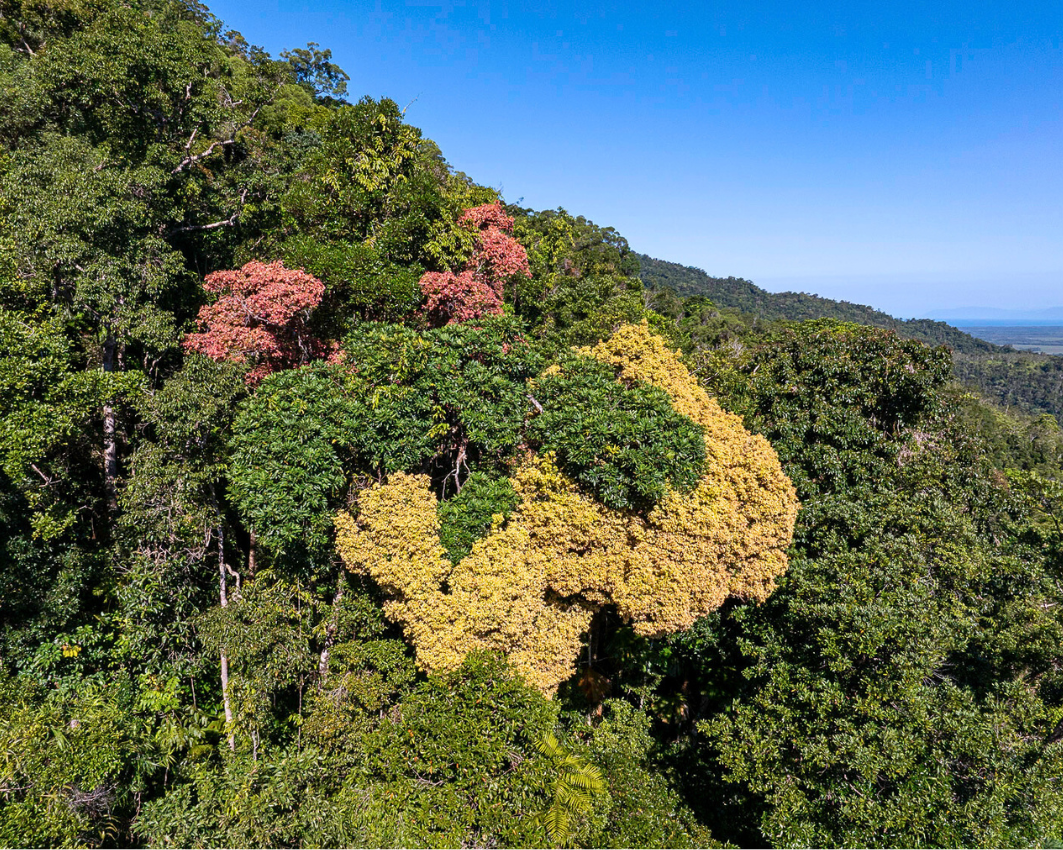
Rainforest canopy at Forest Creek
Nine Threatened Plants Call Lot 2 Home
Our botanist and ecologist identified:
China Camp Laurel (Beilschmiedia castrisinensis) - Near Threatened
This tree is listed as Near threatened under the Nature Conservation Act 1992. Its large fruit is dispersed by the Southern Cassowary. The species was observed as several seedlings and small sized saplings. The species is restricted to the area between the Bloomfield and Daintree River in lowland rainforest below 660m.
Gray's Walnut (Endiandra grayi) - Vulnerable
This tree is listed as Vulnerable under the Nature Conservation Act 1992. Its large fruit is dispersed by the Southern Cassowary. The species is restricted to the area between Cape Tribulation and the Daintree River at altitudes up to 40m. This tree was identified as several seedlings across the rainforest creek regions.
Noah's Walnut (Endiandra microneura) - Near Threatened
This tree is listed as Near threatened under the Nature Conservation Act 1992. Its large yellow fruit is dispersed by the Southern Cassowary. The species is restricted to the Daintree River and Cape Tribulation areas below 250m. It is often locally abundant where it is found; however, on Lot 2 was identified as only a couple of small trees.
Giant Climbing Pandanus (Freycinetia marginata) - Endangered
This climbing monocot is listed as Endangered under the Nature Conservation Act 1992. It is quite prolific on Lot 2, being found in several places along the creek. It produces spectacular red floral displays.
Climbing Pandanus (Freycinetia percostata) - Vulnerable
This climbing monocot is listed as Vulnerable under the Nature Conservation Act 1992. It was found in one area as a very large thicket bordering the creek edge.
Ant Plant (Myrmecodia beccarii) - Vulnerable (EPBC-listed)
The epiphytic Ant Plant is present on Melaleuca quinquenervia and Lophostemon suaveolens. This unusual species is listed as Vulnerable under the Nature Conservation Act 1992 and the Environment Protection and Biodiversity Conservation Act 1999. It is restricted to coastal habitats between Cooktown and Ingham. The species is present within Regional Ecosystem 7.11.40a in the southwest portions of the lot.
Daintree Gardenia (Randia audasii) - Near Threatened
This small understorey tree is listed as Near threatened under the Nature Conservation Act 1992. It is restricted in patchy distribution from Atherton to Cooktown. It was identified within the rainforest bordering the creek. Some specimens encountered on the lot were of significant size for the species.
Iron Malletwood (Rhodamnia sessiliflora) - Endangered
This small understorey shrub is listed as Endangered under the Nature Conservation Act 1992. It is present in a handful of rainforest sites bordering the creek. The exotic fungus Myrtle Rust threatens the species survival. Rust was not observed during field inspection.
Daintree Myrtle (Rhodomyrtus effusa) - Endangered
Each plant represents resilience, surviving over a century of clearing and logging. By protecting Lot 2, we ensure these species have a safe sanctuary for generations to come.
→ Make a Tax-Deductible Donation Now
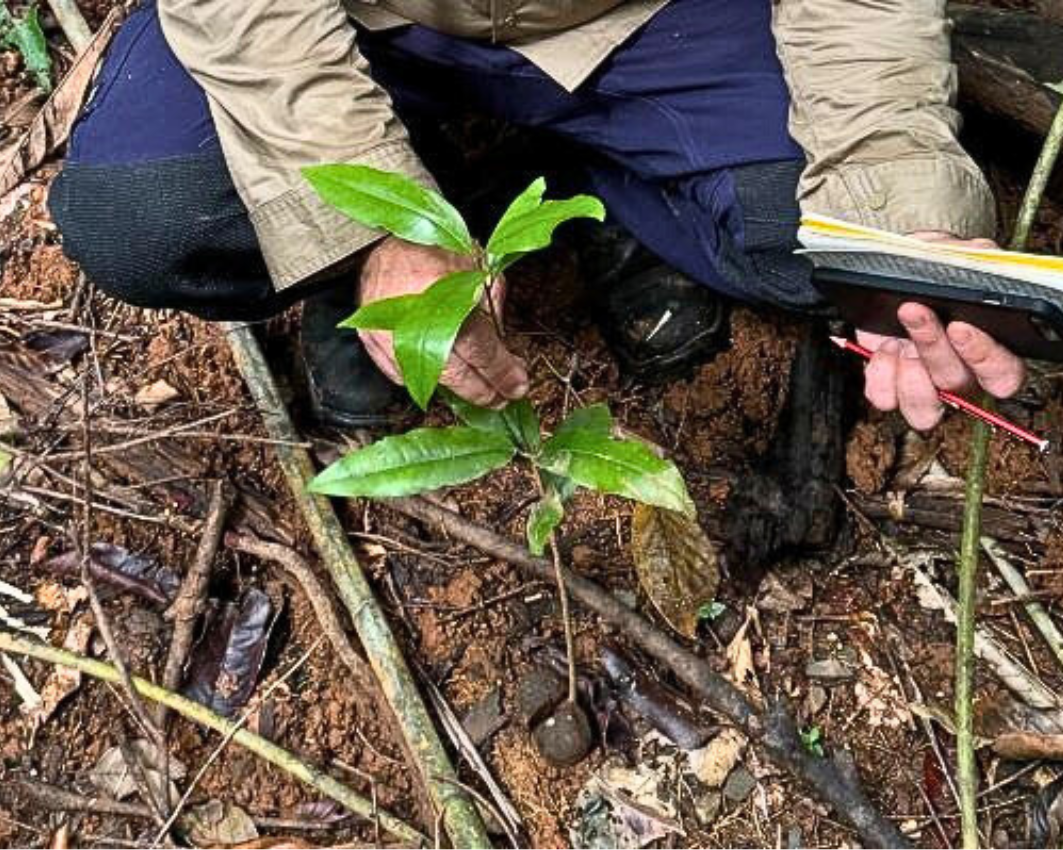
China Camp Laurel is found at Forest Creek.
A Thriving Ecosystem
Lot 2 is strategically positioned within a vital wildlife corridor, linking foothills, floodplains, and ultimately the Coral Sea and the Great Barrier Reef. Two creeks traverse the property, supporting high-conservation habitats and enabling critical wildlife—such as the endangered Southern Cassowary, a keystone species whose seed dispersal regenerates the rainforest—to thrive.
Why this Land Matters
Lot 2 sits adjacent to the Wet Tropics World Heritage Area, providing an essential connection between rainforest and reef. By purchasing and restoring this property, we will:
-
Protect one of the world’s most biodiverse ecosystems, home to over 3,000 plant species (576 endemic), 368 bird species (11 endemic), 113 reptiles (24 endemic), 51 frogs (22 endemic), and 36 bat species.
-
Reconnect fragmented rainforest habitats and maintain essential wildlife corridors across degraded lowland rainforest.
-
Improve wetland and creek health, filtering sediments and nutrients before they reach the Great Barrier Reef.
-
Secure critical habitat for the Southern Cassowary, ensuring the survival of rainforest fruiting plants and the species that depend on them.
The 12-hectare property includes approximately 5 hectares of remnant vegetation and 7 hectares of degraded and regrowth land. Its location on Old Forest Creek Road at Forest Creek ensures regenerative agriculture and restoration efforts will strengthen ecological connectivity from the Daintree River delta to the Alexandra Range, supporting both local biodiversity and the broader landscape’s resilience to climate change and environmental pressures.
→ Make a Tax-Deductible Donation Now
Why Buyback Works
Lot 2 is currently zoned "Rural" under the Douglas Shire Planning Scheme. Without permanent protection and active conservation management, the remnant rainforest and its endangered ecological communities remain vulnerable to:
- Inappropriate land use
- Weed invasion and edge effects
- Habitat degradation over time
- Fragmentation pressures across the wider landscape
Planning controls reduce risk, they do not eliminate it. The only way to guarantee long-term protection of these ecological values is to secure the property for conservation and manage it accordingly. That is what land buyback achieves.
Land buyback is the only guaranteed way to:
- Prevent further inappropriate development
- Halt fragmentation of critical rainforest habitat
- Permanently protect land so it can be assessed for inclusion in the Daintree National Park (CYPAL)
Over the last six years, we have purchased and protected 34 properties across the Daintree Lowlands. Lot 2 is the next crucial step.
→ Make a Tax-Deductible Donation Now
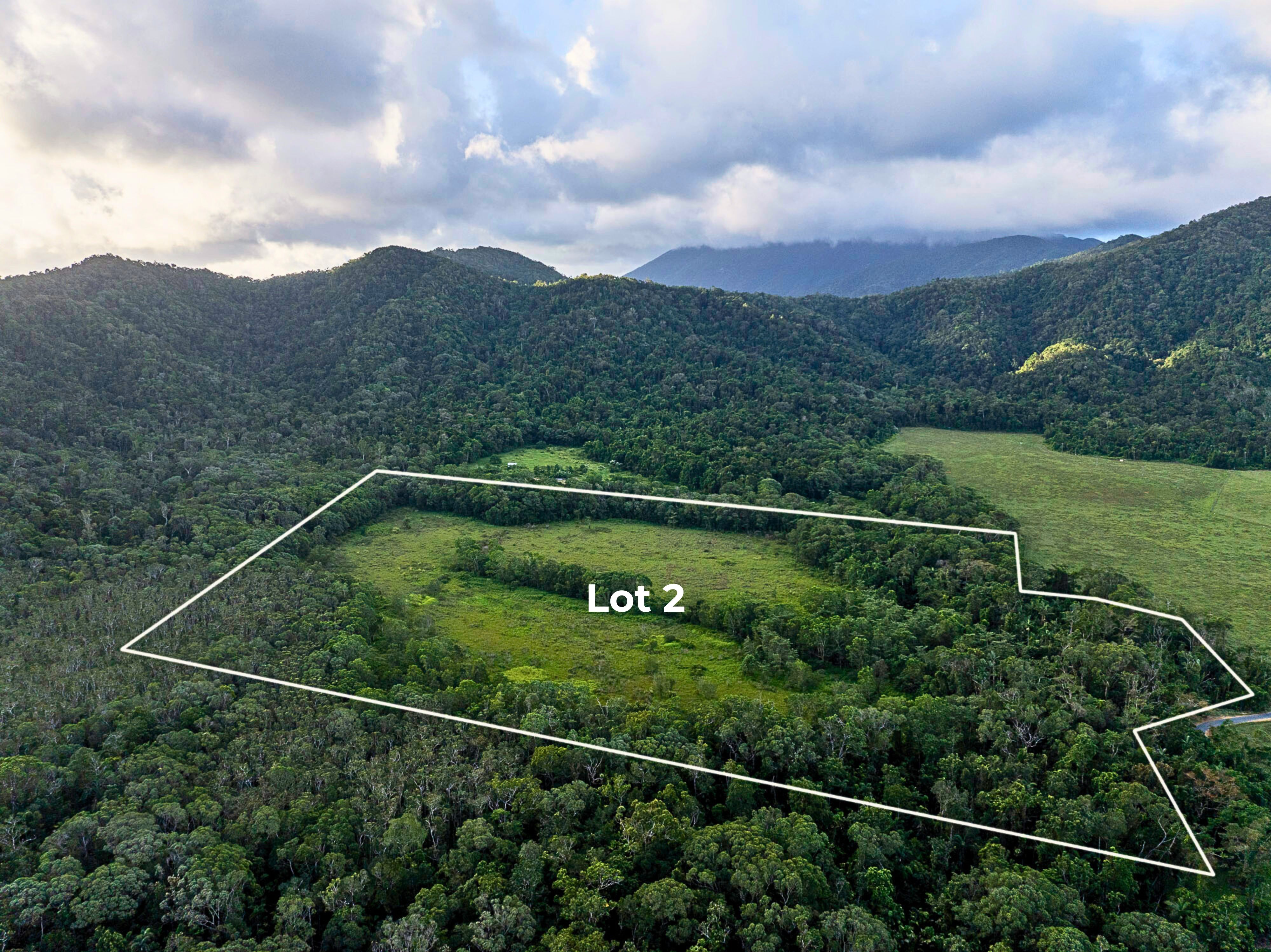
Lot 2 Old Forest Creek Road at Forest Creek.
Fragmentation Threat
Past Daintree developments have caused significant clearing and fragmentation, introducing exotic weeds and domestic dogs that threaten native wildlife.
The Problem: When continuous rainforest is broken into smaller, disconnected sections by roads, housing, and infrastructure, wildlife lose their ability to move naturally through the landscape. This disrupts seed distribution and other biodiversity processes while creating opportunities for invasive species to colonise degraded areas.
The Solution: Connected rainforests are better equipped to respond to climate change and natural disasters. By restoring wildlife linkages, we strengthen rainforest health and resilience.
Official Status: In November 2021, the Australian Government listed the Daintree Lowland Rainforest as endangered under the Environment Protection and Biodiversity Conservation Act 1999, covering the Wet Tropics from Ingham to Cape Tribulation. Despite this endangered status, the Daintree Rainforest remains not fully protected.
→ Make a Tax-Deductible Donation Now
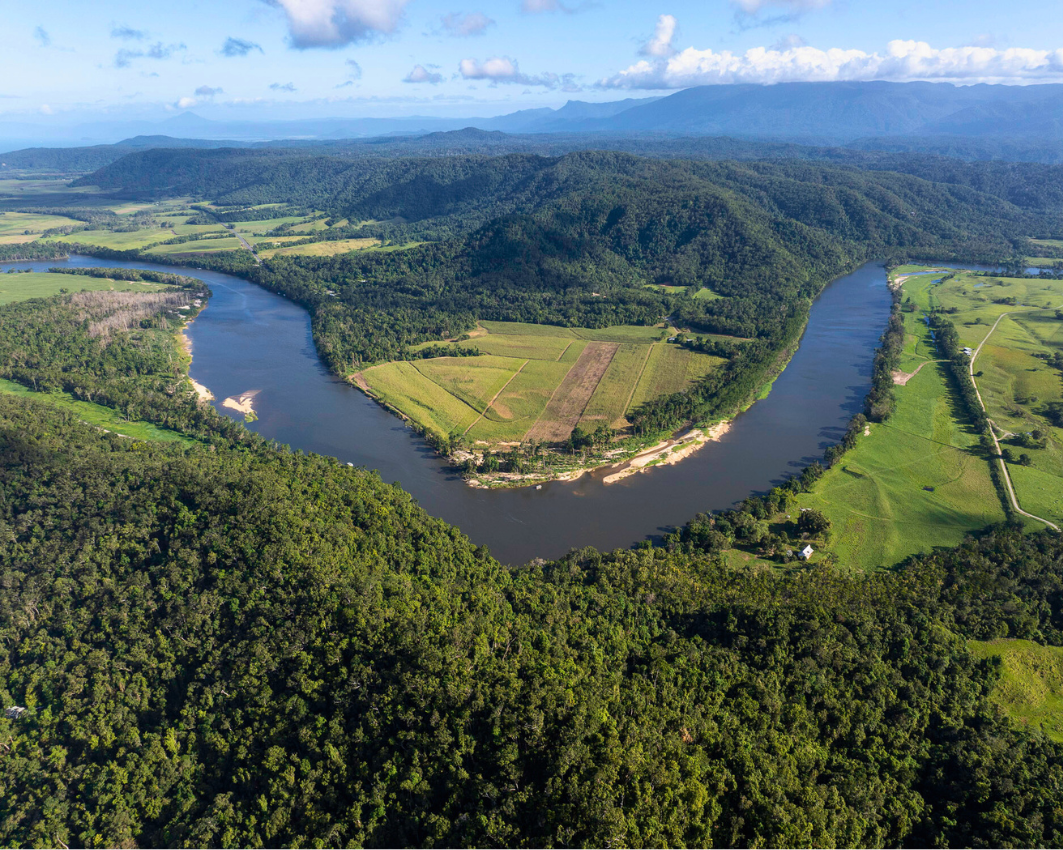
The Daintree River flowing out to the Great Barrier Reef.
How We’ll Maintain & Enhance the Environmental Values of the Land
Our restoration approach will combine regenerative agriculture and scientific conservation strategies with Traditional knowledge. The project will see thousands of native trees re-established to enhance and protect the unique environmental values of the property.
An ecologist oversees the process, conducting quarterly and annual assessments to monitor progress and ensure ecological health.
Our innovative research component compares high-density and lower-density planting techniques, combining existing trees with natural regeneration and tree planting to optimise production of harvestable native plants and restoration outcomes.
→ Make a Tax-Deductible Donation Now
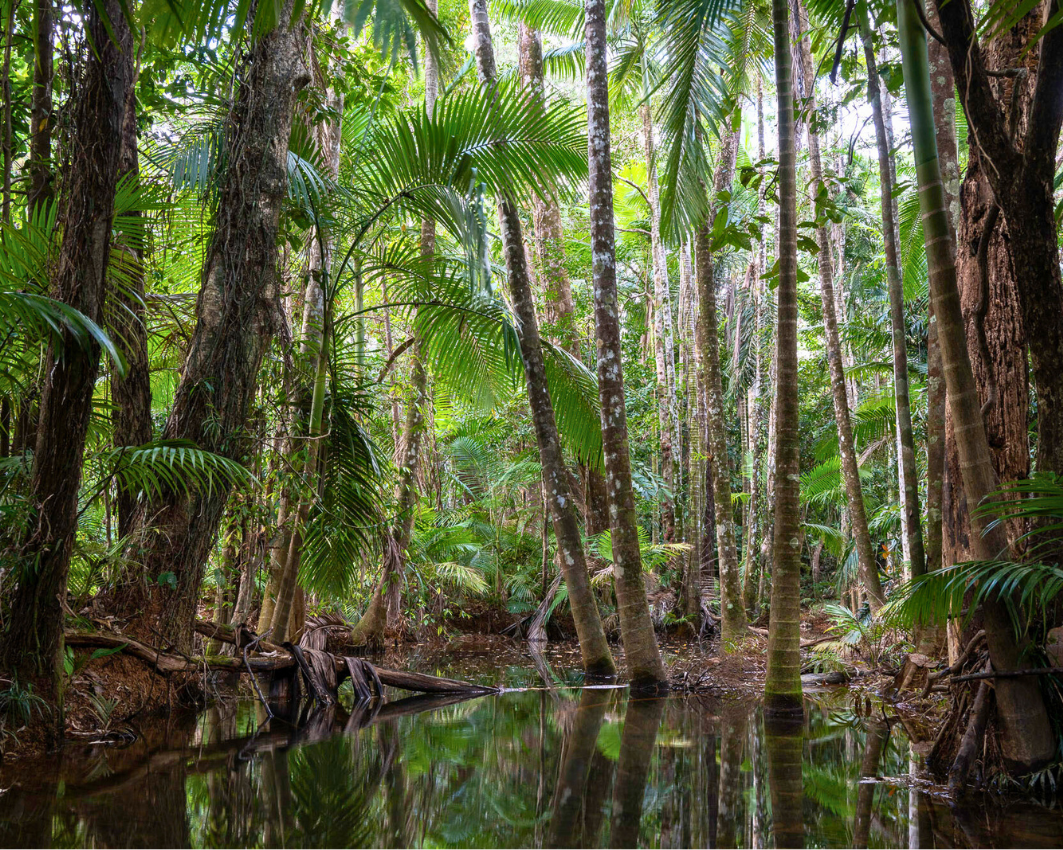
Creek on Lot 2 Old Forest Creek Road.
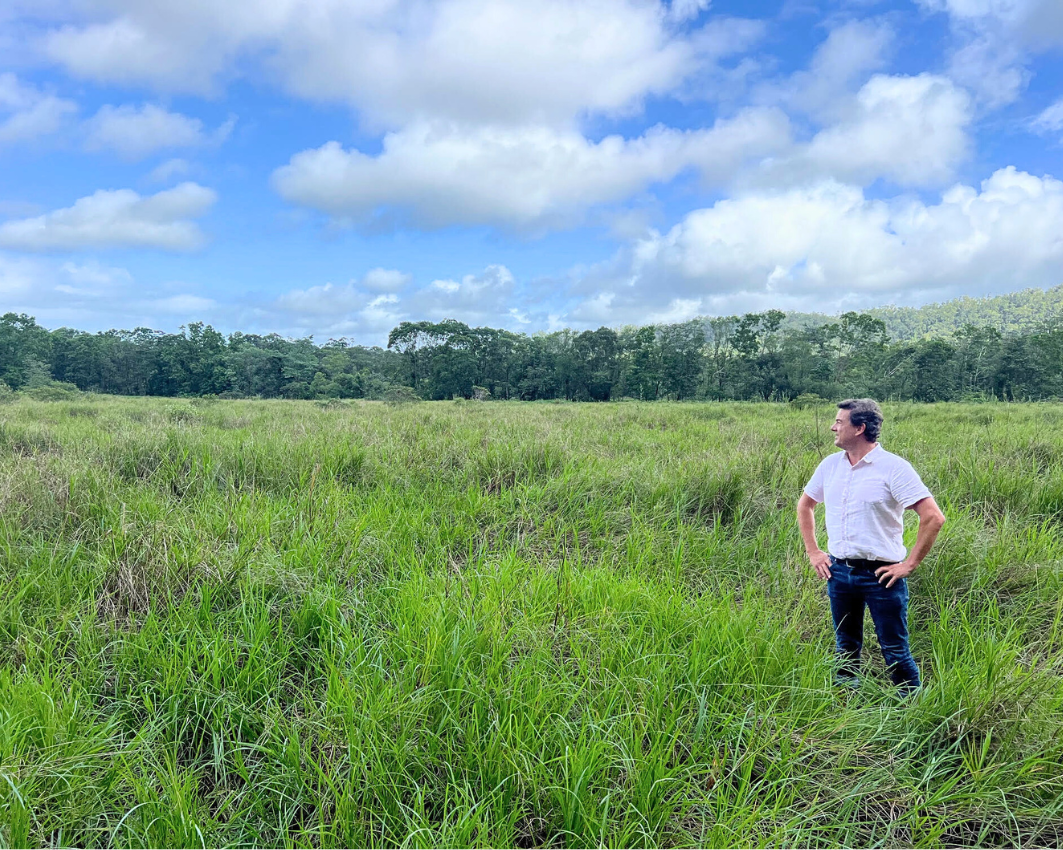
Native Trees that once grew here will be used to protect and enhance the environmental values of Lot 2.
Our Partnership
One of our business partners is supporting this project as part of their broader environmental commitment, having already planted over half a million trees, demonstrating how partnerships can drive meaningful conservation outcomes.
Ready to protect this botanical ark?
Your support will finalise the acquisition of this property and ensure its ongoing protection and management for conservation. Funds raised for regenerative restoration will help transform the degraded areas into a thriving, productive native forest, creating lasting benefits for for Wildlife, Climate, People and the Planet.
Since its inception, Gondwana Rainforest Trust has successfully purchased and protected 34 properties in the Daintree, contributing to the long-term protection of this vital rainforest landscape. Your contribution joins a proven track record of conservation success.