Hidden within the ancient rainforest of Lot 1 Cape Tribulation Road lies something extraordinary.
During a recent survey, our botanist, Kristopher Kupsch, uncovered one of the world’s rarest and most ancient plants, the Green Dinosaur (Idiospermum australiense). A species that has remained largely unchanged for millions of years, with a lineage tracing back over 120 million years to the earliest flowering plants.
Finding not only mature trees, but also a new generation of seedlings thriving here is rare. It offers a glimpse into a prehistoric world that still quietly survives in the Daintree today.
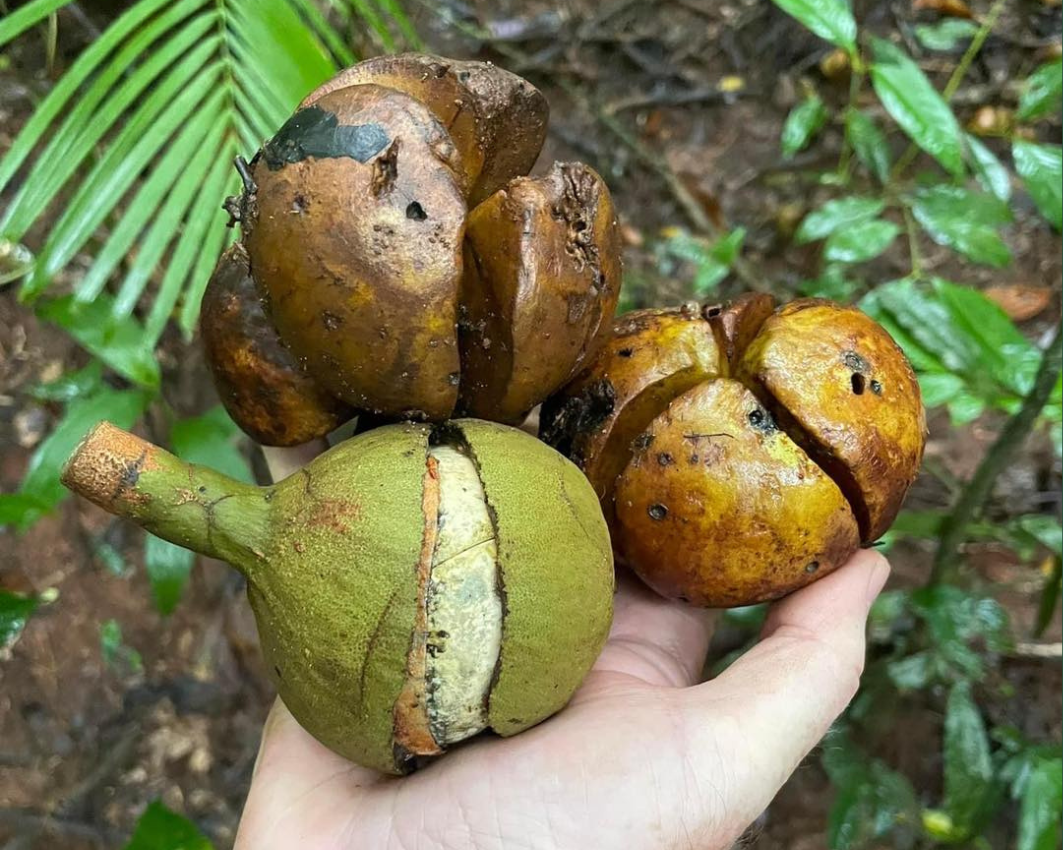
The Green Dinosaur (Idiospermum australiense).
Vegetation Survey of Lot 1 Cape Tribulation Road, Diwan
On 3 February 2026, botanist Kristopher Kupsch undertook a vegetation survey across the 3.466-hectare Lot 1 site in Diwan. Bordering the Daintree National Park and the Wet Tropics World Heritage Area, the property is largely intact, with approximately 87% covered by complex lowland rainforest (Regional Ecosystem 7.11.1a).
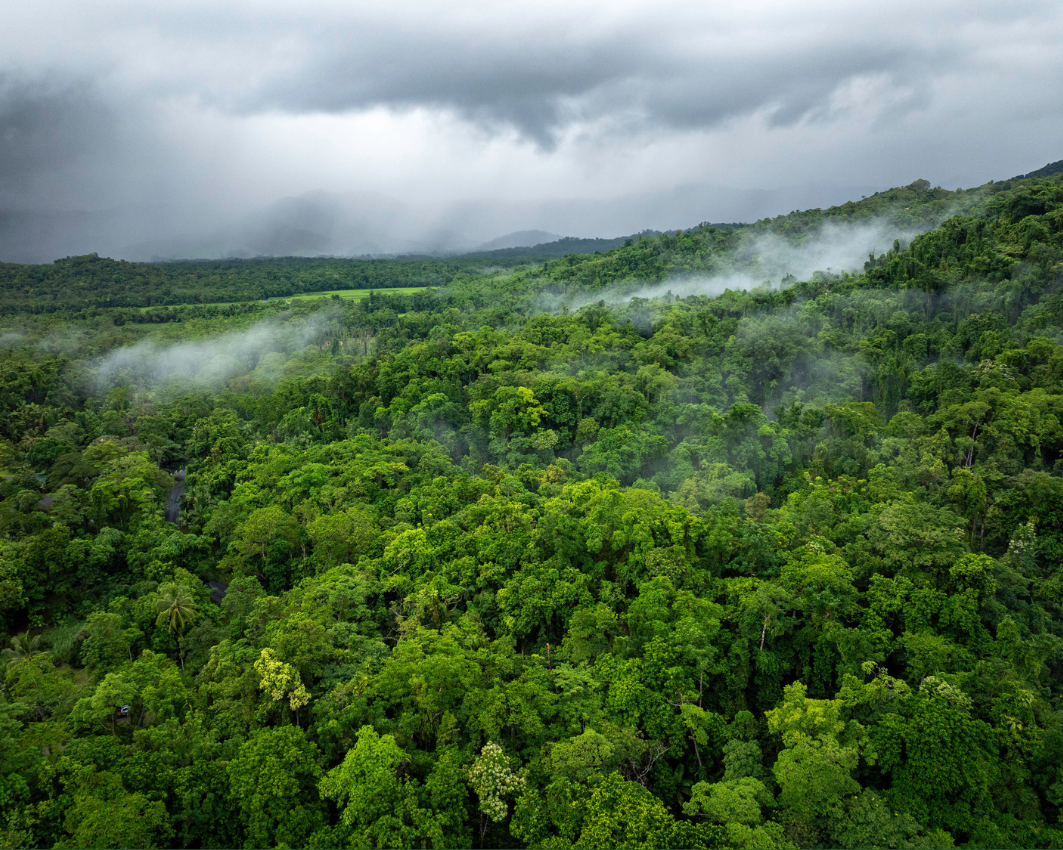
Lot 1 Cape Tribulation Road.
Two small creeks run through the site, supporting diverse plant communities and creating a mosaic of habitats. Much of the forest shows signs of long-term stability, with mature canopy trees and minimal disturbance.
You can help protect vital habitat for rare and threatened species on Lot 1 here.
Threatened and significant species
Five plant species listed as threatened species under state and national legislation were recorded during our survey:
Spiral Ginger (Cheilocostus potierae)
This species was identified on the edge of Lot 1 and Cape Tribulation Road. Its existence on the site is considered tenuous based on road maintenance activities.
Climbing Pandanus (Freycinetia percostata)
On Lot 1, it is restricted to the eastern and southern portions associated with swampy vegetation. It is quite abundant in the immediate vicinity.
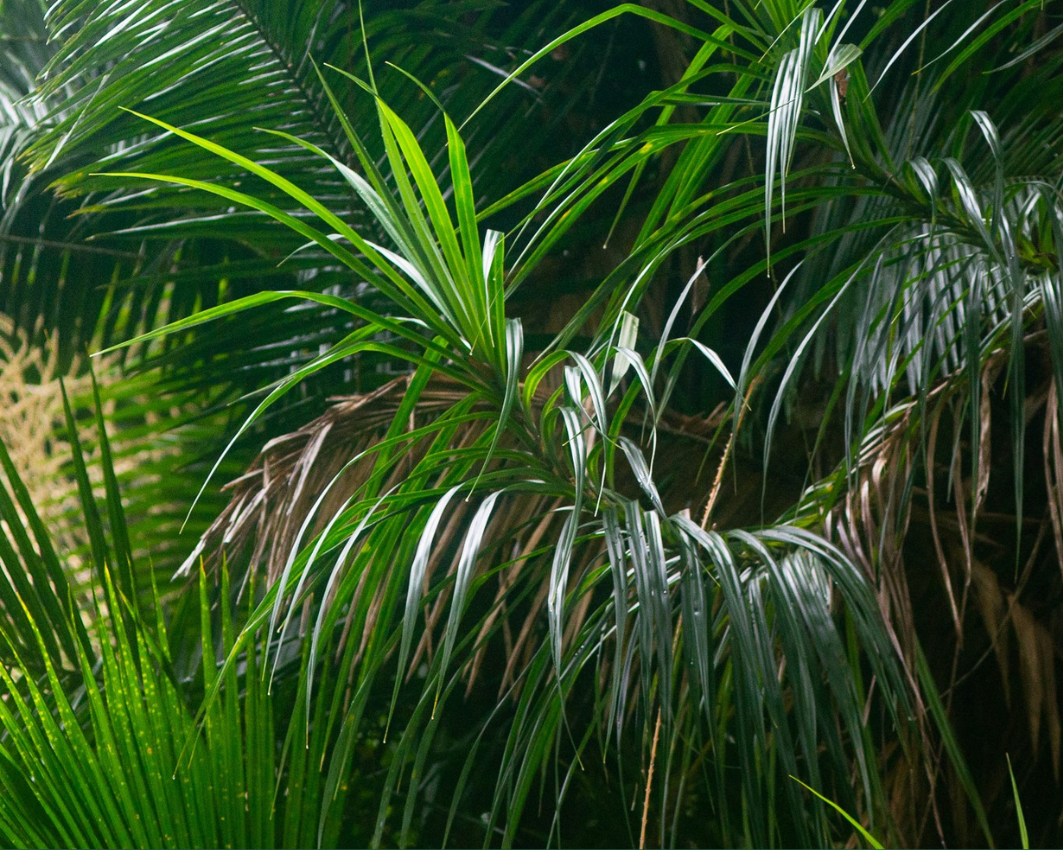
Climbing Pandanus (Freycinetia percostata).
Tassel Fern (Phlegmariurus phlegmarioides)
This species is an epiphyte that grows high in the canopy. It was identified from a fallen piece on the forest floor. It is unclear how common it is on Lot 1.
Noah’s Walnut (Endiandra microneura)
This tree produces large yellow fruit that the Southern Cassowary disperses. The species is restricted to the Daintree River and Cape Tribulation areas below 250m. It was observed on Lot 1 on occasion.
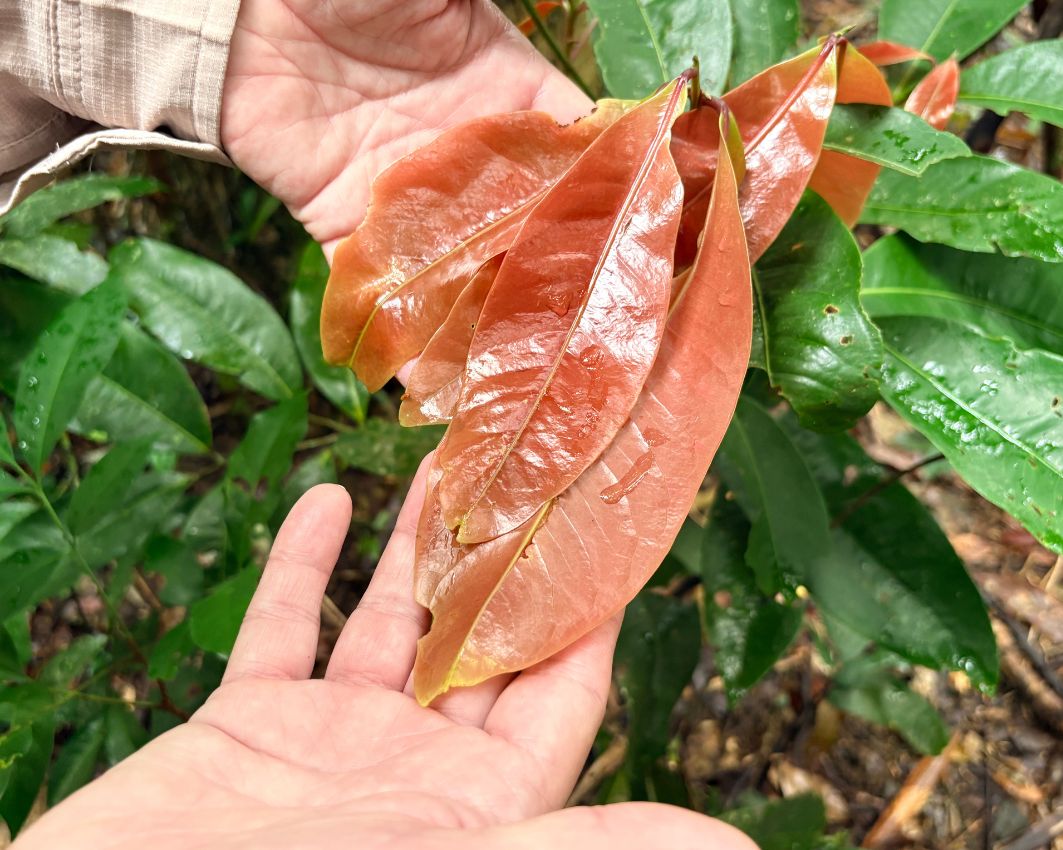
Noah’s Walnut (Endiandra microneura).
Daintree Ryparosa (Ryparosa kurrangii)
A remarkable, cauliflorous tree species endemic to the lowland tropical rainforests of Queensland, and one of the rarest tree species in the Daintree Rainforest. The Daintree Ryparosa has a symbiotic relationship with the Southern Cassowary, and it is common on Lot 1 with notably large and younger specimens as well.
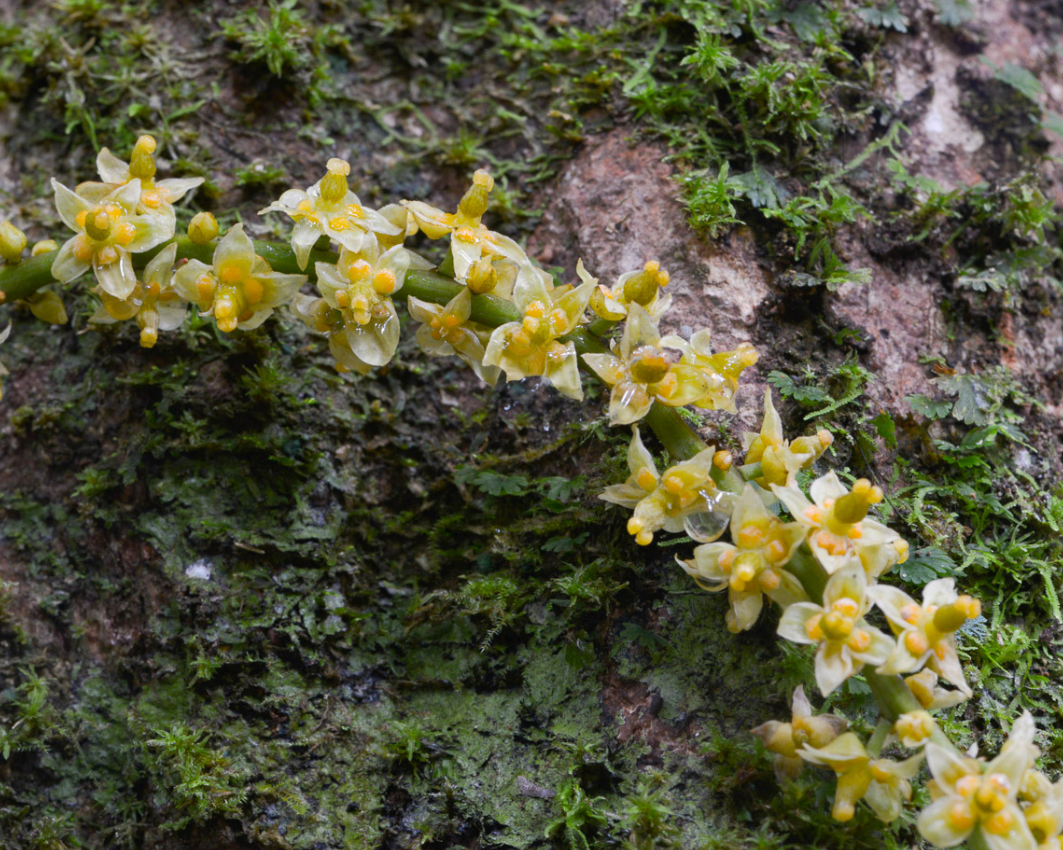
Daintree Ryparosa (Ryparosa kurrangii).
Regionally significant species
In addition, seven regionally significant species occur here, including plants found in only a small part of the Daintree.
Green Dinosaur or Idiot Fruit (Idiospermum australiense)
A small number of large Idiospermum were identified from the north-eastern area of Lot 1. This area adjoins the main Cape Tribulation road and is easily observed. There is, however, some edge effect to the trees. Many seedlings were identified in at least two separate areas on Lot 1.
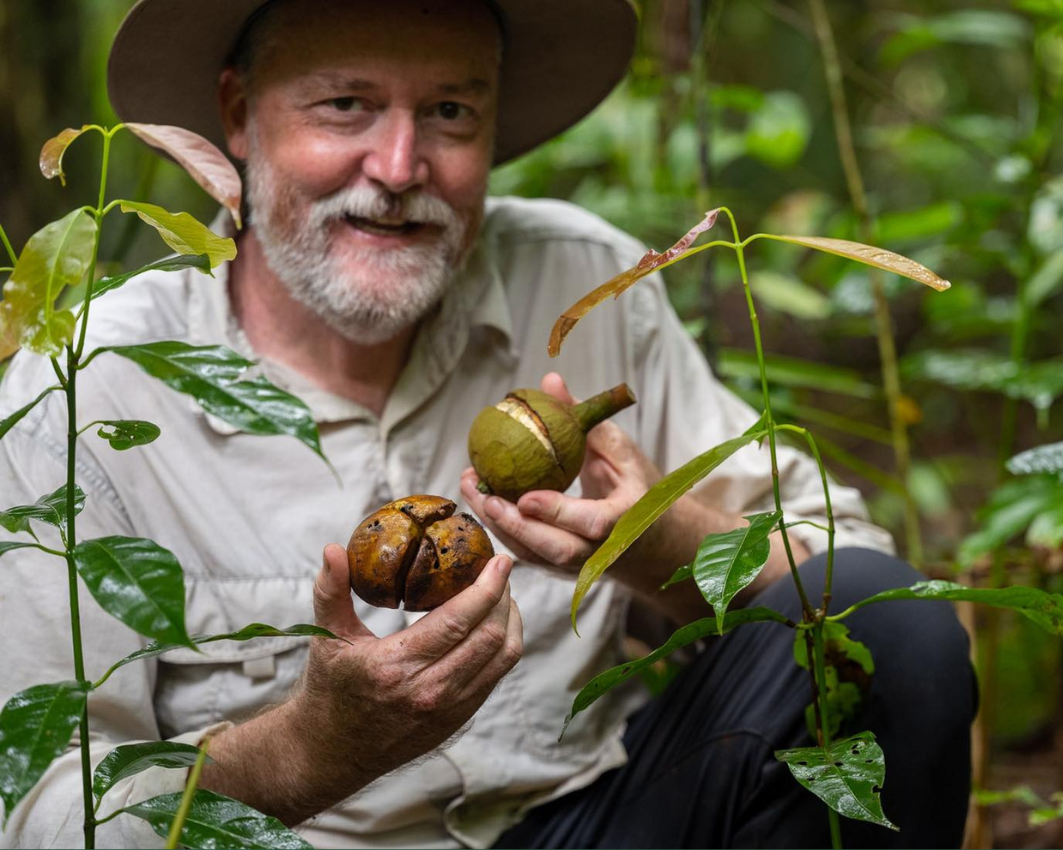
Green Dinosaur (Idiospermum australiense).
Boonjee Blushwalnut (Beilschmiedia volckii)
A large canopy tree in the Laurel family. This eventually large tree was identified on Lot 1 by a single seedling. It produces oval-shaped black fruits to 7cm across. These fruits are dispersed by the Southern Cassowary and Musky Rat-kangaroos. The species has only been recorded in the Daintree four times previously. This record represents the furthest north of the species' known range.
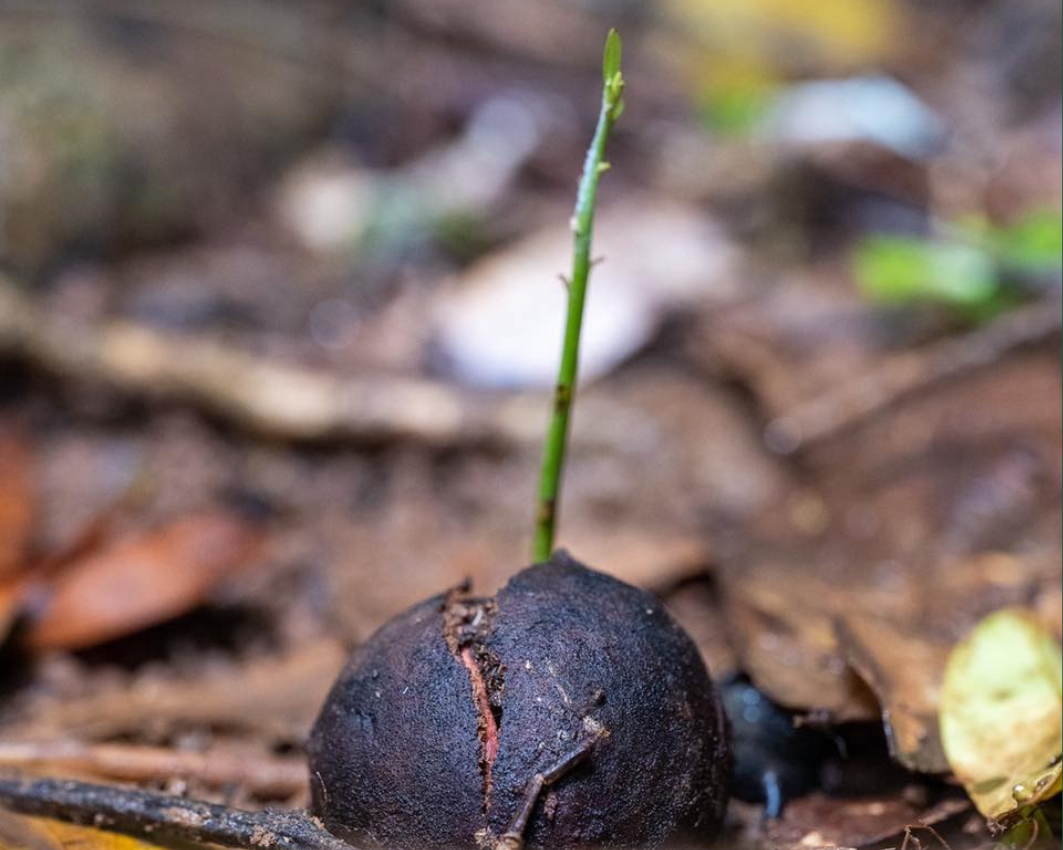
The Boonjee Blushwalnut (Beilschmiedia volckii).
Millaa Ebony (Diospyros pluviatilis)
A small understorey species typically common on the Atherton Tablelands, with a few records from the Daintree Rainforest in the Cow Bay district. Only a handful of specimens were observed on Lot 1. It has only previously been collected 4 times in the Daintree.
Daintree Cleistanthus (Cleistanthus oblongifolius)
This understorey tree is restricted to the area between Daintree and Rossville. It also occurs in SE Asia and the Solomon Islands. This tree was once known until recently as Cleistanthus myrianthus. It was recorded as an occasional tree on Lot 1.
Velvet Tuckeroo (Cupaniopsis diploglottoides)
A small, slender understorey tree restricted to lowland rainforests between Rossville and the Daintree village. A total of 6 trees were identified on Lot 1.
Cooper Creek Haplostichanthus (Polyalthia xanthocarpa)
An understorey shrub grows to about 2m and is restricted to the Mossman Gorge, Daintree - Cape Tribulation lowlands; however, it is often locally abundant. On Lot 1, this species was common.
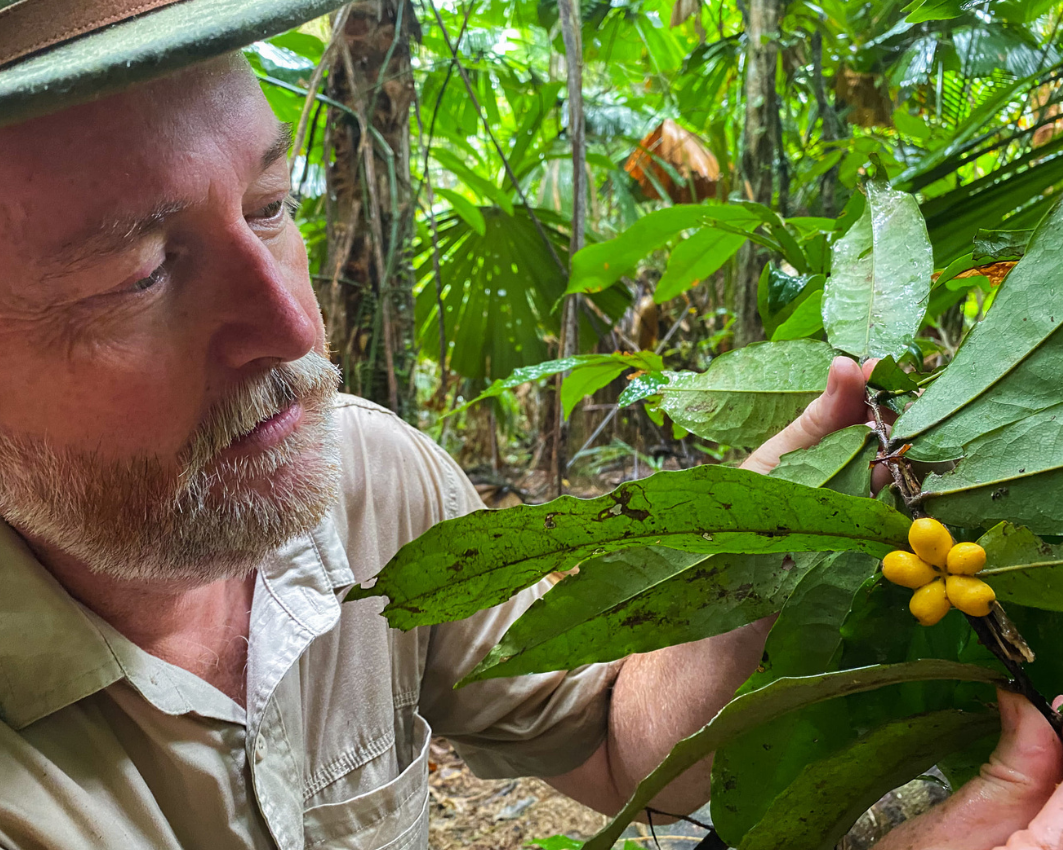
Cooper Creek Haplostichanthus (Polyalthia xanthocarpa).
You can help protect vital habitat for rare and threatened species on Lot 1 here.
Critical Cassowary Habitat
Lot 1 lies within the core habitat for the endangered Southern Cassowary (Casuarius casuarius johnsonii), with footprints and scats confirming active use.
The presence of key food trees and intact forest structure makes this site part of an important corridor linking Thornton Peak to the lowland forests near Cooper Creek. For cassowaries, connectivity like this is essential.
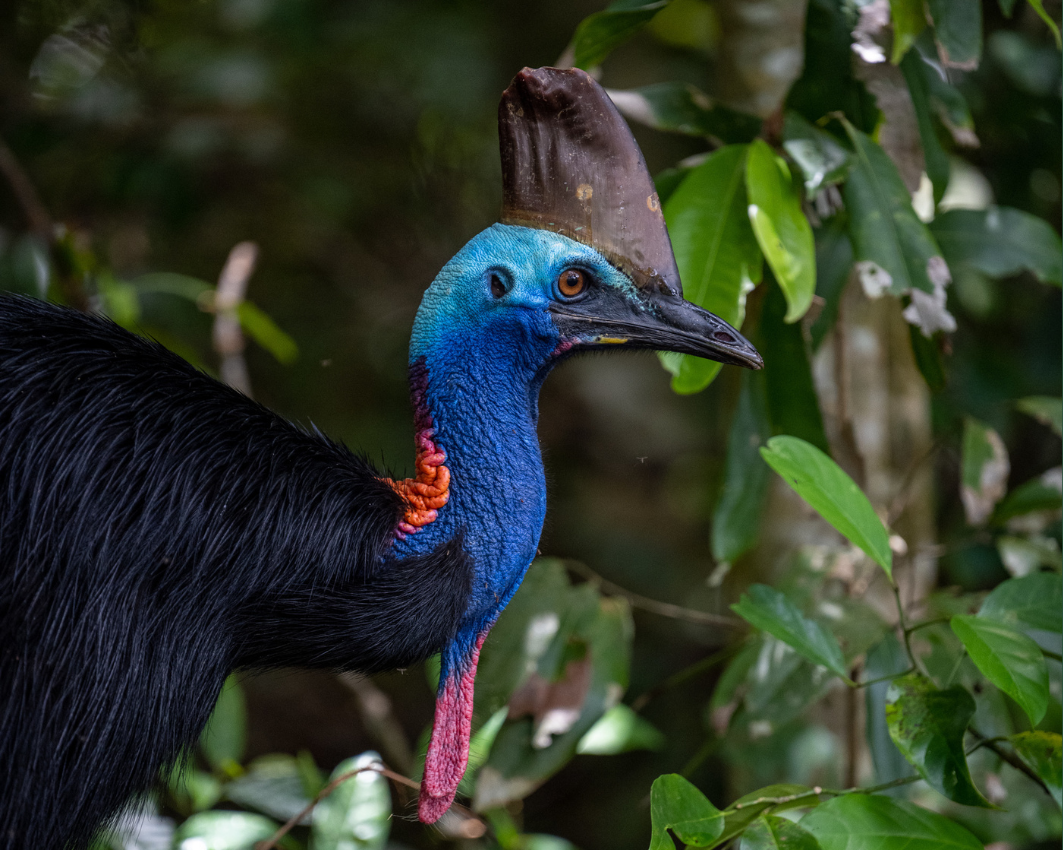
Southern Cassowary (Casuarius casuarius johnsonii).
A Dynamic Ecosystem
Beyond plants, the property supports a wide range of wildlife. Observations included:
- Active nesting mounds of Orange-footed Scrubfowl
- A breeding site for the Buff-breasted Paradise Kingfisher
- Native reptiles such as Keelback and Green Tree Snakes
This diversity reflects a healthy, functioning rainforest ecosystem.
Threats and Management Needs
While much of the site remains in excellent condition, some threats are present, such as weed invasion along cleared and roadside areas, feral pig disturbance across the property and edge effects impacting sensitive species near the road.
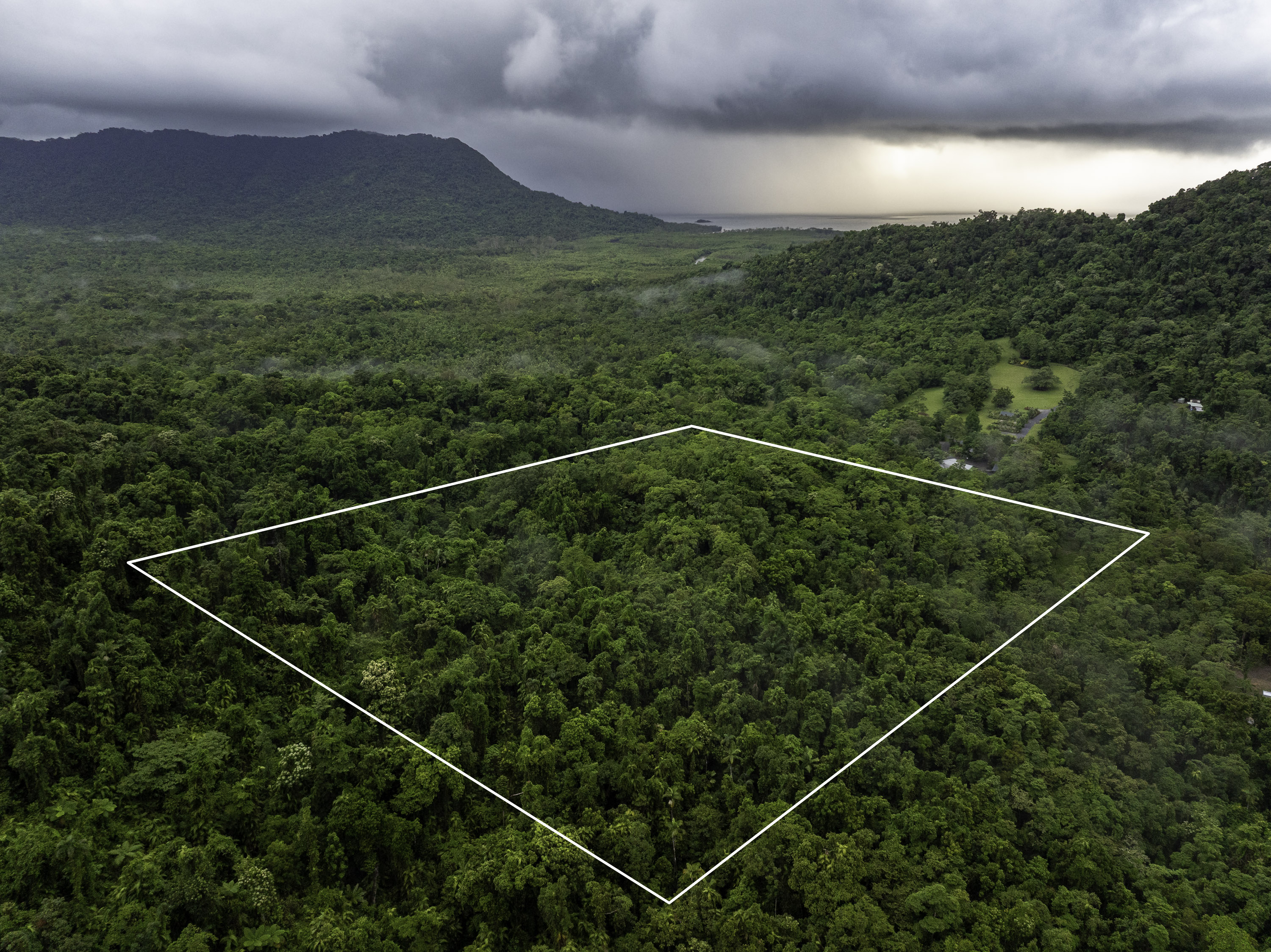
Lot 1 Cape Tribulation Road in the Daintree.
Managing these pressures will be key to maintaining the site’s ecological integrity.
Why This Matters
Lot 1 is more than just a block of rainforest. It is a living fragment of Gondwana, home to species that have survived since the age of dinosaurs.
The discovery of the Green Dinosaur here reinforces just how important these landscapes are. Protecting sites like this safeguards not only biodiversity, but entire evolutionary histories that exist nowhere else on Earth.
Because in places like the Daintree, the past is still alive, and what we protect today determines whether it survives into the future.
A connected rainforest is essential for healthy ecosystems. You can help protect vital habitat in the Daintree here.