At first glance, the Daintree Rainforest and the Great Barrier Reef seem like two separate ecosystems, one terrestrial, one marine. In reality, they are deeply interconnected. What happens in the rainforest directly shapes the health of the reef.
A connected system: from rainforest to reef
The Daintree sits within a coastal catchment where rivers and streams flow directly into the Coral Sea. These waterways act as a physical link, transporting water and everything it carries, from land to reef.
Land-based run-off is now recognised as the greatest contributor to poor water quality in inshore areas of the Great Barrier Reef, carrying sediments, nutrients and pollutants into marine ecosystems. This means the condition of the rainforest upstream plays a critical role in determining the condition of the reef downstream.
The role of rainforests and wetlands as natural filters
Intact rainforest systems, especially wetlands, function as highly effective natural filtration systems.
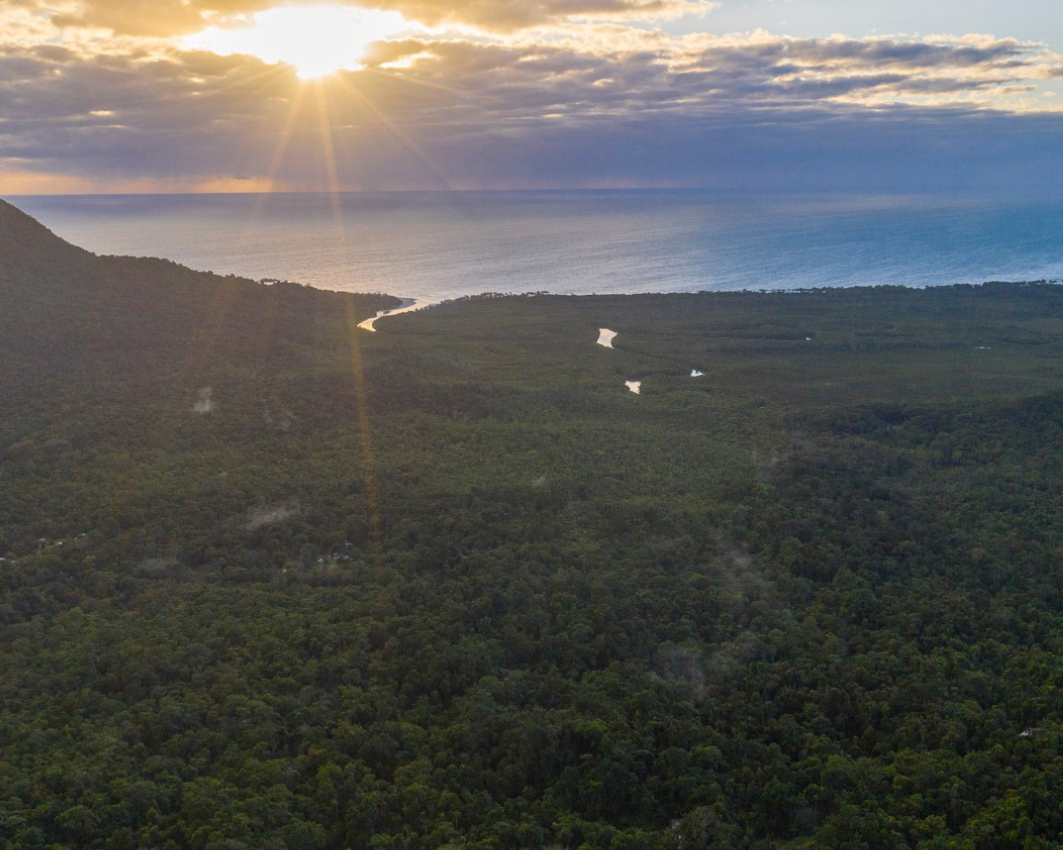
The Daintree River flows into the Coral Sea and the Great Barrier Reef. Image: Steven Nowakowski
They trap and stabilise fine sediments, absorb excess nutrients such as nitrogen and phosphorus and slow water flow, reducing erosion and pollutant transport. Scientific studies show that wetlands in the Wet Tropics can actively remove nutrients through processes like denitrification, reducing the pollution load entering the reef lagoon. These ecosystems essentially act as a buffer, improving water quality before it reaches the ocean.
Why water quality matters for the reef
Coral reef ecosystems are highly sensitive to changes in water quality.
When excess sediments and nutrients reach the reef:
- sediments reduce light penetration, limiting photosynthesis in corals and seagrass
- nutrients can trigger algal blooms, which outcompete corals
- pollutants weaken reef resilience to other stressors like climate change
Declining water quality is therefore considered a major threat to reef health and biodiversity.
The importance of intact rainforest in the Daintree
The Daintree catchment remains one of the few areas in the Great Barrier Reef region where riverine ecosystem health is still rated in very good condition.
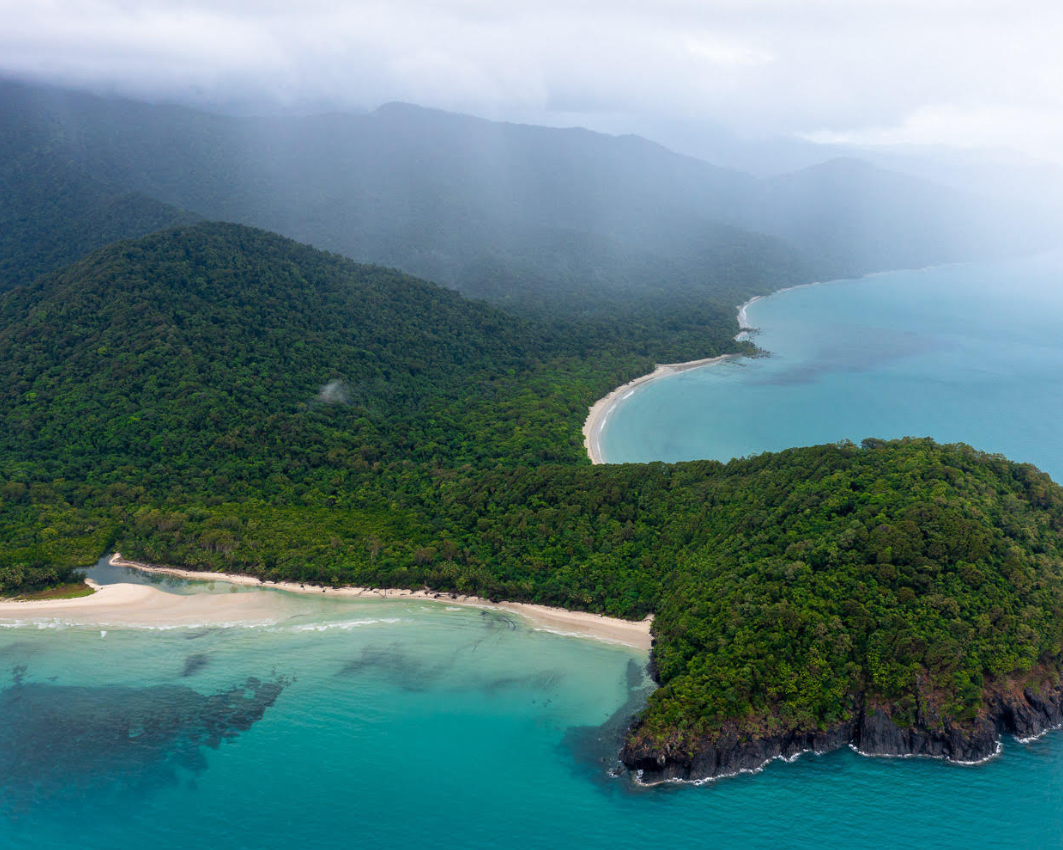
Daintree Rainforest and the Great Barrier Reef meet at Kulki (Cape Tribulation). Image: Steven Nowakowski
This is largely due to intact vegetation cover, minimal large-scale agricultural development and functioning wetland systems. Healthy rainforest reduces erosion, stabilises soils, and maintains balanced nutrient cycles, preventing large volumes of pollutants from entering waterways in the first place.
What happens when rainforest is lost
When rainforests or wetlands are cleared or degraded, this protective function breaks down.
Without vegetation:
- rainfall runs off faster and with greater force
- soil erosion increases, sending sediment into rivers
- fertilisers and pollutants move more freely into the ocean
The loss of coastal wetlands is particularly damaging, as these systems are known to act as natural filters for toxins and sediments entering the reef.
This leads to poorer water quality and increased stress on coral ecosystems.
An ecosystem perspective
Conservation strategies in Queensland increasingly recognise that protecting the reef requires protecting its entire catchment, from mountains to coast. Government and scientific frameworks, such as the Reef 2050 strategies, emphasise a whole-of-system approach linking catchments, wetlands and reef ecosystems.
Meaning protecting rainforest means protecting waterways, and protecting waterways means protecting the reef!
Why protecting the Daintree matters
The Daintree is not just a rainforest; it is a frontline defence system for one of the most important marine ecosystems on Earth.
By keeping rainforest intact and restoring degraded areas, sediment and nutrient runoff are reduced, water entering the reef remains cleaner, and reef ecosystems are better able to survive and recover! In this way, every hectare of rainforest protected contributes to the long-term health of the Great Barrier Reef.
The bigger picture
The connection between the Daintree and the reef highlights a critical truth in conservation: ecosystems do not exist in isolation. Protecting the rainforest is not just about trees or wildlife; it is about safeguarding entire ecological networks that extend far beyond the forest itself, all the way to the coral reefs.