How flowers made the Daintree and why protecting them matters
When we think of the Daintree Rainforest, we often picture towering trees, ancient ferns, and iconic wildlife like the Southern Cassowary. But beneath it all lies a quieter force shaping this entire ecosystem: flowers.
Flowers are not simply decorative; they are the foundations of life as we know it. And nowhere is that more evident than in the Daintree.
A rainforest built by flowers
It might sound surprising, but rainforests like the Daintree wouldn’t exist without flowering plants. Flowering plants (angiosperms) arrived relatively late in Earth’s history, but rapidly transformed the planet. Within a short evolutionary window, they reshaped ecosystems and became dominant across most habitats. In fact, modern rainforests, grasslands, and even mangroves are all deeply rooted in the rise of flowering plants.
The Daintree is no exception.
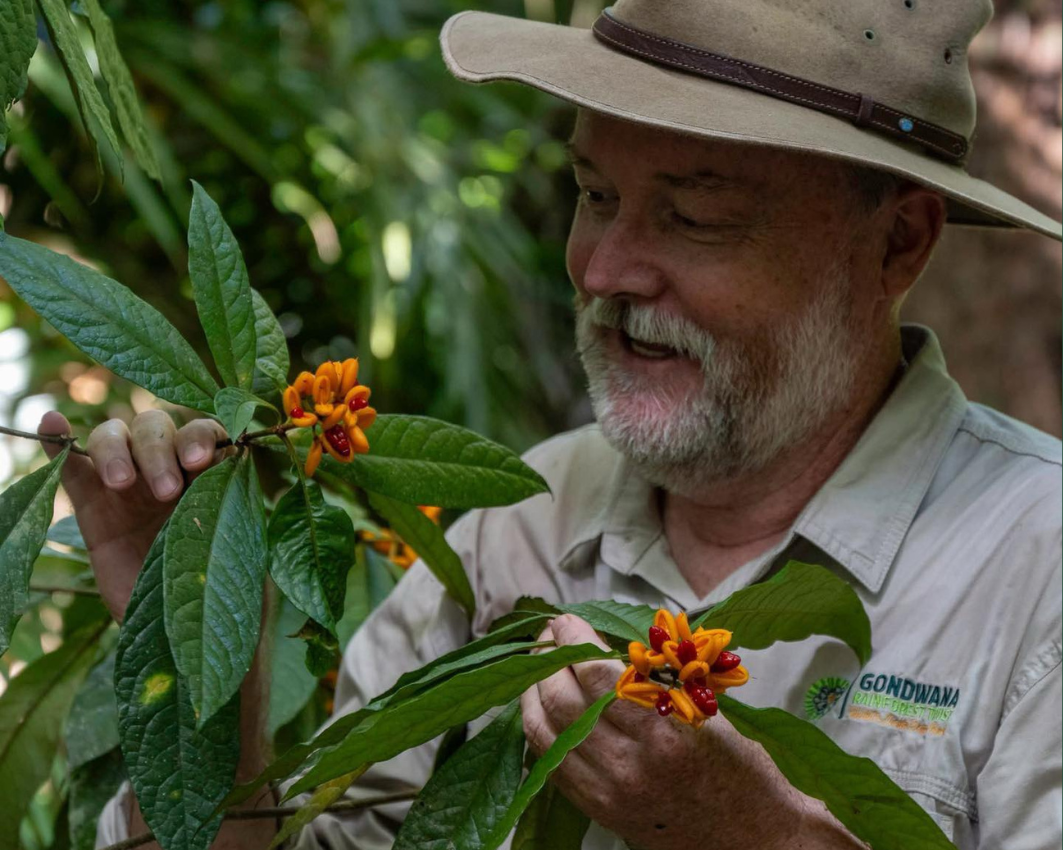
Hairy Red Pittosporum (Pittosporum rubiginosum).
Every fruiting tree, every vine, every understory shrub, these are the building blocks of a complex web of life. From the Daintree Satinash to the Climbing Pandanus, flowering plants create food, shelter, and structure for the entire ecosystem.
Without them, the rainforest and the species that depend on it simply wouldn’t exist.
The hidden partnerships that keep the forest alive
Flowers don’t work alone. One of their most powerful innovations is cooperation. Over millions of years, flowering plants formed partnerships with insects, birds, and mammals, transforming former “enemies” into allies through pollination. They communicate using scent, colour, and even electrical signals to attract pollinators.
In the Daintree, these relationships are everywhere:
-
Bees and insects pollinate rainforest trees
-
Fruit bats and birds disperse seeds across the landscape
-
Cassowaries spread large rainforest fruits, regenerating entire forests
This is not just biodiversity, it’s interdependence. And it’s fragile.
We are a “floral species”
It's argued that humans themselves are deeply tied to flowers. Most of the food we eat comes from flowering plants, especially grasses like rice, wheat, and maize. In other words, we are a “floral species.” But this connection goes beyond food.
Flowers shape cultures, rituals, and economies. They are present in moments of celebration, grief, and identity.
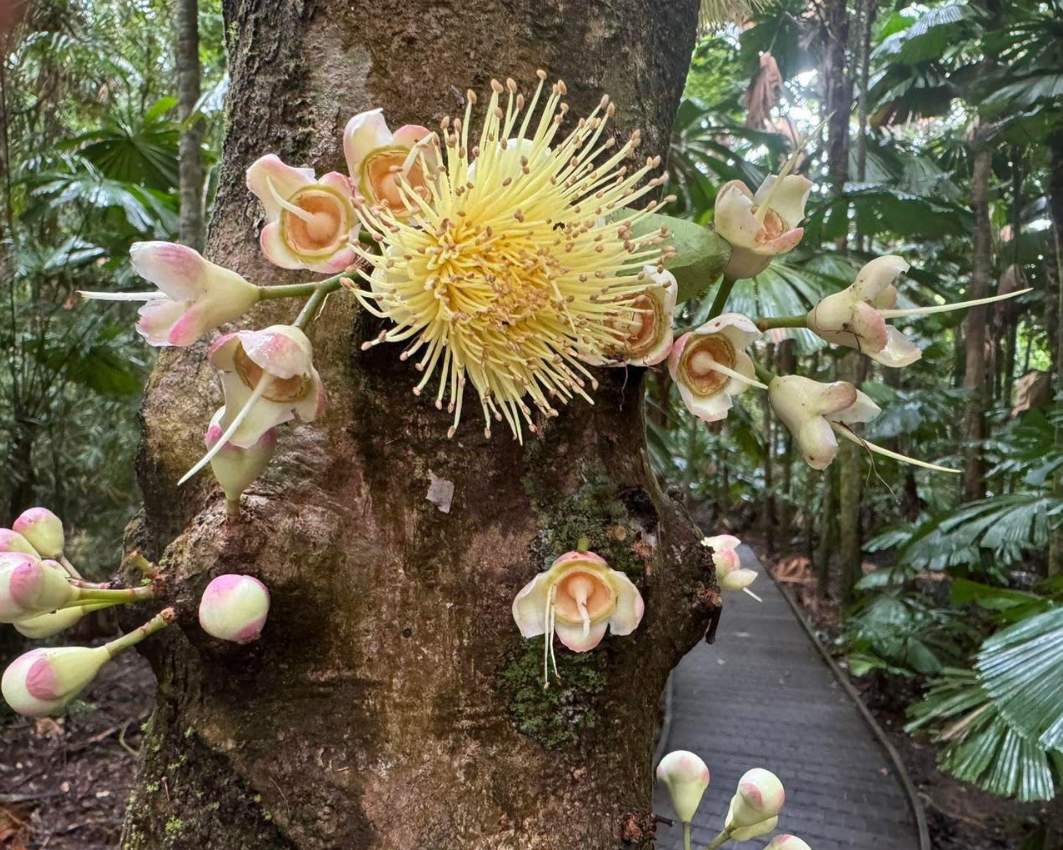
Daintree Satinash (Syzygium monospermum).
And in places like the Daintree, they shape entire landscapes.
What happens when flowers decline?
Here’s the challenge. Nearly half of the world’s flowering plant species are now in decline, driven by habitat loss, climate change, and chemical pollution.
When flowers disappear, the consequences ripple outward:
-
Pollinators decline
-
Food webs collapse
-
Forest regeneration slows or stops
-
Biodiversity is lost
In fragmented ecosystems like the Daintree lowlands, where freehold properties still allow for clearing, this risk is very real.
Protecting flowers means protecting everything
Every time we protect a piece of rainforest, we are protecting far more than trees.
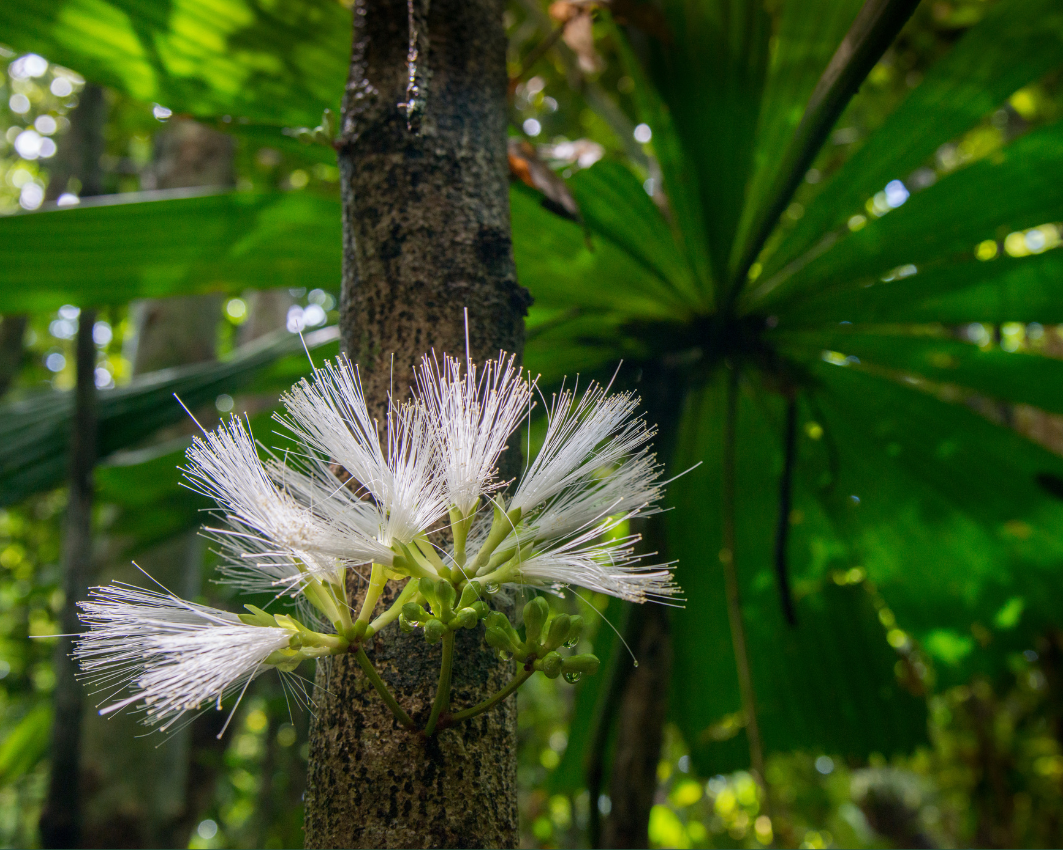
We are safeguarding pollination networks, seed dispersal pathways, habitat for endangered species, and the living infrastructure of the ecosystem.
The Save the Daintree program focuses on buying back at-risk land and returning it to conservation, ensuring these floral systems remain intact and connected. Because protecting rainforest isn’t just about preserving what we see. It’s about protecting the invisible relationships that make life possible.
A lesson from flowers
Thriving ecosystems are built on cooperation.
Flowers didn’t dominate the planet through force; they did it through connection, partnership, and adaptability. That’s the same principle guiding rainforest conservation today.
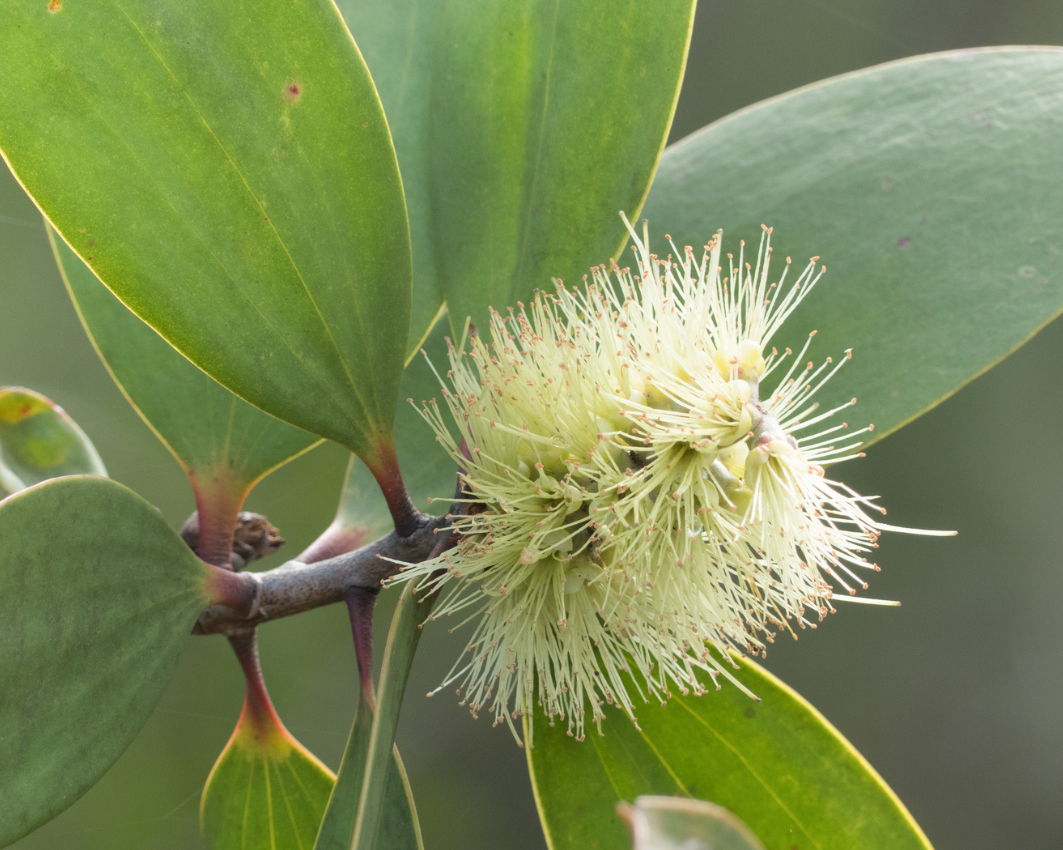
The broad-leaved paperbark (Melaleuca viridiflora).
Be part of the story
When you help protect the Daintree, you are helping protect the flowers that build the forest, the wildlife that depends on them, and the systems that sustain life on Earth.
Every square metre matters. Because every flower matters.