Older than flowering plants, older than the dinosaurs, ferns are some of the most ancient plants alive today and nowhere in Australia are they more spectacular than in the Daintree. Here's your guide to Australian ferns, the famous King Fern, and the rainforest that keeps them safe.
Long before the first flower bloomed, before the first dinosaur walked the Earth, ferns were already here.
They are among the oldest plants alive today, survivors of a green world that existed hundreds of millions of years before the forests we know now. And in Australia, the single greatest place to see them is the Daintree Rainforest, one of the oldest continuously surviving rainforests on the planet.
If you've ever searched for the different types of ferns, wondered how old these plants really are, or simply fallen for their unfurling green fronds, this is the story of Australian ferns and the ancient forest that protects them.
How old are ferns?
Here is the fact that stops people in their tracks: ferns appear in the fossil record dating back around 325 million years!
To put that in perspective, ferns came before the flowering plants. They came before the conifers. They even came before the cycads. They were among the very first vascular plants, plants that move water through their tissues and for a vast stretch of prehistory, ferns and their relatives were the dominant vegetation on the entire planet.
What makes a fern a fern? Unlike most rainforest plants, ferns don't flower and they don't produce seeds. Instead, they reproduce by spores, tiny dust-like particles, usually carried on the underside of their fronds, a method of reproduction far more ancient than the seeds and flowers that came later.
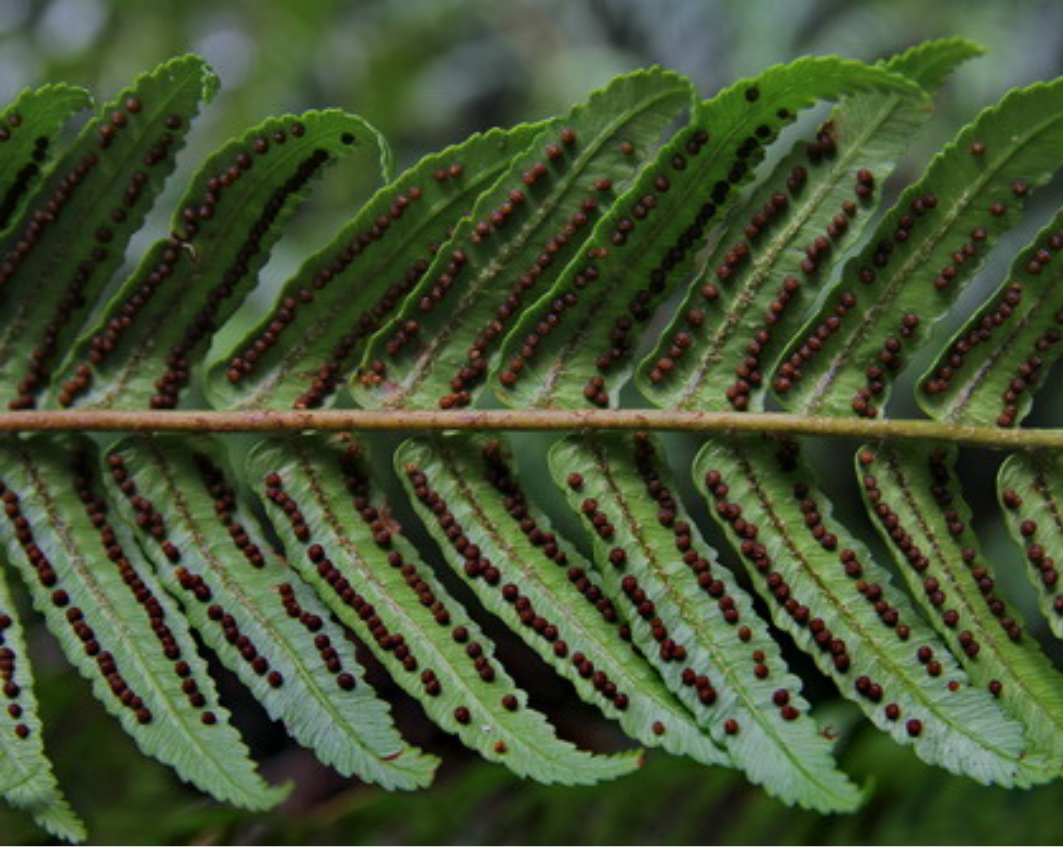
Fern spores. Image: Native Plants Queensland – Townsville Branch
This is part of why ferns are so often described as living fossils: their basic design has worked, almost unchanged, for hundreds of millions of years.
Australian ferns and the Daintree: a global stronghold
Australia is home to hundreds of fern species, found everywhere from alpine gullies to coastal gorges. But they reach their richest, most extraordinary diversity in the wet tropical north and above all, in the Daintree.
The Daintree and the surrounding Wet Tropics of Queensland form one of the most important refuges for ferns on Earth. Around 40 fern species are endemic to the Wet Tropics, meaning they grow nowhere else in the world. And by some estimates, a remarkable share of all of Australia's fern species, possibly around two-thirds, can be found within this one ancient rainforest region.
The reason is simple: ferns love water and warmth, and the Daintree delivers both in abundance. Some years, parts of the Daintree receive more than six metres of rain during the summer wet season. That constant moisture, combined with a warm climate that has stayed remarkably stable for millions of years, has allowed ferns to flourish here when they were lost almost everywhere else.
The types of ferns you'll find in the Daintree
Walk a Daintree boardwalk, and you'll quickly realise ferns are not one single kind of plant. They come in an astonishing range of forms, from giants that rival small trees to delicate species you could mistake for moss. Here are some of the types of ferns that make the Daintree so special.
Tree ferns. Perhaps the most iconic rainforest plant of all, tree ferns lend the forest its prehistoric, "lost world" feel. The scaly tree fern (Cyathea cooperi) carries a crown of feathery fronds atop a slender trunk that can reach as high as 12 metres. Tree ferns have been here since the age of the dinosaurs, though today's species are smaller versions of their towering ancestors.
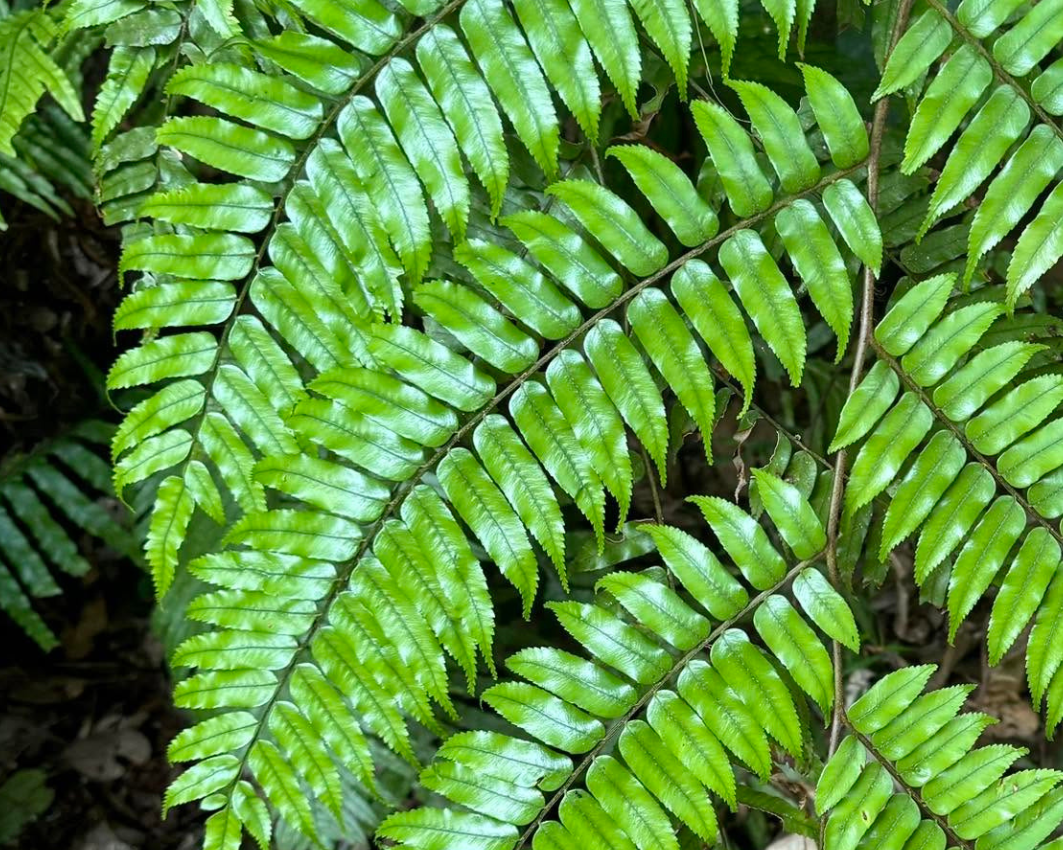
Rebecca Tree Fern (Cyathea rebeccae).
Epiphytic ferns.
Many Daintree ferns don't grow in the ground at all. Instead, they live high in the canopy, perched on the trunks and branches of other plants. The Basket Fern (Drynaria) is one of the most important: it traps falling leaves and moisture to build its own pocket of soil in the treetops, creating tiny ecosystems where frogs, insects and other creatures can live their entire lives without ever touching the forest floor.
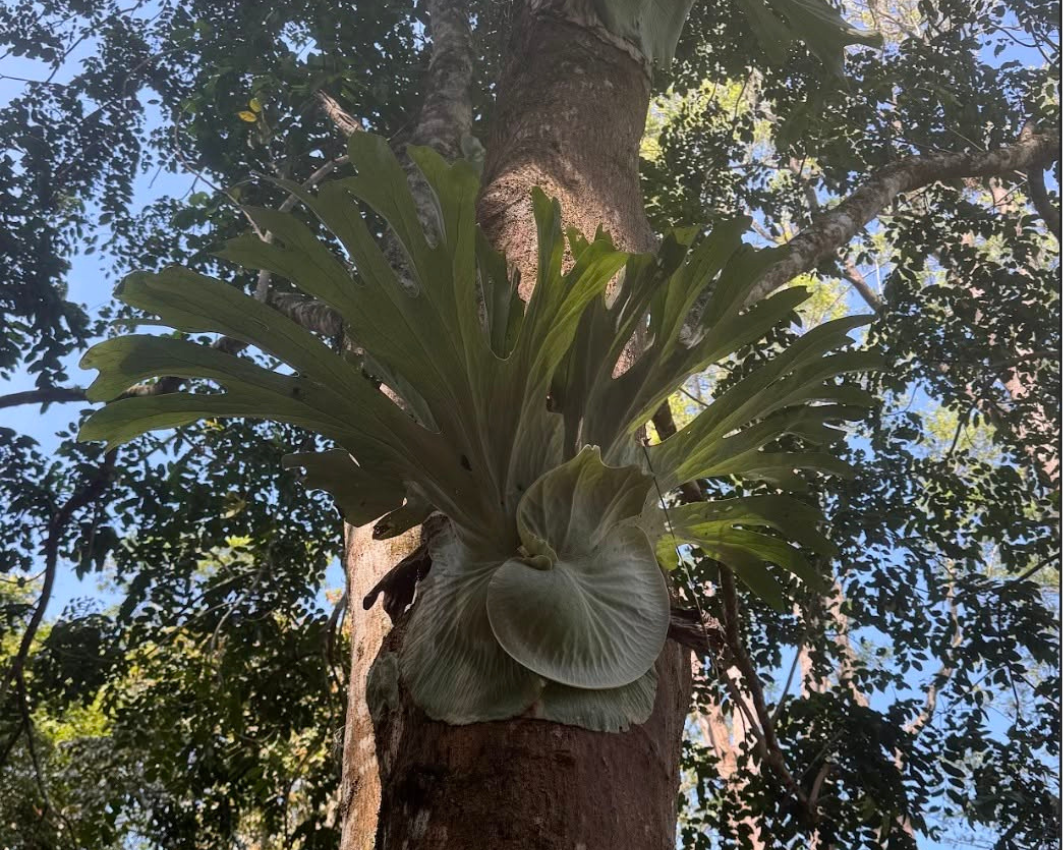
Bird's Nest, Elkhorn and Staghorn ferns.
These dramatic epiphytes form rosettes and antler-shaped fronds that cling to rainforest trees, gathering nutrients from the air and rain. They're among the most recognisable and beautiful ferns of the Australian rainforest.
Filmy ferns and ground ferns.
Down in the cool, shaded understorey grow some of the smallest and most delicate ferns, including filmy ferns whose fronds are often just a single cell thick, surviving only in the most humid, sheltered corners of the forest.
And then there is the King Fern.
The King Fern: a 300-million-year-old giant
If there is a single fern that captures everything ancient and astonishing about the Daintree, it is the King Fern (Angiopteris evecta).
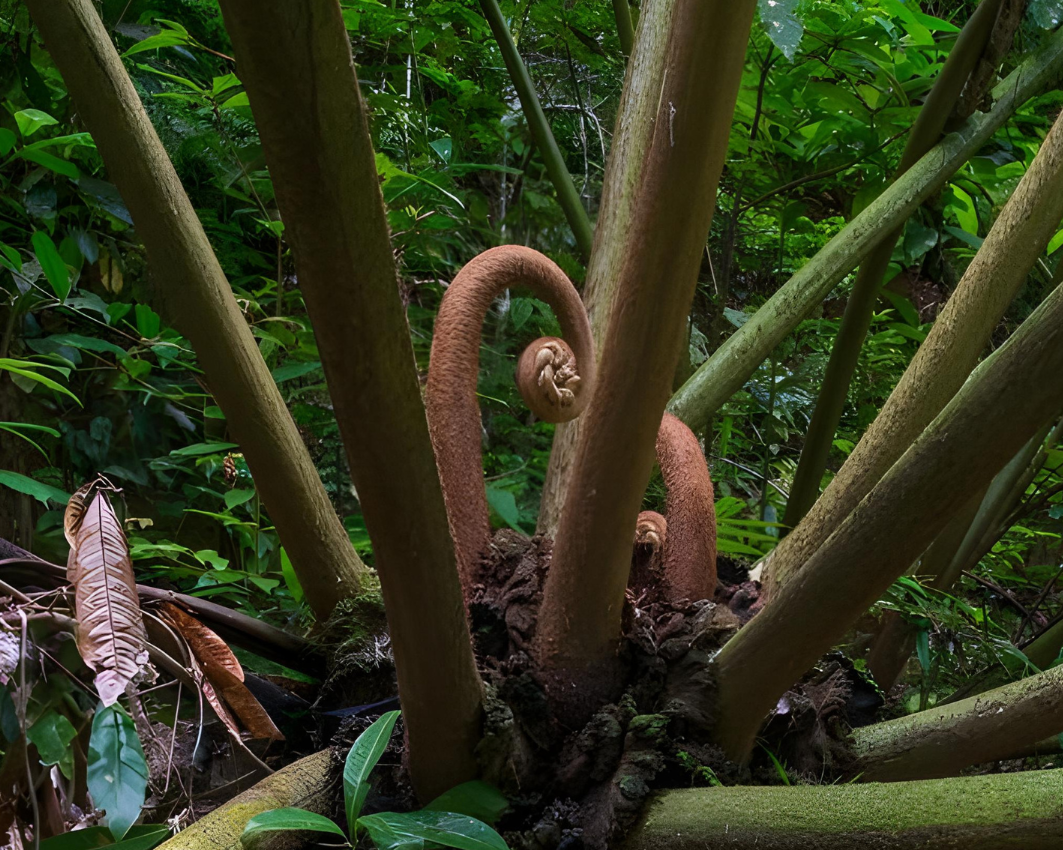
Image: Steven Nowakowski
The King Fern is one of the largest and most ancient ferns in the world. Its enormous arching fronds, among the largest produced by any fern on the planet, can reach up to five metres long on a fully mature plant. Remarkably, those huge fronds contain no woody, strengthening tissue at all. They are held up almost entirely by the pressure of the sap within them.
It is a true relic. Fossilised fronds strikingly similar to the King Fern's have been found in rocks around 300 million years old, from a time, in the late Paleozoic era, when ferns ruled the land. It is the only species of its genus found in Australia. These magnificent ferns need permanent water to support their fronds, which is why they're now found in only a handful of moist refuges across the country. The Daintree is one of the best places left on Earth to see them.
Five fern facts
- Ferns appeared around 325 million years ago — long before flowering plants, conifers, cycads or dinosaurs.
- Ferns don't flower or set seed. They reproduce using spores, an ancient method that predates seeds entirely.
- The King Fern has some of the largest fronds of any fern in the world, reaching up to five metres long.
- Around 40 fern species grow only in Queensland's Wet Tropics and nowhere else on Earth.
- Many rainforest ferns live high in the canopy, building their own soil and sheltering frogs and insects that never touch the ground.
Why protecting the Daintree means protecting its ferns
Ferns, as lovers of moisture and shade, are among the first plants to suffer when a forest is cleared, fragmented or dried out. A rainforest rich in ferns is a rainforest that is healthy, humid and intact. When the ferns disappear, it is often a sign that the forest itself is in trouble.
That's why this matters so much. The ancient ferns of the Daintree, the King Ferns, the tree ferns, and the delicate ferns have survived for hundreds of millions of years. But survival on that scale means nothing if the forest around them is lost in a single human lifetime.
Through Save the Daintree, we purchase at-risk rainforest properties in the Daintree Lowland Rainforest and protect them permanently, keeping their ancient plant life, including these extraordinary ferns, safe forever. Each block protected is another piece of one of the world's oldest forests kept whole, with all its deep-time inhabitants intact.
When you support this work, you help protect not just a place, but a living link to the dawn of plant life on Earth.