Story by Jason Bennee.
It stepped out of the ancient rainforest like a creature from another age. Nearly two metres tall, close to 70 kilos, and crowned with a casque, the Southern Cassowary walked straight toward me.
Drawn by the smell of food, it poked its head into the campervan — curious, not aggressive. I instinctively moved between the bird and the lunch, a mistake, but instead of the feared “murder feet” attack, the Cassowary simply sized me up and moved on.
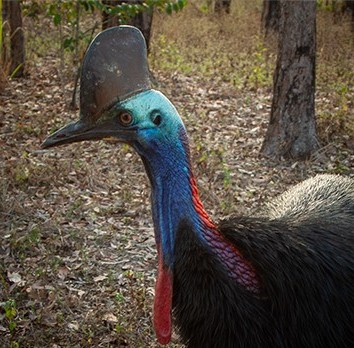
Jason Bennee's cassowary encounter.
That moment taught me something important: Cassowaries aren’t the monsters people imagine. They’re powerful, yes, but more interested in rainforest fruit than in us. When problems do happen, it’s usually because people interfere — especially by feeding them.
Feeding Cassowaries is not only illegal, it’s harmful. Birds that learn to associate people with food lose their natural wariness, which leads to more dangerous encounters, road accidents, and even starvation when they stop foraging properly. What feels like kindness actually puts both Cassowaries and people at risk.
I shared this story over coffee with the Gandalf of Gondwana — conservationist Kelvin Davies. For over 25 years, Kelvin has worked to protect the Cassowary’s rainforest home.
Cassowaries are far more than a curiosity — they’re rainforest gardeners. As one of the last remaining “megafauna” species, they’re the only animal capable of swallowing the largest rainforest fruits whole. Even massive native rainforest fruits vanish in a single gulp. No peeling, no chewing, just down the hatch.
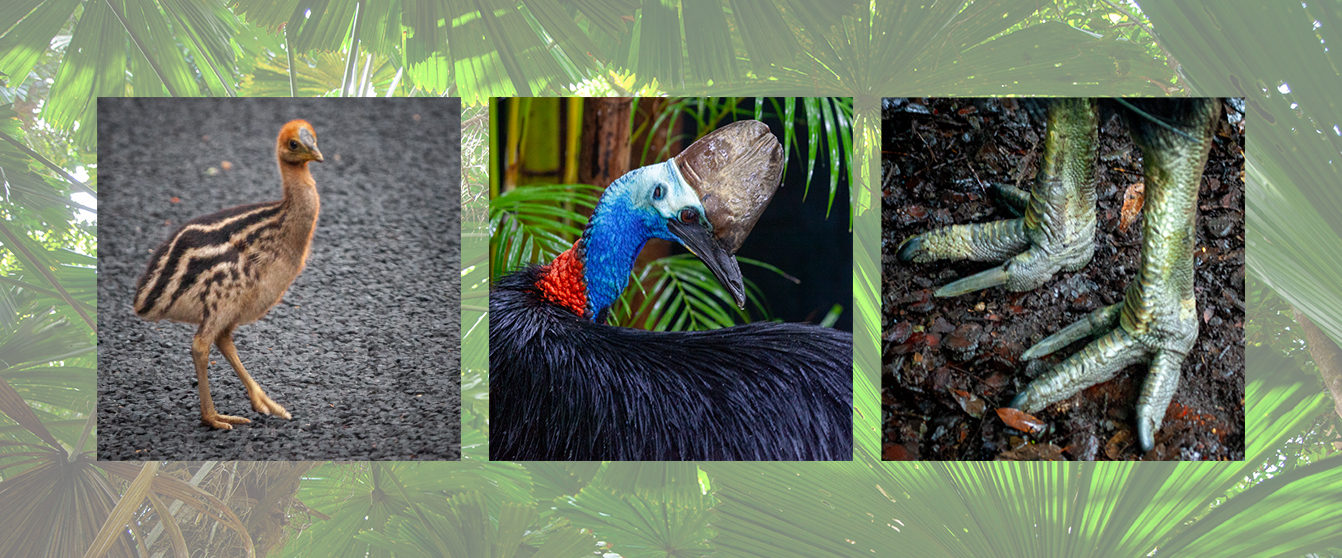
This makes them keystone species. Some trees, like Daintree Ryparosa, germinate just 4% of the time. But when a Cassowary digests and disperses their seeds, that figure soars to 92%.
In other words, Cassowaries are not a threat to us — they’re a lifeline to the rainforest.
Kelvin put it bluntly: “There are only about 4,400 Cassowaries left in Australia's wet tropical rainforest.” Much of their habitat has been cleared, and at one stage two-thirds of the Daintree Lowland Rainforest was subdivided for development.
But there is hope. The Save the Daintree program and Gondwana Rainforest Trust, which Kelvin founded, has already purchased 34 blocks of land that are cassowary habitat, pristine, remnant, or degraded, the rainforest is cared for restored and protected forever.
Every block saved is another safe haven for cassowaries and the forests they help regenerate.
If you want to help protect the habitat of these rainforest giants — and ensure they’re admired for their true role as seed spreaders, not feared or fed — please, donate now, and help purchase and protect at-risk land in the Daintree Rainforest.
An affordable gift every month is the very best way to support the work of the Gondwana Rainforest Trust and help Save the Daintree. Make your monthly pledge today.