Tourists arrive in the Daintree Rainforest with a shared hope: an encounter with a Cassowary. They are an icon of Far North Queensland, vital not only to the rainforest's ecological health, but also to the region's tourism economy. Yet behind the excitement lies a more fragile truth: their survival depends on decisions being made right now.
Why Cassowaries matter
The Southern Cassowary (Casuarius casuarius johnsonii) is often described as the gardeners of the rainforest, and for good reason. Their diet is made up of around 98 per cent fruit, making them one of the most important seed dispersers in the Wet Tropics.
Through a process known as endozoochory, Cassowaries consume fruits and deposit seeds across vast distances. Unlike many birds, they do not grind seeds in a gizzard. Instead, they pass them intact, often enhancing germination.
Some plant species rely heavily, even exclusively, on Cassowaries for survival, including:
- Daintree Ryparosa (Ryparosa kurrangii)
- Cassowary Plum (Cerbera floribunda)
- Noah's Walnut (Endiandra microneura), found only between the Daintree River and Cape Tribulation
- Yellow Walnut (Beilschmiedia bancroftii)
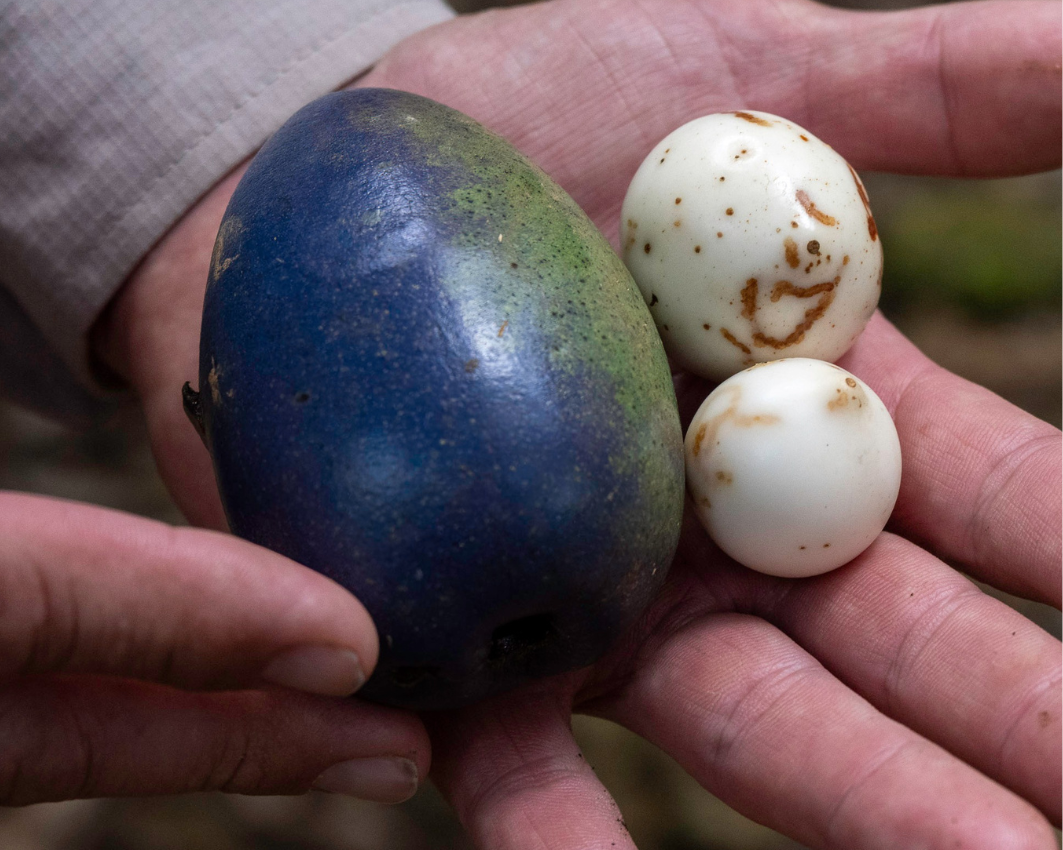
Cassowary Plum (Cerbera floribunda).
Without Cassowaries, these plants would struggle to spread. Over time, the very composition of the rainforest would change, potentially leading to local extinctions and a loss of biodiversity in one of the oldest ecosystems on Earth.
A fragile landscape under pressure
From a conservation perspective, the greatest gaps are clear: scale, coordination, and long-term commitment.
Despite global recognition of its value, the Daintree continues to face ongoing threats, most critically habitat loss and fragmentation. Development continues to break up critical habitat, even small-scale clearing disrupts wildlife corridors, and isolated rainforest patches are no longer viable ecosystems.
Cassowaries need large, connected landscapes to survive. When these connections are severed, populations become increasingly vulnerable. The roots of this issue stretch back decades. In 1982, the Queensland Government approved a rural residential subdivision of 1,136 freehold lots in the Daintree Lowland Rainforest, embedding fragmentation into the landscape and excluding two-thirds of the lowland rainforest from the protection later granted to the Daintree National Park and Wet Tropics World Heritage Area. Today, around 150 undeveloped properties remain at risk.
Conservation in action
There is, however, a solution that works: the buyback and protection of freehold land.
Gondwana Rainforest Trust has purchased and protected 36 rainforest properties in just six years, on average, one every eight weeks! This effort has been powered not by governments, but by thousands of individuals around the world who chose to act. Each property secured removes the threat of development and protects vital Cassowary habitat. Where land has been previously cleared, restoration is underway. Natural regeneration is encouraged by removing invasive weeds, and strategic planting is used where forest has been lost. Over 6,000 trees have already been planted across our recent planting rounds.
These efforts rebuild the corridors Cassowaries depend on, reconnecting fragmented landscapes into functioning ecosystems.
Emerging threats
Beyond habitat loss, Cassowaries face daily dangers:
- Vehicle strikes. Several birds have been killed on Daintree roads in the past year, and road kills are the leading cause of adult Cassowary deaths.
- Domestic dogs. Dogs can hunt, kill, or displace Cassowaries from their essential habitat.
- Human expansion. Growing settlement brings traffic, invasive plants, and ongoing disturbance.
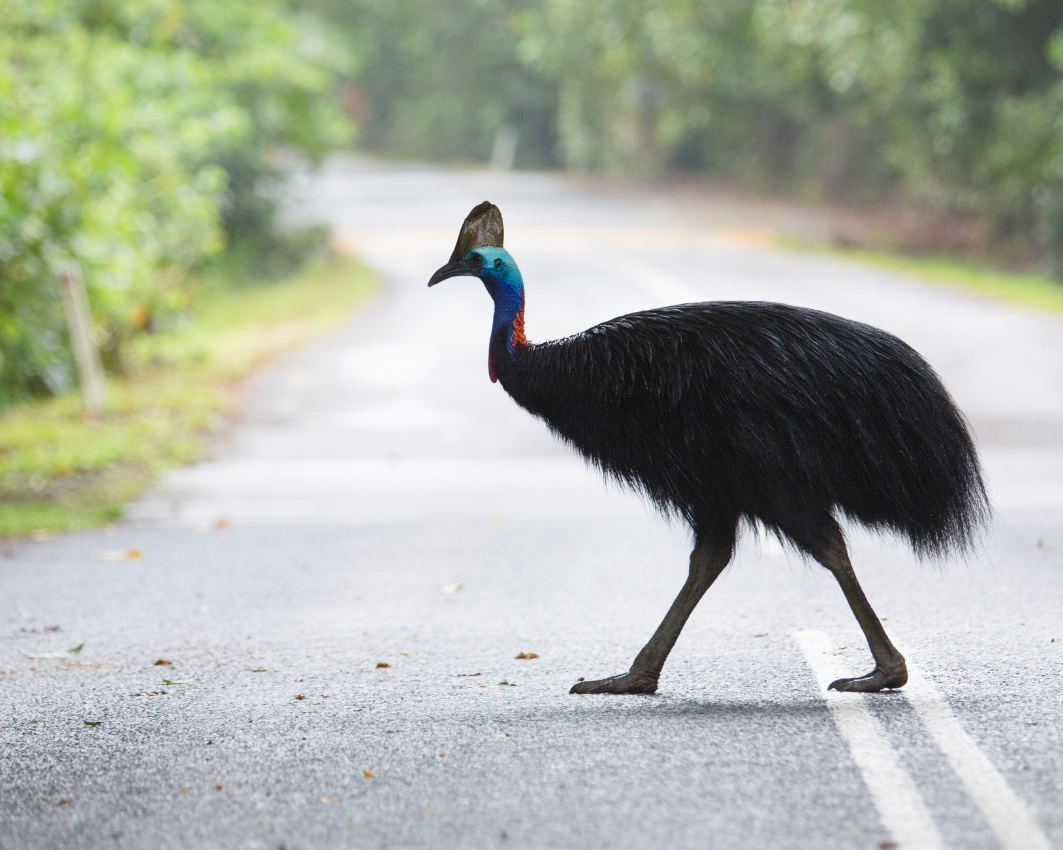
Even when dogs are not physically present, their scent-marking can alter Cassowary behaviour, pushing birds away from key feeding or nesting areas.
A critical gap in government support
Despite the Daintree's lowland tropical rainforest being listed as an endangered ecological community under the Environment Protection and Biodiversity Conservation Act 1999, protection remains incomplete. While all levels of government have supported land buybacks in the past, there has been no significant funding contribution for many years. This leaves a critical gap, one currently being filled by community-driven conservation.
How many Cassowaries are left?
Current estimates suggest around 4,000 Cassowaries remain across the Wet Tropics, spanning adults, juveniles and chicks. Populations also exist in Cape York, though data there remains limited. The long-term outlook for Cassowaries depends on one key factor: habitat connectivity.
Restoring the future
After protecting what remains, the next most powerful action is restoration. The rainforest has an extraordinary ability to recover, but it often needs a helping hand. Removing invasive species, replanting degraded areas, and reconnecting isolated patches can transform landscapes within years.
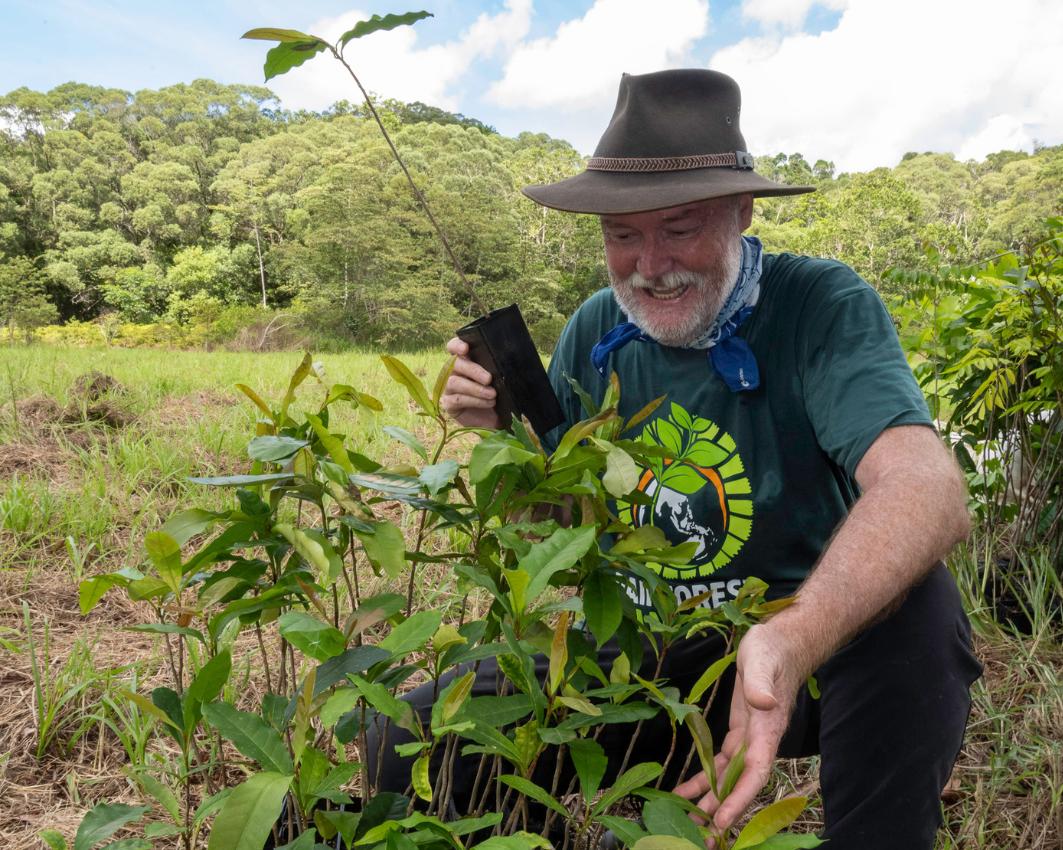
Founder, Kelvin tree planting in the Daintree Rainforest.
Community involvement is key. Across the Daintree lowlands, residents, landowners and conservation groups are already playing an active role in restoring habitat. You can plant a tree for Cassowary habitat in the Daintree rainforest here.
The next step: protecting what's left
With freehold properties still at risk, the future of the Daintree and its Cassowaries hangs in the balance. Right now, efforts are underway to secure and restore a 12-hectare property at Lot 2, Old Forest Creek Road, a critical piece of habitat in the lowland rainforest.
This is how conservation in the Daintree succeeds: not through promises, but through action. Not someday, but now.
A shared responsibility
If governments will not act at the scale required, people are stepping in. Tens of thousands have already contributed to saving the Daintree, protecting land, restoring rainforest, and ensuring that future generations will still have the chance to lock eyes with a Cassowary in the wild.