Habitat: Tropical and subtropical rainforest, wet forest edges and mature fruiting canopy
Distribution: Eastern Australia, from Cape York/Wet Tropics down to northern and eastern NSW, plus New Guinea
Lifespan: Exact wild lifespan is not well documented
Conservation status: Listed as Least Concern on the IUCN Red List, listed as Vulnerable in NSW
Main threats: Rainforest clearing, habitat loss and fragmentation
In the rainforest canopy, where sunlight filters through layers of green, one of Australia’s most colourful birds moves among the fruiting trees. With a deep purple chest, soft green wings, a golden-yellow belly and flashes of bright colour, the Wompoo Fruit-Dove (Ptilinopus magnificus) looks almost too vivid to be real!
A bird named for their call
The Wompoo Fruit-Dove is named after its distinctive call, a deep, resonant “wom-pooo” that carries through the forest. Often heard before they are seen, this dove spends much of its life high in the canopy, feeding on native rainforest fruits.
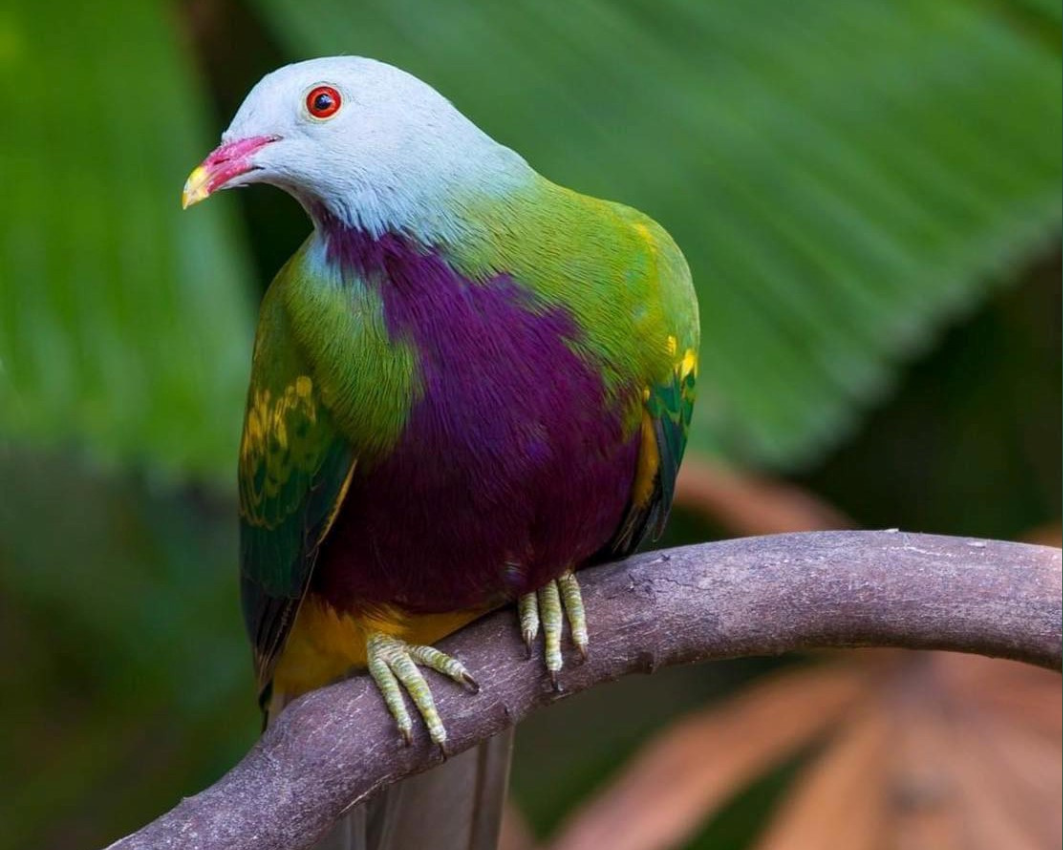
The Wompoo Fruit-Dove (Ptilinopus magnificus). Image: Steven Nowakowski
They are one of Australia’s largest fruit-doves, growing to around 35 to 45 centimetres in length. Their size is part of what makes them so ecologically important. With a relatively large gape, the Wompoo Fruit-Dove can swallow fruits and seeds that smaller birds cannot manage. This means they play a special role in moving larger rainforest seeds across the forest.
Where they live
The Wompoo Fruit-Dove is found in rainforests and wet forest habitats of eastern Australia, from north Queensland down into New South Wales, as well as in New Guinea. In places like the Daintree Rainforest, the Wompoo Fruit-Dove is part of a much larger web of life. Fruiting trees feed the dove, the dove spreads the seeds, and the forest continues to grow.
A rainforest gardener
Rainforests rely on animals to move seeds. Many rainforest plants produce fleshy fruits designed to be eaten by birds, bats and other wildlife. As these animals travel, they carry seeds away from the parent tree and deposit them elsewhere, helping the forest renew itself.
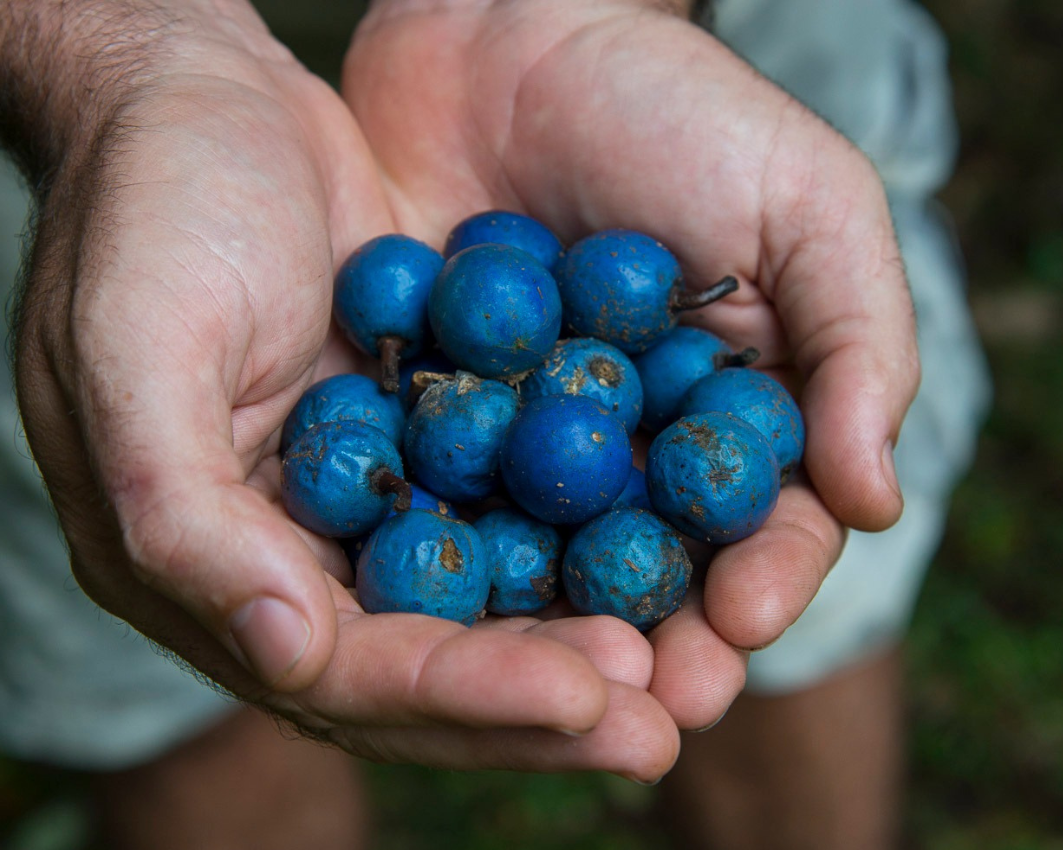
Fruits of the blue quandong (Elaeocarpus angustifolius). Image Steven Nowakowski
The Wompoo Fruit-Dove is especially important because they can disperse seeds from larger-fruited plants. Without birds like the Wompoo, some trees may struggle to spread, especially in fragmented landscapes.
Why habitat protection matters
The main threat to rainforest birds like the Wompoo Fruit-Dove is habitat loss and fragmentation. When rainforests are cleared or fragmented, birds lose feeding areas, nesting sites, and safe pathways through the landscape.
This is why protecting intact rainforest is so important. Every protected property helps keep habitat connected, giving species like the Wompoo Fruit-Dove the space they need to feed, breed and move through the canopy.
A symbol of rainforest abundance
The Wompoo Fruit-Dove reminds us that rainforest conservation is not only about protecting trees. It is about protecting relationships.
It is the relationship between fruiting trees and the birds that spread their seeds. Between the canopy and the forest floor. Between old-growth habitat and future regeneration. Between the species, we can see the ecological processes quietly unfolding around them. To hear the call of the Wompoo Fruit-Dove echo through the rainforest is to hear a healthy forest at work.
By protecting rainforest habitat, we help protect the Wompoo Fruit-Dove and the countless seeds they carry into the future.