Habitat: Upland and lowland tropical rainforest and adjacent woodlands
Distribution: North Queensland from Mount Spec, near Townsville, to the Iron Range in the Wet Tropics Region and lowland New Guinea
Lifespan: 5 years
Conservation status: Listed as Least Concern in Queensland (Nature Conservation Act 1992)
Main threats: Habitat loss and forest fragmentation caused by human activities
About
The striped possum (Dactylopsila trivirgata) is unmistakable due to their bold, skunk-like appearance, featuring striking black and white stripes along their body and a white-tipped tail. Their toes are elongated and slightly covered with fur.
In adults, transitions between black and white markings are more gradual, and the white areas tend to turn grey with age. This possum's distinctive bushy tail is much longer than their body, typically darker on top, with the tip being either black or white.
Other than their markings, striped possums possess several distinctive features: they have an elongated tongue and fourth finger, long incisors, and a rounded braincase.
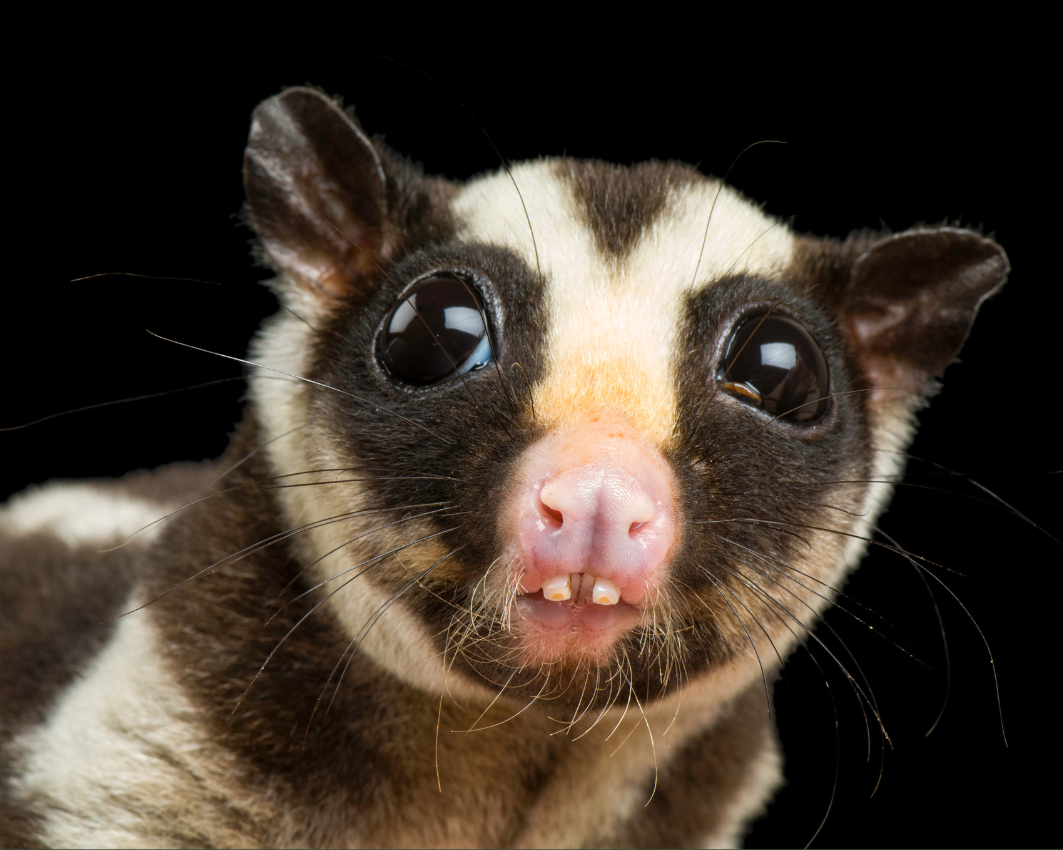
Striped possum (Dactylopsila trivirgata). Image: Joel Sartore
They also give off a strong, sweet, musty odour, but the reason for this is unknown.
Fun fact: Next time you hear croaking frogs in the rainforest, keep your eyes peeled for a striped possum. The mammals’ distress call is actually a series of 5-6 loud “croaks”. They also growl!
Behaviours
The striped possum is a shy, solitary creature that ventures out at night to feed on flowers, fruits, beetle larvae, and pollen. They are most easily located by the sounds they make while chewing and drinking in the forest. During the day, they rest on a bed of leaves inside a tree hollow or a clump of ferns. In areas with coconut palms, it is common to hear a commotion as they use their chisel-like teeth to gnaw through leaves and bark in search of insects, causing shreds of leaves and trunk to fall to the ground. They also bite into dead branches or fallen logs to find borers or grubs.
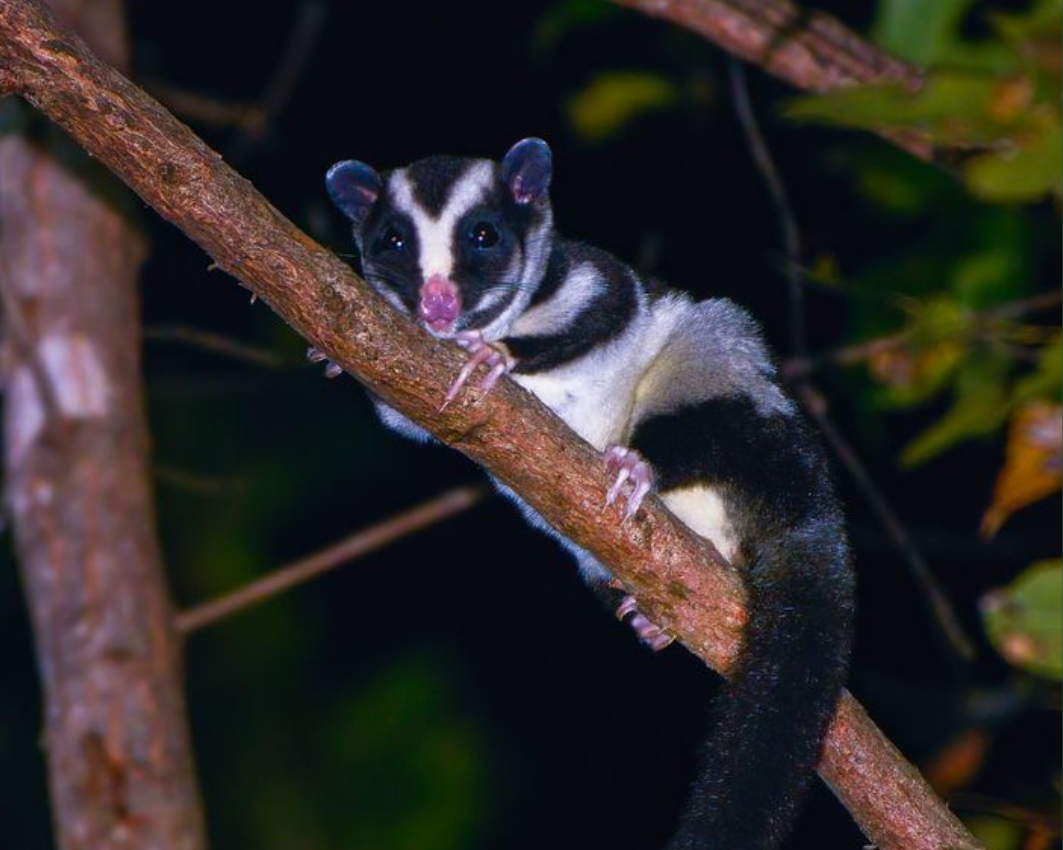
Striped possum (Dactylopsila trivirgata). Image: Steven Nowakowski
Little is known about the mating system, as they can be challenging to observe due to their shy nature and fast movements; however, it appears that there is intense rivalry among the males for breeding females.
They chase each other and, when in close contact, make threatening, raucous vocalisations. They mate in the dry season (between February and August in Australia, peaking in June to July). In contrast to New Guinea, the period ranges from January to as late as October.
The females have well-developed pouches and bear one to two young, almost always two. There is no detailed information available about the development of the young or the age of sexual maturity. Once they are weaned, females continue to carry their offspring with them on their backs until they reach maturity.
A connected rainforest is essential for healthy ecosystems. You can help protect vital habitat in the Daintree here.