Distribution: Along the east coast of Australia from Queensland to Victoria, often near creeks, dams, rivers, lakes, wetlands and other waterways
Scientific name: Pseudechis porphyriacus
Life span: Up to 12 years
Length: 1.5–2.5 metres, with males growing slightly larger than females
- Breeding season: July to November
Conservation status: Least Concern under the International Union for Conservation of Nature (IUCN)
About
The Red-bellied Black Snake (Pseudechis porphyriacus) is one of Australia’s most recognisable and ecologically important venomous snakes. Known for its glossy black upper body and striking red to pink underside, this species plays a key role as a predator in eastern Australian ecosystems and is commonly encountered near water.
This species is endemic to eastern Australia, occurring from south-eastern Queensland, through New South Wales, the Australian Capital Territory, and into eastern Victoria. In Queensland, Red-bellied Black Snakes are most often found in coastal and subcoastal regions, including the edges of the Wet Tropics.
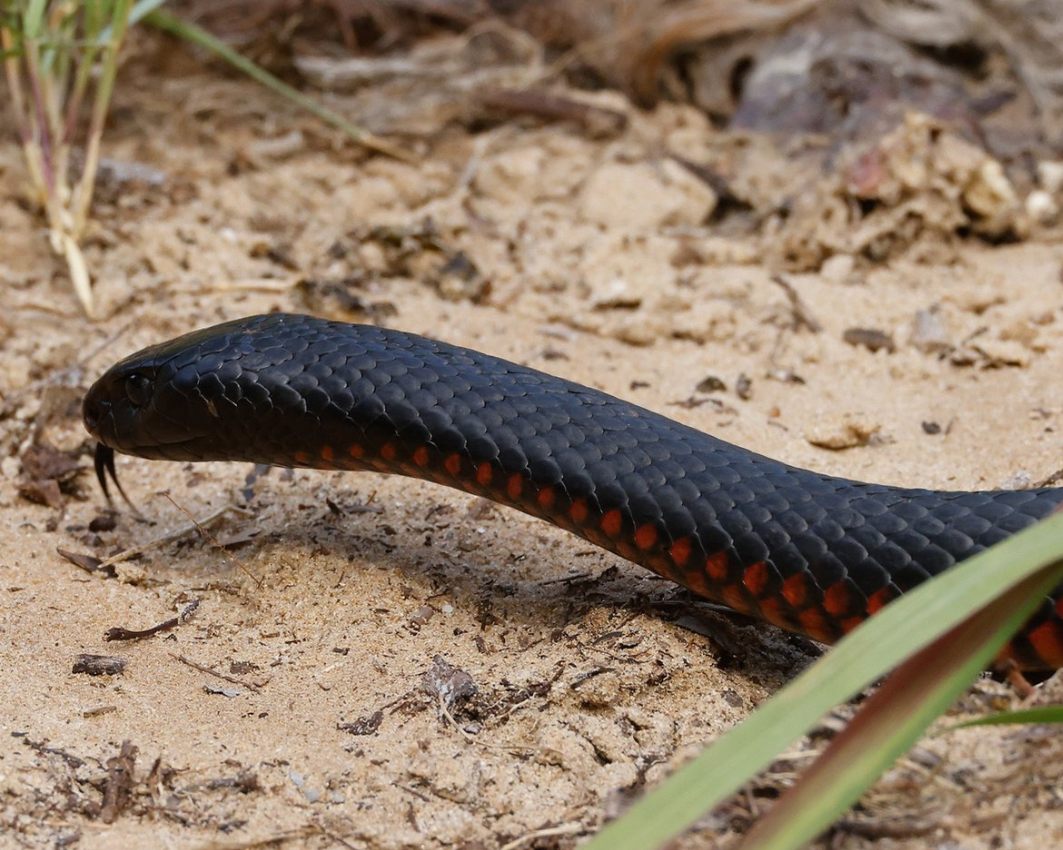
Red-bellied Black Snake (Pseudechis porphyriacus). Image: Rivendel
Behaviour
Red-bellied Black Snakes are diurnal and most active during warmer months. They are strong swimmers and are frequently observed moving through water in pursuit of prey. Despite their reputation, they are generally shy and non-aggressive. When threatened, individuals may flatten their necks, raise their forebody, and strike defensively if escape is not possible. Bites typically occur when snakes are harassed, stepped on, or handled.
Diet
This species is a generalist predator with a diet that includes: frogs and tadpoles, fish, reptiles (including other snakes), and small mammals. Their fondness for frogs means they are often abundant in healthy wetland systems, making them an important indicator of ecosystem function.
The Red-bellied Black Snake is venomous, but its venom is moderate in toxicity compared to many other Australian elapids. Severe systemic effects are uncommon, and fatalities are extremely rare with prompt medical treatment. Nonetheless, all snake bites should be treated as serious medical emergencies.
Breeding
Unlike many snakes, Red-bellied Black Snakes are viviparous, meaning females give birth to live young rather than laying eggs. Mating occurs in spring, and females typically give birth to 5–18 young in late summer. These offspring can remain in the sac for up to two days after birth, and emerge from the sac at an average length of 23cm. Males reach sexual maturity at 19 months, while females are mature at 31 months.
Similar to other snakes, they continue to grow throughout their life and shed their skin periodically to allow for growth.
Communication and Perception
Red-bellied black snakes have two main uses for communication: mating and combat.
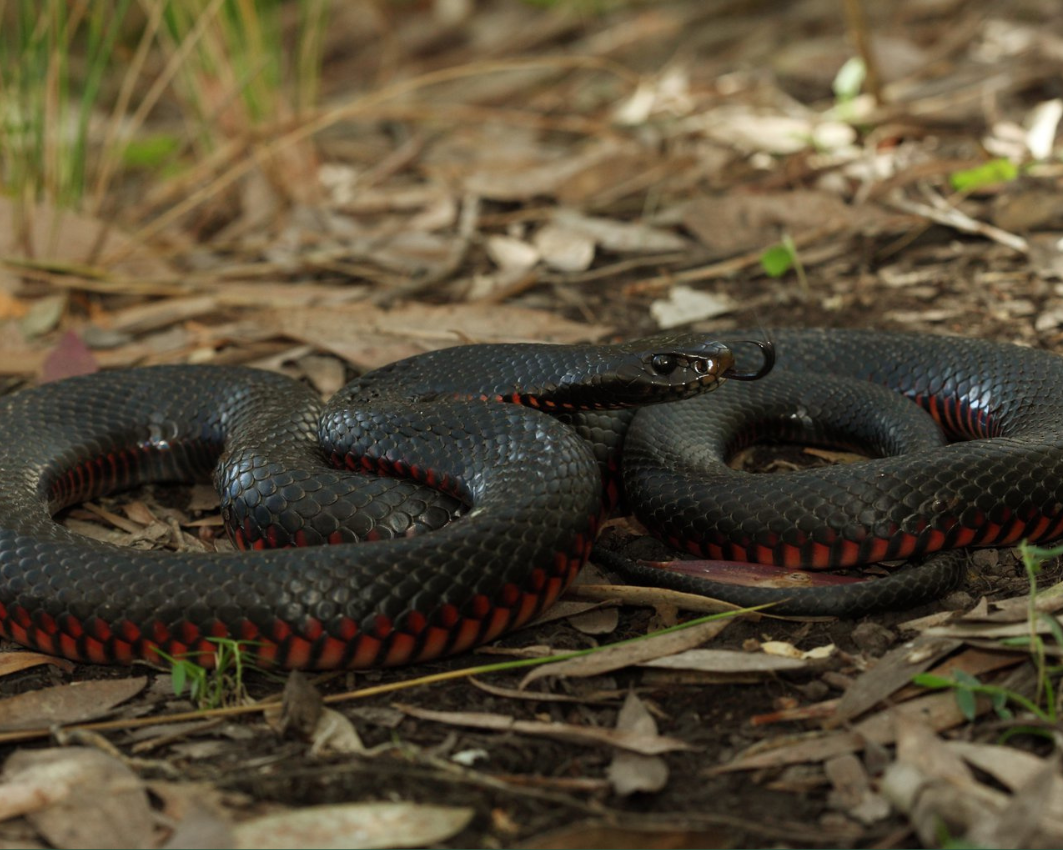
Image: Stephen Mahony
When the males search for a female, they may encounter other males that could be chasing the same female. Here, the two will engage in combat. Combat is conducted by the males elongating and spreading their necks, rearing up their forebodies and then intertwining themselves by using a twisting motion to interlock their necks. Combat continues from this point by both males remaining outstretched while pushing against one another in the attempt to be chosen as the winner by the female. Combat can range in time from only a few minutes to half an hour.
Mating involves a specific form of tactile communication with this species. One male will run its body along that of the female and may even begin to hiss or bite at the female if the male becomes excited. The female will show acceptance of mating by elongating her body and allowing the male to then align his body with hers.
Although venomous, they play a valuable ecological role in regulating frog and small vertebrate populations and are an integral component of the Daintree’s complex trophic interactions. Habitat loss, wetland drainage, and increased road traffic along rainforest–farmland interfaces pose the greatest local threats, rather than direct persecution within intact rainforest.
A connected rainforest is essential for healthy ecosystems. You can help protect vital habitat in the Daintree here.