Distribution: Northern and eastern Australia and southern and south-eastern New Guinea
Habitat: Wet tropical and subtropical forests, woodlands and shrublands
Scientific name: Isoodon macrourus
Size: Up to 47 cm
Life span: 2 to 3 years (in the wild)
Conservation status: Listed as Least Concern under the International Union for Conservation of Nature (IUCN)
The Northern Brown Bandicoot (Isoodon macrourus) is a small marsupial native to northern and eastern Australia. Their range stretches from the subtropical regions of New South Wales up through Queensland, including the tropical rainforests and woodland mosaics of Tropical North Queensland.
About
Northern Brown Bandicoots are nocturnal and largely solitary, spending the day hidden in simple ground nests made from leaf litter or shallow depressions.
With their pointed snouts, rounded ears, and coarse brindle brown fur, they have evolved to forage silently through leaf litter and soft soil. Adults can reach up to around 400–470 mm in body length with tails up to around 200 mm, and weigh roughly 1–2 kg, making them the largest of Australia’s bandicoot species!
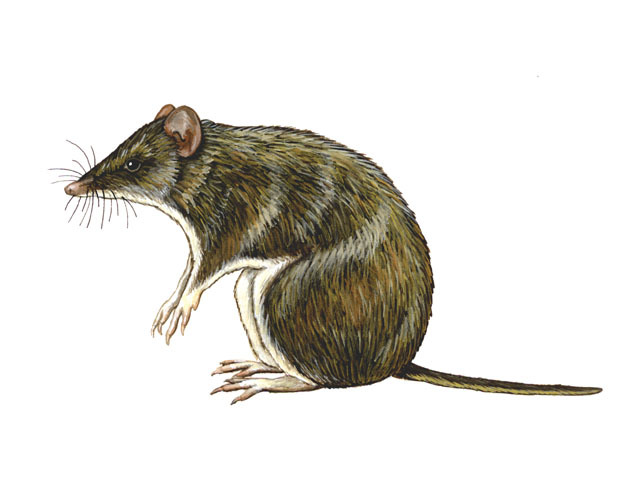
Northern Brown Bandicoot (Isoodon macrourus). Image: Michigan Science Art
Diet
These bandicoots are omnivorous generalists, meaning they eat both animal and plant matter. Their diets are dominated by soil-dwelling insects and invertebrates, such as beetles, worms and larvae, but they will also eat roots, seeds, fruit, fungi and sometimes small vertebrates.
Their constant digging and foraging help turn and aerate soil, aiding nutrient cycling and seed germination in the forest floor — a small but important ecological service in places like the Daintree.
Fun fact: The name bandicoot originates from the Telugu term 'pandi-kokku', meaning 'pig-rat'.
Reproduction
One of the most remarkable facts about the Northern Brown Bandicoot is its incredibly short gestation period—around 12–13 days, the shortest of any mammal! Females can produce multiple litters each year, with young leaving the pouch around 55–60 days and foraging independently soon after.
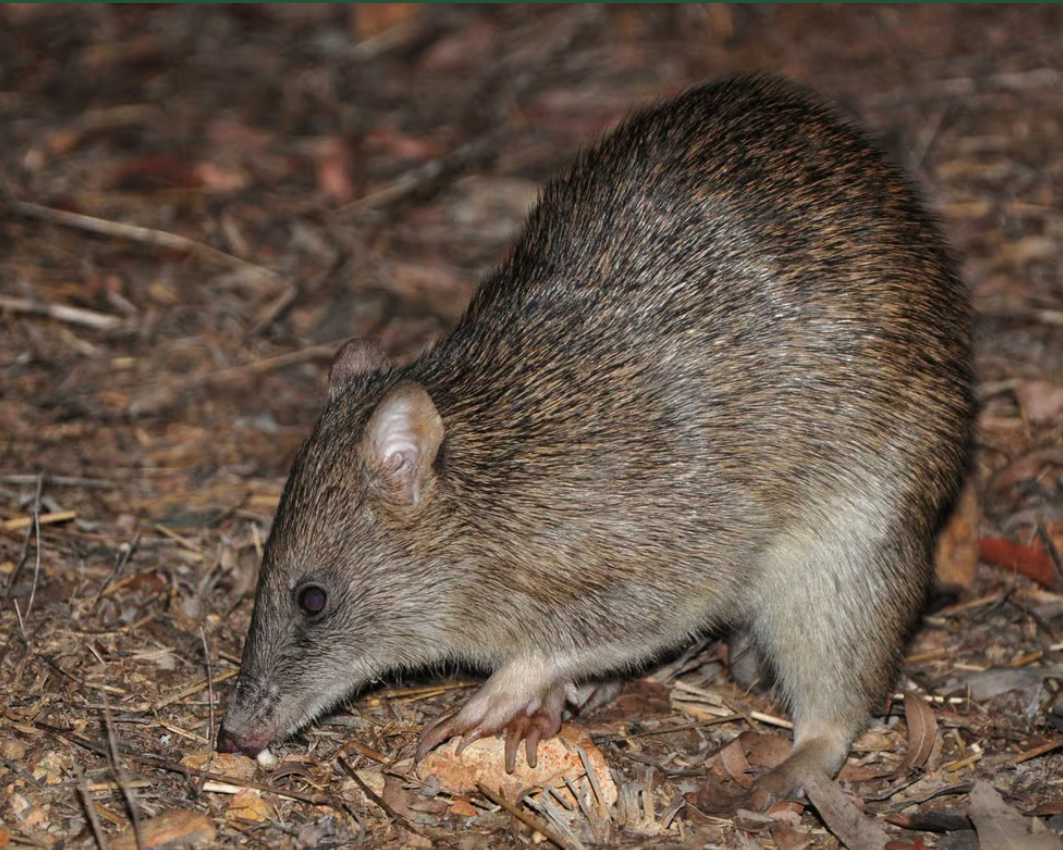
Image: Annette Ruzicka
Threats and Conservation
Although the Northern Brown Bandicoot is currently listed as Least Concern on the IUCN Red List, populations have declined in parts of Queensland and northern NSW due to urbanisation, habitat loss, feral predators (foxes, cats) and vehicle strikes.
In the Daintree and similar tropical landscapes, habitat protection, predator control, and maintaining ground cover are vital to keeping bandicoot populations healthy and thriving.
A connected rainforest is essential for healthy ecosystems. You can help protect vital habitat in the Daintree here.