Distribution: Endemic to Sulawesi, Papua New Guinea, the Maluku Islands, and Queensland, Australia, where it remains most prevalent
Scientific name: Pandercetes gracilis
Size: About 1.5 cm with an approximate leg span of up to 5 cm
Conservation status: Does not currently have a listed conservation status on the IUCN Red List
About
Hidden in plain sight among the mosses and lichens of tropical forests, the lichen huntsman spider (Pandercetes gracilis) is one of Australia’s most remarkable examples of camouflage. In the ancient Daintree Rainforest, this spider blends seamlessly into lichen-covered bark, epiphyte-laden branches, and mottled rainforest surfaces, so effectively that it is often overlooked even by experienced observers.
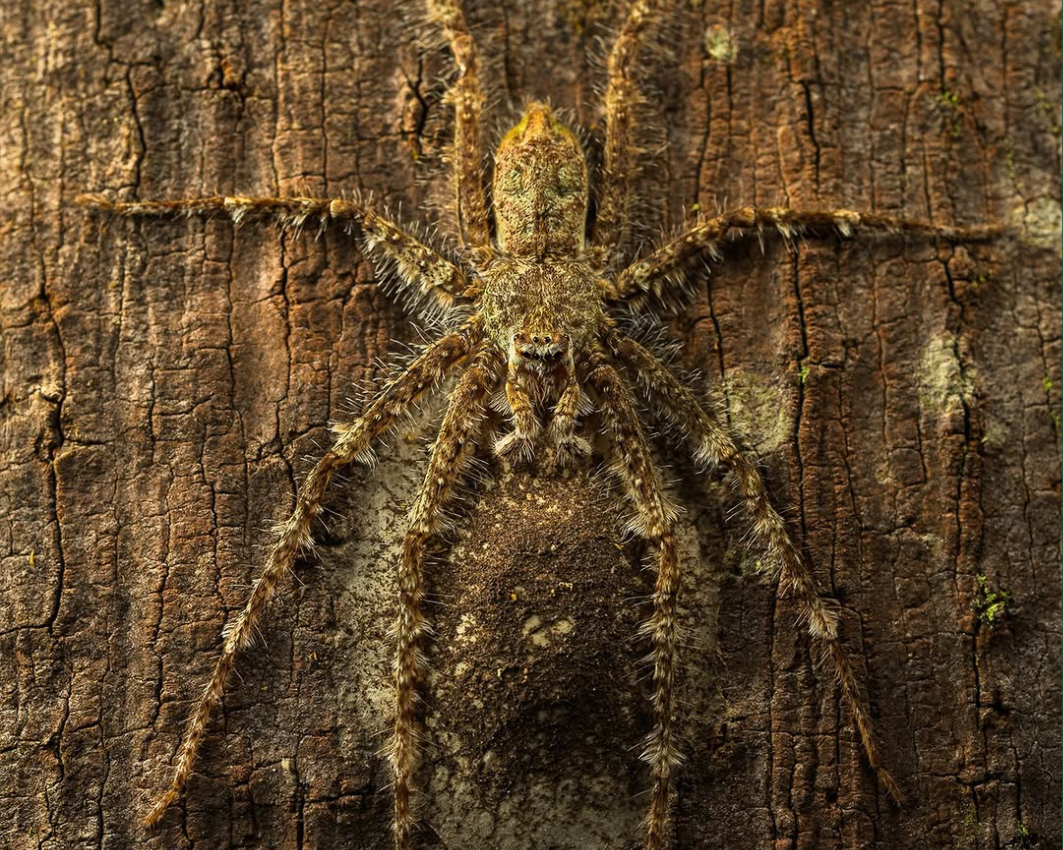
Lichen huntsman spider (Pandercetes gracilis) defending her egg sac. Image: Emanuele Biggi
Taxonomy
Pandercetes gracilis belongs to the family Sparassidae, commonly known as huntsman spiders. Unlike web-building spiders, huntsmen are active hunters. This species is relatively small and slender compared with many other huntsman spiders and is distinguished by its flattened body and elongated legs. Its most striking feature is its lichen-like colouration, a complex mosaic of greys, greens, whites, and browns that closely mimics the colouration of crustose and foliose lichens growing on rainforest trees.
This adaptive colour pattern is not decorative; it is a finely tuned evolutionary strategy that allows the spider to remain motionless on tree trunks and branches, virtually invisible to both predators and prey.
Distribution
The lichen huntsman spider occurs across northern and eastern Australia, particularly in tropical and subtropical forests. Within the Daintree, it is most commonly associated with humid lowland and upland rainforest, where constant moisture promotes abundant lichen growth on bark, rocks, and fallen timber.
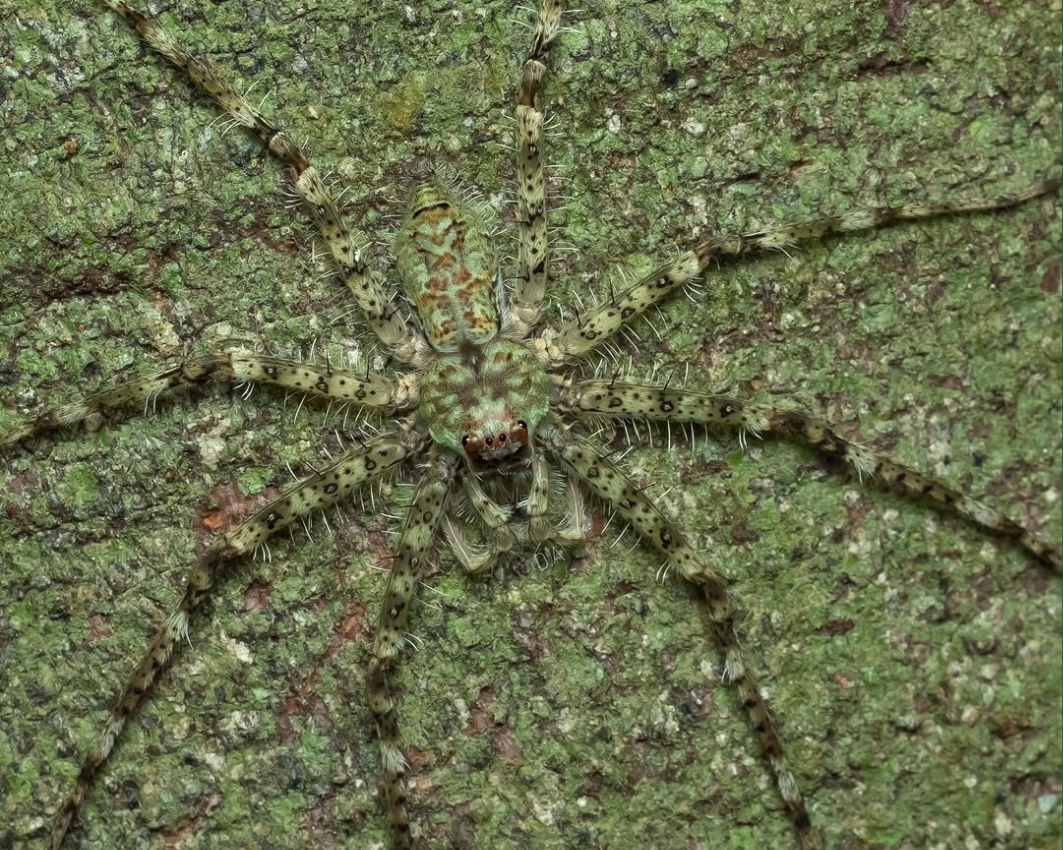
Lichen huntsman spider (Pandercetes gracilis) Image: Derek Ang
The Daintree’s stable climate, characterised by high humidity, warm temperatures, and dense vegetation, creates ideal conditions for lichens. Here, Pandercetes gracilis is typically found resting during the day on tree trunks, buttress roots, and large branches, becoming active at night.
Behaviour
Like all huntsman spiders, Pandercetes gracilis does not use a capture web. Instead, it relies on ambush predation, waiting motionless until an insect passes within striking distance. By regulating insect populations, lichen huntsman spiders play a quiet but important role in maintaining ecological balance within rainforest ecosystems.
A connected rainforest is essential for healthy ecosystems. You can help protect vital habitat in the Daintree here.