Habitat: Grows as an understory tree in well-developed lowland and upland rainforests
Distribution: Endemic to North East Queensland, restricted to the area between Cape Tribulation and Cardwell
Conservation status: Not listed, but many areas where it occurs are protected
Scientific name: Lepidozamia hopei
Common names: Hope's Cycad
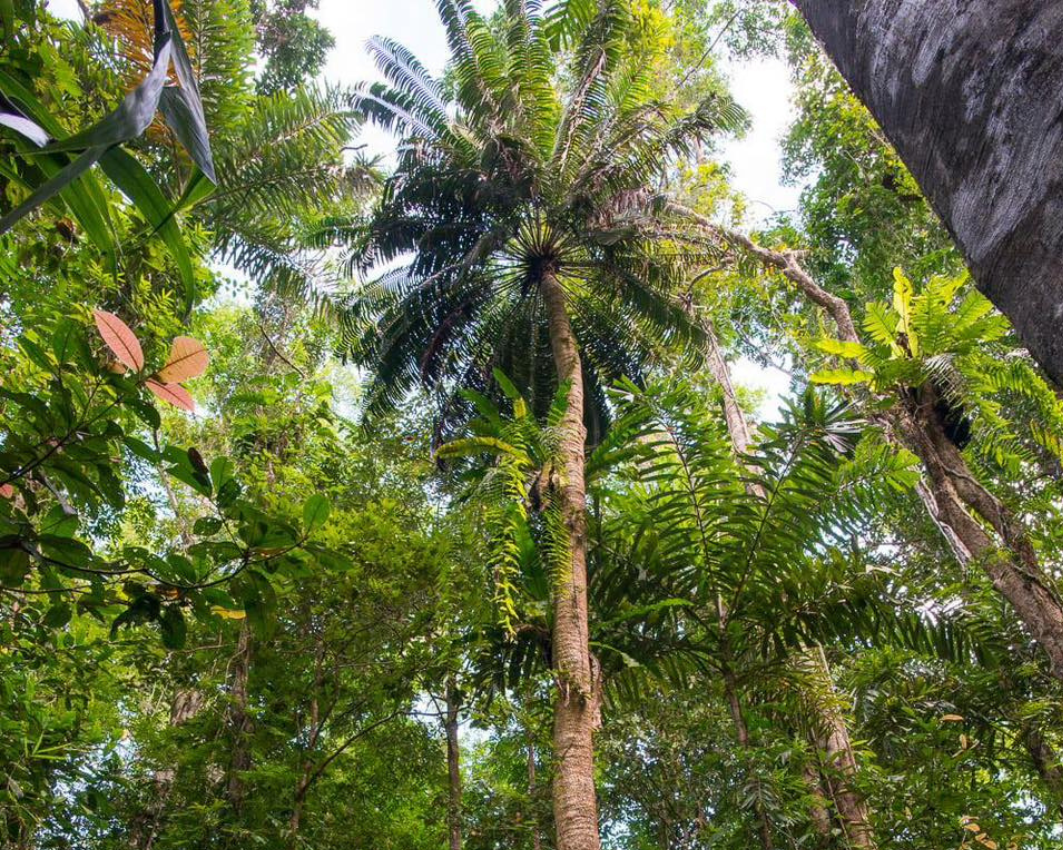
Hope's cycad on one of our protected properties.
About
Cycads are sometimes called “living fossils” because their overall morphology hasn’t changed much in tens of millions of years.
Hope's cycad (Lepidozamia hopei) is in the Zamiaceae family. It is the largest Cycad species, with some specimens reaching heights of 18 metres. Lepidozamia hopei is a slow-growing cycad, even by cycad standards.
-
Seedling stage:
Around 5–10 cm of growth per year in height (mostly leaf growth, not trunk). -
Juvenile / pre-trunking stage:
Still slow — may take 10–20 years before a visible trunk begins to form. -
Trunking adults:
About 1–3 cm of trunk height per year under natural conditions. In ideal horticultural conditions (fertile soil, consistent moisture, warmth), up to 3–5 cm per year is possible.
Time to Reach Large Sizes
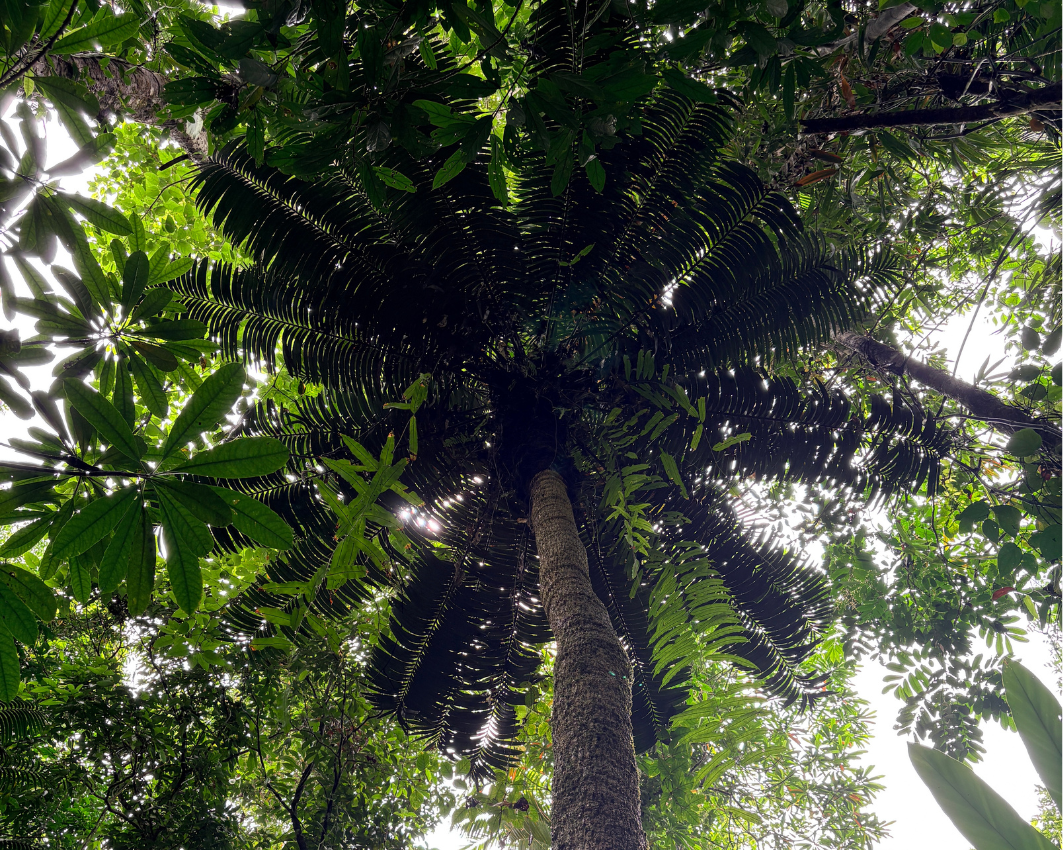
Because of this rate, individuals reaching 10+ metres are typically hundreds of years old, and the tallest recorded specimens (18 metres) may be 1,000 to 2,000 years old. Its expansive crown can support up to 100 pinnate leaves with wide, shiny leaflets. Found naturally in tropical rainforests from sea level to 1,000 metres.
Fruit and Seedlings
Lepidozamia hopei is dioecious, meaning male and female reproductive structures occur on separate plants.
Male Hope Cycad plants produce slender, elongated cones (strobili) at the apex of the trunk. These cones are typically cylindrical, measuring around 30–70 cm in length, and are often brown to reddish-brown in colour. Their primary role is to release pollen, which is carried mainly by insects — particularly beetles— to female cones. Male plants tend to cone relatively frequently, sometimes every one to two years.
Female plants produce much larger, barrel-shaped cones, also positioned at the apex of the trunk. These cones can reach 50–80 cm in length and contain large seeds surrounded by a fleshy outer layer. In contrast to males, female plants reproduce far less often, typically producing cones only once every five to ten years.
The seeds and the fleshy outer coating (sarcotesta) of Lepidozamia hopei, like all cycads, are toxic. Cassowaries, however, have evolved to tolerate many toxic rainforest fruits. They can swallow Lepidozamia seeds whole, and the toxins don’t harm them because the hard seed coat remains intact and passes through their gut without being digested.
Pollination and reproduction
Lepidozamia hopei has a very slow and infrequent reproductive cycle, typical of large Cycads. Males begin producing cones at around 20–30 years of age, and females at around 30–50 years of age.
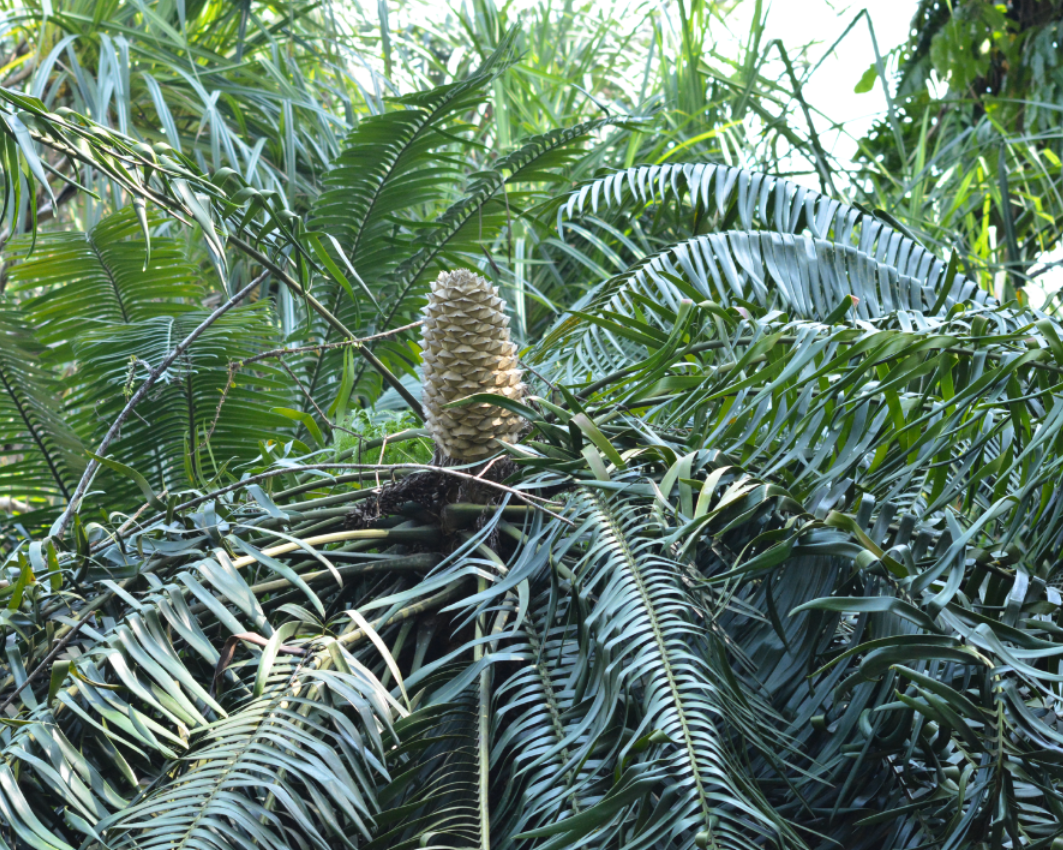
The cone of Hope's cycad (Lepidozamia hopei).
Male cones are usually produced annually or every 1–2 years, but the size and quality can vary depending on environmental conditions, and female cones are produced much less frequently, often every 5–10 years, sometimes longer. Each cone contains large seeds.
A connected rainforest is essential for healthy ecosystems. You can help protect vital habitat in the Daintree here.