Habitat: Lowland rainforest in the Wet Tropics of north-east Queensland, including areas with seasonal (wet–dry) rainfall patterns
Distribution: Endemic to Northeast Queensland, Australia
Conservation status: Listed as Endangered under the Nature Conservation Act 1992 of Queensland
Scientific name: Rhodomyrtus effusa Guymer
Common names: Daintree Myrtle and Guymer's Myrtle
About
The Daintree Myrtle (Rhodomyrtus effusa Guymer) is a versatile plant that can grow as a shrub or small tree, and occasionally, in dense or disturbed vegetation, it can appear scrambling or vine-like as it grows through surrounding plants. The leaves are 8-18 cm long and 4-8.5 cm wide, with the undersides covered in long brown hairs. Intramarginal veins are well-developed, with sparse oil dots, and short petioles that are 1-3 mm long. Twigs and petioles are densely covered in erect, tortuous, rusty brown hairs. The flowers are borne singly on stalks, with calyx lobes and petals that are densely hairy on both surfaces. The ovary is pubescent at the apex, with around 20-24 ovules per locule, and a greenish, capitate stigma.
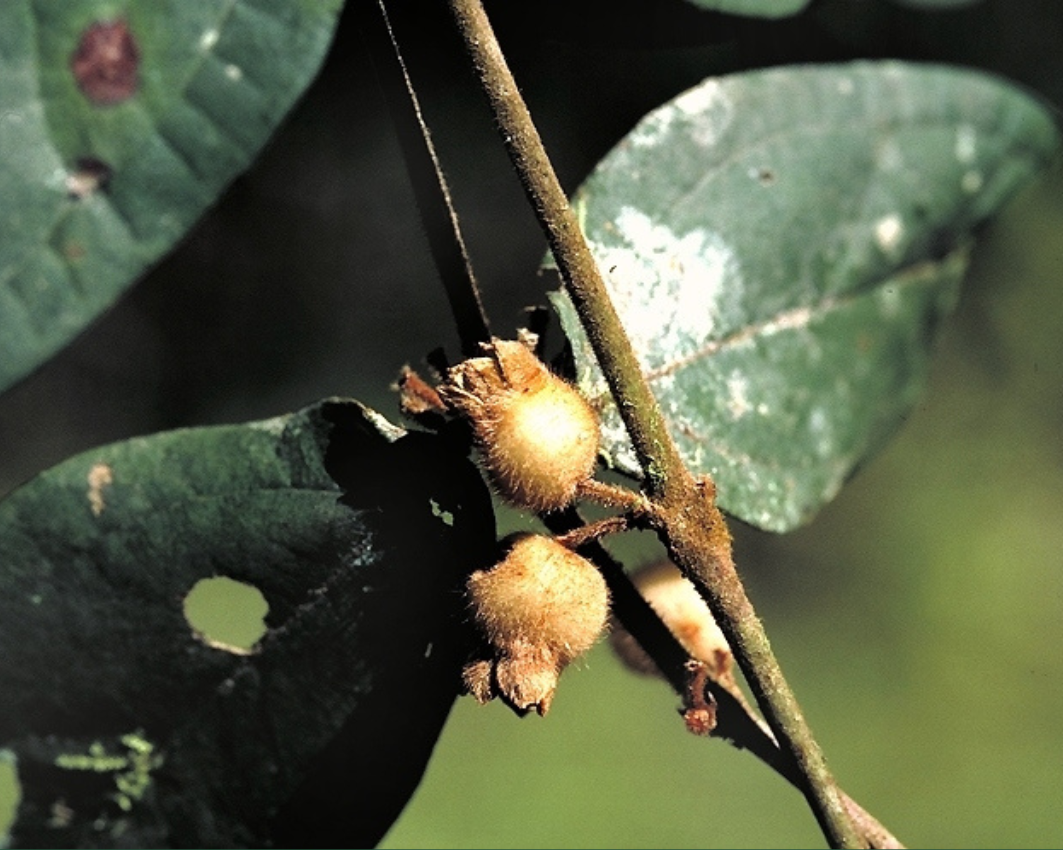
Daintree Myrtle (Rhodomyrtus effusa Guymer). Image: CSIRO
The fruits of Rhodomyrtus effusa are globular, 5-10 mm in diameter, and clothed in long, prostrate, brown hairs, with persistent calyx lobes at the apex. The seeds are flattened, measuring approximately 1.5 mm in diameter, with a U-shaped embryo and small cotyledons no wider than the radicle. Seedlings have ovate cotyledons, 3-4 mm long and 2-3 mm wide, with hairy stems that are four-angled. The first pair of true leaves is three-veined with sparsely hairy margins. By the tenth leaf stage, the leaf blades are clothed in pale brown hairs, with few and sparse lateral veins. Seed germination takes 36 to 55 days.
Fun Fact: Despite its poor climbing mechanism, it can occasionally resemble a vine, making it a bit of an oddity in the plant world!
Distribution
The Daintree Myrtle is well-adapted to environments with distinct wet and dry seasons, characteristic of tropical regions. This plant is typically found in lowland rainforests that experience seasonal variations in rainfall.
This species thrives at altitudes ranging from near sea level to 200 meters above sea level. It predominantly grows in disturbed or previously disturbed areas of lowland rainforest. This habitat preference indicates its resilience and adaptability to environments that have undergone some form of human or natural disturbance.
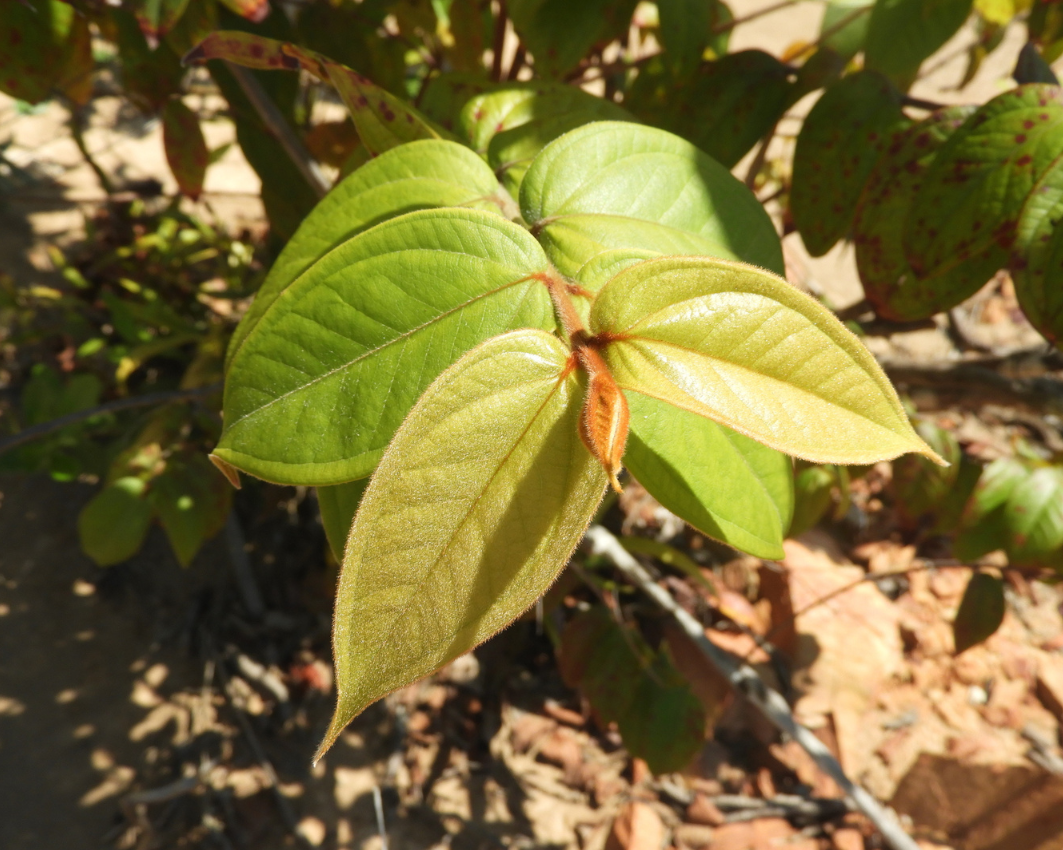
Image: Penny Taylor
Growth and threats
The Daintree myrtle is a resilient plant that can grow into a small tree, but it usually flowers and fruits as a shrub. It is commonly found in disturbed or previously disturbed areas of lowland rainforest, indicating its adaptability to environments that have undergone some form of human or natural disturbance.
Despite its resilience, Rhodomyrtus effusa faces threats primarily from habitat destruction due to land clearing for agriculture and urban development. Additionally, climate change poses a potential threat by altering the seasonal rainfall patterns that this species relies on for growth and reproduction. Conservation efforts are essential to ensure the survival of this unique plant species in its natural habitat.
A connected rainforest is essential for healthy ecosystems. You can help protect vital habitat in the Daintree here.