Habitat: Tropical lowland rainforests of QLD
Distribution: The Daintree region, which includes areas between the Daintree River and Cape Tribulation
Conservation status: Near Threatened under Queensland’s Nature Conservation Act 1992
Scientific name: Randia audasii
Common names: Daintree gardenia
The Daintree Gardenia is a rare and beautiful species found only in the lowland rainforests of Far North Queensland. This tree is part of the ancient Daintree ecosystem — the oldest continuously surviving tropical rainforest on Earth, and contributes to its rich biodiversity.
Unlike most gardenias, which are shrubs, the Daintree gardenia is a true rainforest tree growing up to 20 metres and features dark, glossy green leaves. From June to September, it produces small, yellow-green flowers, followed by hairy, green drupes that ripen into yellow or orange fruit.
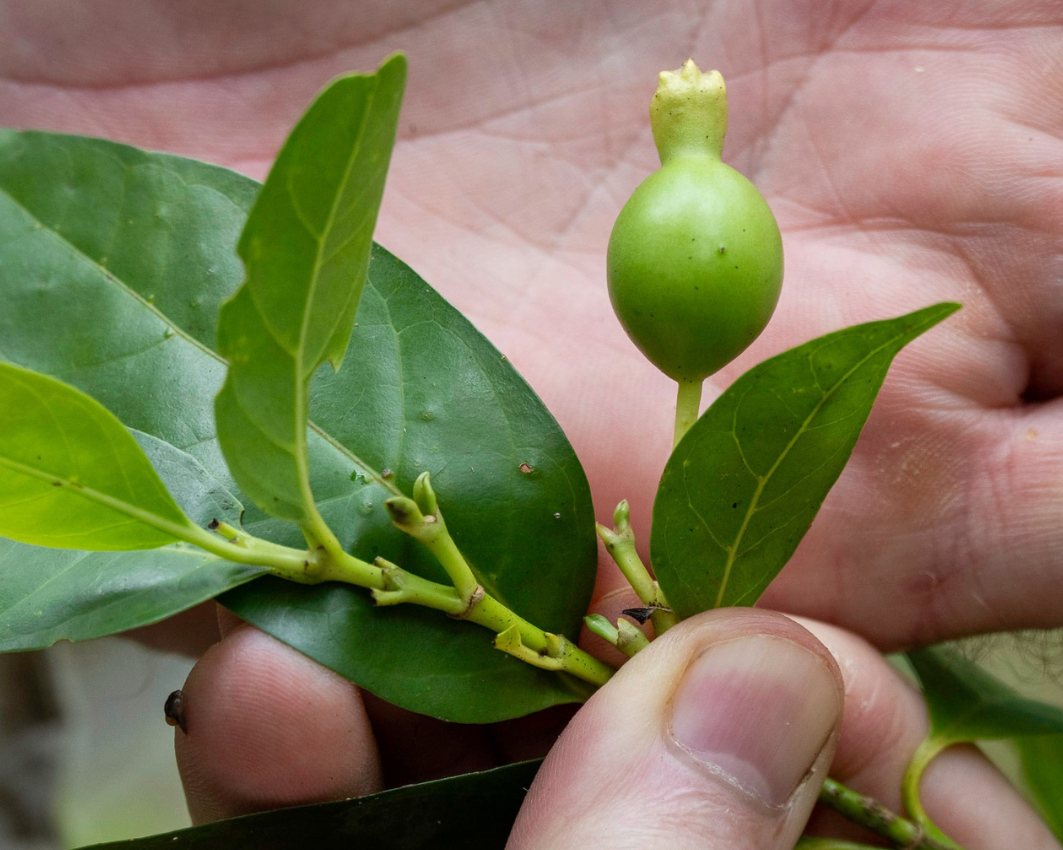
Fruit of the Daintree gardenia (Randia audasii)
Description
This species shares a close ecological relationship with the cassowary. When the bird consumes the fruit, the seeds pass through its digestive system, a natural process that improves germination. Without cassowaries, seed dispersal for the Daintree gardenia would be far less effective.
Conservation of the Daintree gardenia depends on protecting tropical rainforest habitat and supporting healthy populations of the endangered southern cassowary, whose presence is key to the tree’s long-term survival.
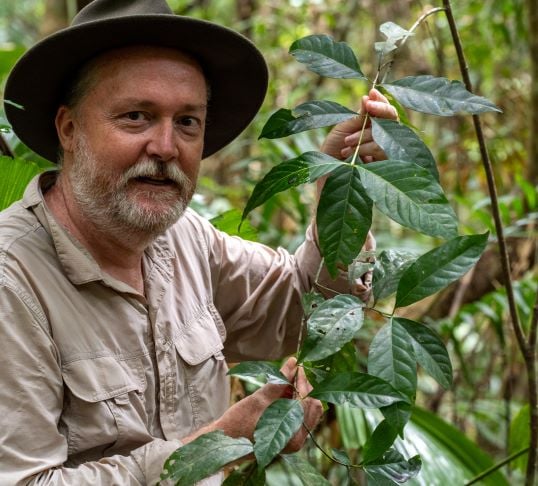
Our founder, Kelvin, with the Daintree gardenia (Randia audasii)
Distribution
The Daintree Gardenia is endemic to the lowland tropical rainforest of Far North Queensland, with its natural range restricted to a handful of valleys in the Daintree region. These areas offer just the right combination of humidity, rich soils, and consistent rainfall — the precise conditions this rare species depends on.
Its limited distribution makes it especially vulnerable to habitat disturbance. The survival of this species is closely tied to the health of its rainforest home and the presence of the southern cassowary, which plays a key role in seed dispersal. This makes the Daintree gardenia vulnerable to habitat loss and environmental changes such as climate change.
Growth and threats
It produces small, sweet-scented yellow-green flowers. These are followed by rough-skinned fruits that ripen, turning from dark green to a rich yellow-orange as they mature.
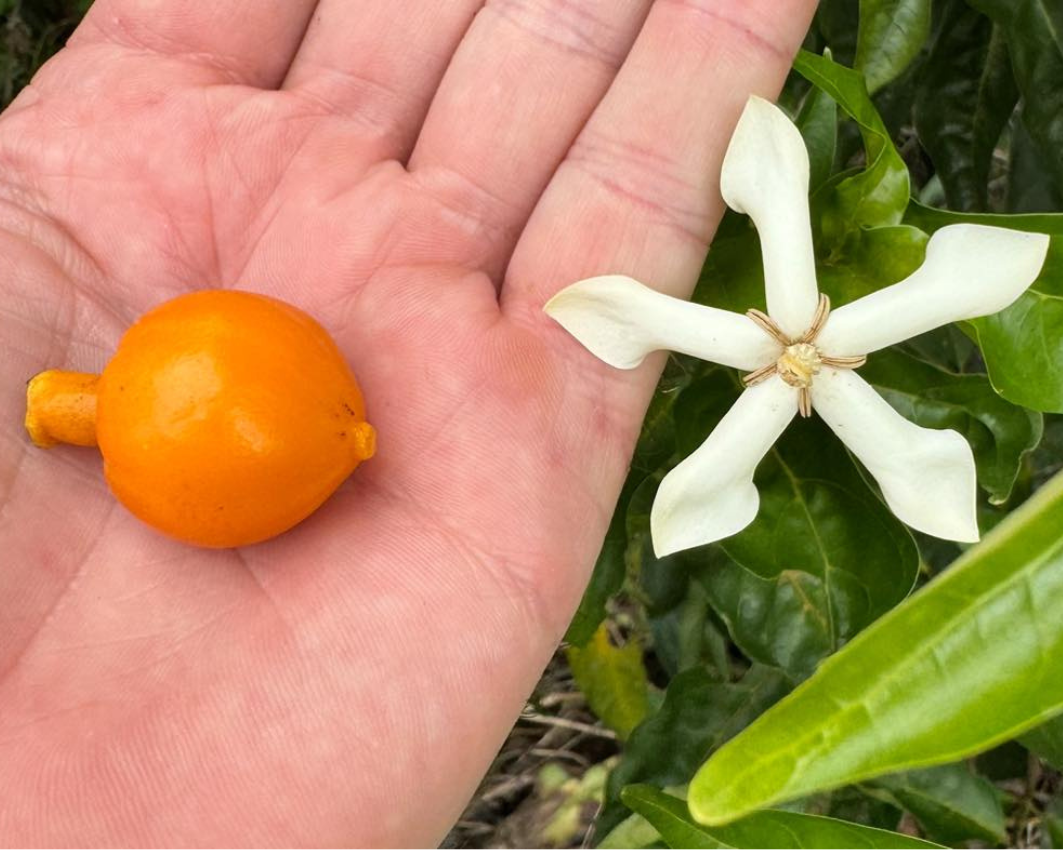
Fruit and flower of the Daintree Gardenia (Randia audasii)
The Daintree Gardenia faces several pressures that threaten its survival. Habitat loss, driven by land clearing and development, remains one of the biggest risks. With such a limited distribution, any reduction in rainforest habitat can have serious consequences for this already near-threatened species.
Another major concern is the decline of the endangered southern cassowary. As the tree’s primary seed disperser, the cassowary plays an essential role in its life cycle. When cassowaries consume the fruit, their digestive system helps prepare the seeds for germination, a process that not only increases success rates but also reduces threats like fruit fly infestation. Without this natural partnership, the tree’s ability to reproduce is significantly reduced.
Conservation efforts for the Daintree gardenia are centred on two key goals: protecting rainforest habitat and supporting healthy cassowary populations. Together, these actions help protect the future of this ecologically important and uniquely adapted tree.
A connected rainforest is essential for healthy ecosystems. You can help protect vital habitat in the Daintree here.