A Very Rare Plant: Third population of the Cooper Creek Walnut purchased and protected.
Imagine a tree so rare that only 51 individuals (above 1m) exist on Earth. Until recently, the Cooper Creek Walnut was only known from two locations with 51 trees. Then, in 2020, we identified a third population at Lot 157 Cape Tribulation Road and immediately purchased the property.
Habitat/Distribution: Well-developed lowland rainforest. Restricted to the area between Cape Tribulation and the Daintree River at three locations in lowland rainforest adjacent to Cooper Creek in Far North Queensland
Conservation status: Listed as Endangered under the Environment Protection and Biodiversity Conservation Act 1999 (EPBC Act), and under the Nature Conservation Act 1992 of Queensland
Scientific name: Endiandra cooperana
Common names: Cooper Creek Walnut
Typical height: Up to 25 meters
Climate: Thrives in tropical climates, well-adapted to warm and humid conditions
About
The Cooper Creek Walnut (Endiandra copperana) is a large, slow-growing rainforest tree endemic to the Daintree lowland rainforest of Far North Queensland. Mature trees can reach up to 25 metres in height and are notable for their pale, striped white bark and the distinctive incense-like scent it releases when cut.
The Cooper Creek Walnut often has large, flared bases on its trunk, known as buttress roots, which help support it in the soft rainforest soil. One of the easiest ways to identify this tree is by its leaves, which range from 8.5 to 15cm in length and have a distinctive curved tip. When young, the leaves are coated in fine brown hairs, which gradually shed as the plant matures.
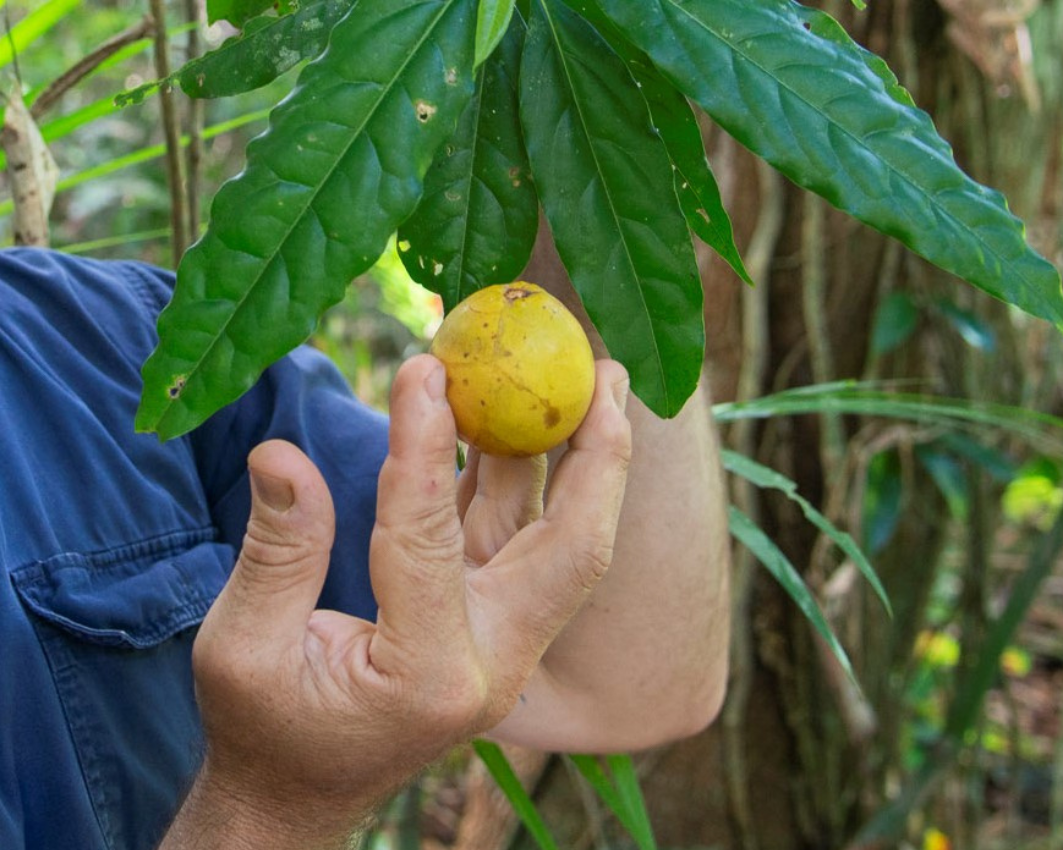
Fruit of the Cooper Creek Walnut (Endiandra cooperana)
In spring, this species produces tiny yellow flowers, with blooms only 2.3 to 2.8 mm long. These are followed by large, round fruits that turn yellow or orange as they ripen, about the size of a small plum. Inside each fruit is a large seed. Endiandra cooperana has large, round fruit, providing the endangered Southern Cassowary with a food source.
While the Cooper Creek walnut is not commonly harvested due to its rarity, it is known to produce dense, millable timber.
Fun Fact: The bark of the Cooper Creek walnut emits a fragrant aroma similar to incense when cut. This unique characteristic makes it stand out among other rainforest trees.
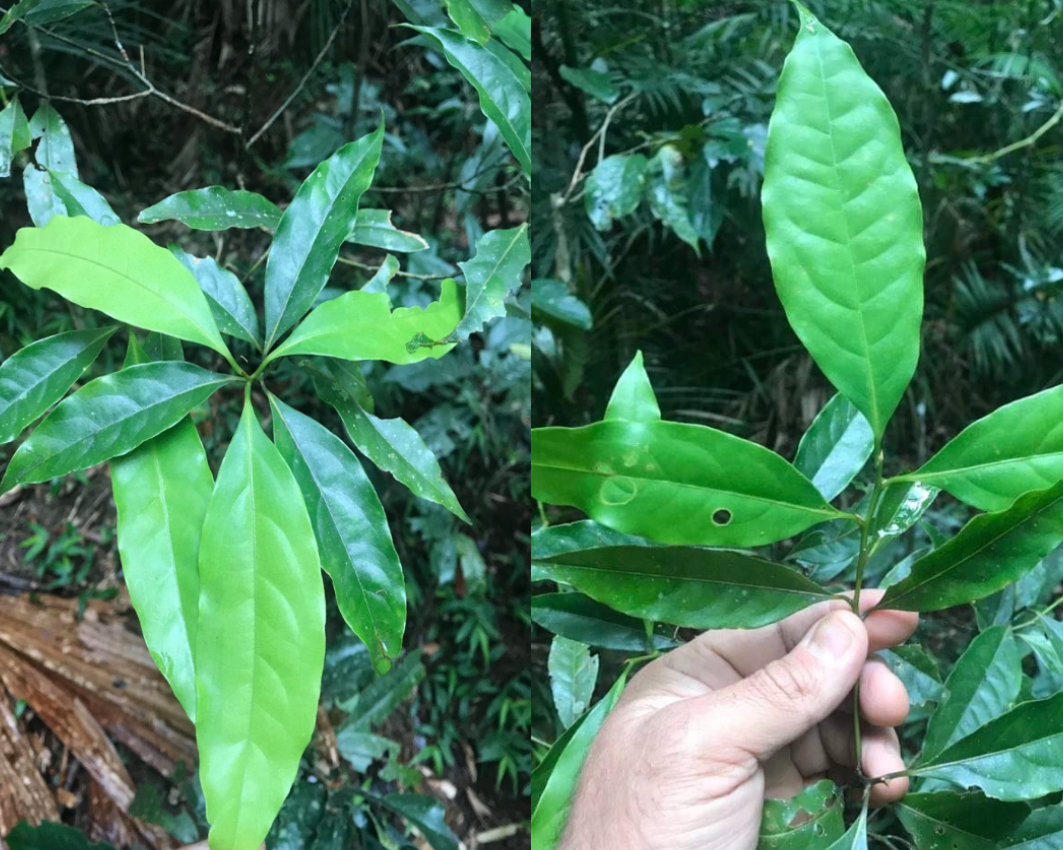
Leaves of the Cooper Creek Walnut (Endiandra cooperana)
Distribution
The Cooper Creek Walnut has an extremely limited distribution. It was known from two multi-aged populations within a narrow range between Cape Tribulation and the Daintree River - one located inside Daintree National Park, and another on nearby private land. Together, these sites represent approximately 30 hectares of habitat. At these two locations exist 51 individual specimens (greater than 1metre in height).
A third population of the Cooper Creek Walnut was discovered during a vegetation survey of Lot 157 Cape Tribulation Road, before we purchased the property in 2020. Through the support of our generous donors, this property was purchased in January of 2021 and is now protected and managed for conservation.
This restricted range makes the species highly vulnerable. However, it also highlights the importance of targeted land conservation, especially in the Daintree Lowland Rainforest - the oldest continually existing rainforest on Earth.
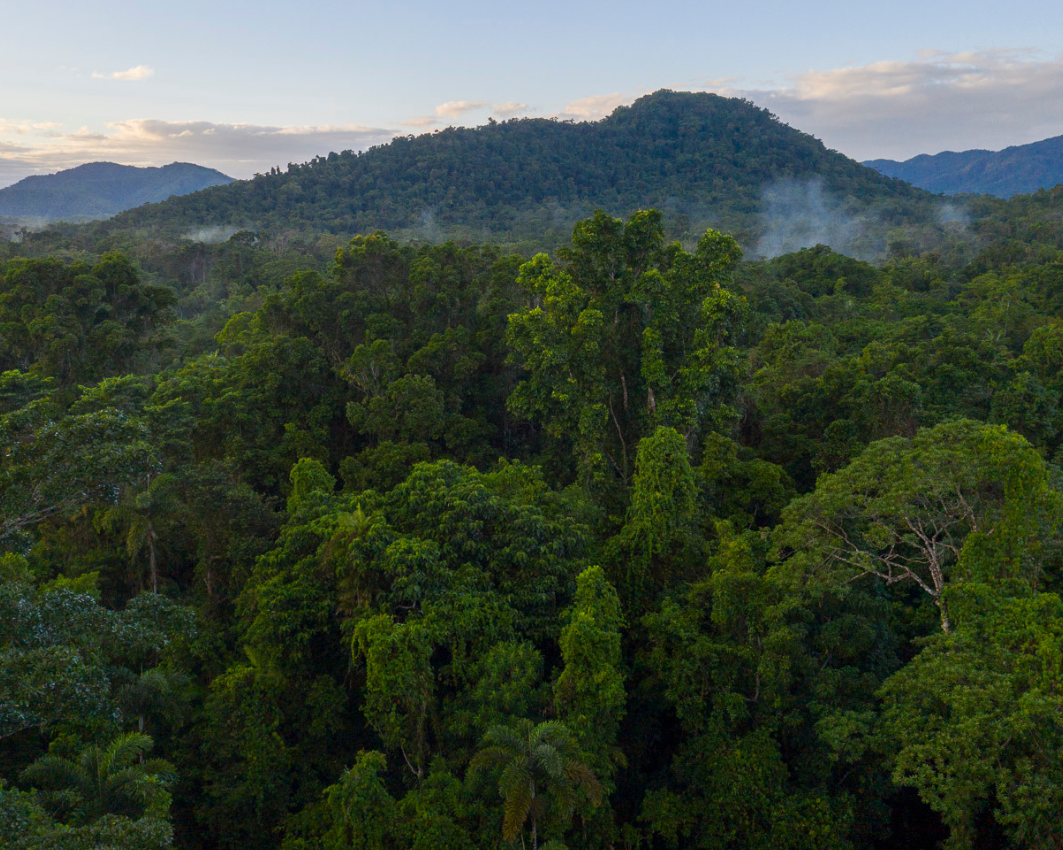
Lot 157 Cape Tribulation Road. Image: Steven Nowakowski
Ecological Importance and Threats
Thriving in tropical, humid conditions with high annual rainfall, the Cooper Creek Walnut plays a vital role in the complex ecology of lowland rainforest systems. Like many Endiandra species, it likely supports fruit-eating wildlife, such as rainforest birds and mammals.
The Cooper Creek Walnut faces several threats that contribute to its endangered status. Habitat clearing and development pose a significant threat to its survival and can lead to the destruction of its natural habitat. With such a small distribution, even minor disturbances can be devastating - making it vulnerable to invasive species, human activities and the cumulative impacts of climate change.
One population exists on private land, and most of the creek flats in the area have been cleared in the past. Another population lives inside the Daintree National Park, and part of the population occurs along Cape Tribulation Road. Widening the road at this site would destroy a significant portion of the population. The third population is now protected forever following our purchase of Lot 157 Cape Tribulation Road.
Conservation efforts are crucial to protect this unique species and its habitat, ensuring the survival of the Cooper Creek Walnut for future generations.
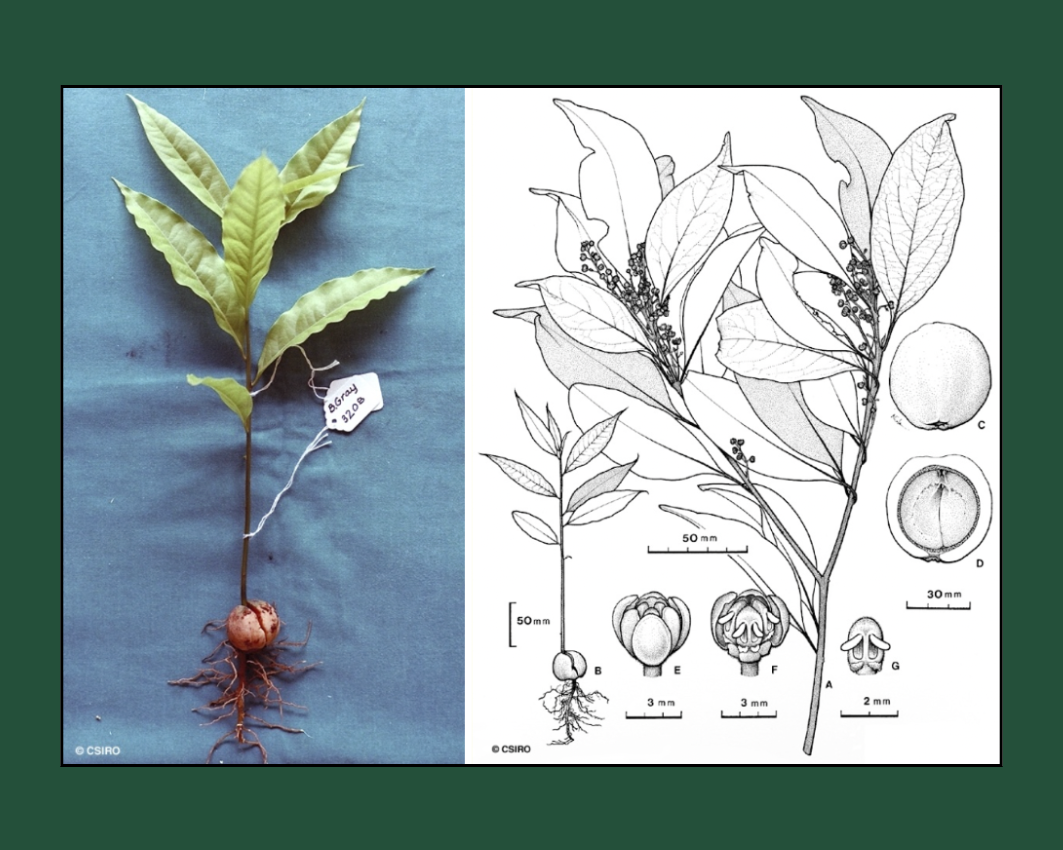
Cooper Creek Walnut (Endiandra cooperana). Image: CSIRO
Why Protection Matters
Purchasing and protecting freehold land in the Daintree Rainforest is essential for the long-term survival of species like the Cooper Creek Walnut. Every block secured for conservation helps protect biodiversity, prevent further fragmentation, and support regeneration in one of the world’s most irreplaceable ecosystems.
By supporting land buyback and long-term protection, you help ensure that endangered species continue to grow in the wild, not just as botanical records.
Please, donate now to help us protect the Daintree Lowland Rainforest and the unique species that call it home.
A connected rainforest is essential for healthy ecosystems. You can help protect vital habitat in the Daintree here.