Habitat: Well-developed lowland and upland rainforests at altitudes ranging from near sea level to 450 meters
Distribution: Native to New Guinea, the Solomon Islands, and parts of Australia, such as the Northern Territory and Queensland
Conservation status: Vulnerable under Queensland's Nature Conservation Act 1992
Scientific name: Freycinetia percostata
Common names: Climbing Pandanus, Climbing Pandan
About
The Climbing Pandanus (Freycinetia percostata) is a moderately large woody climber with slender stems that can reach up to 2 cm in diameter. The plant features distinct leaf auricles with apical deltoid lobes and ciliate-spinulose margins. Its leaves are around 50–60 cm long and 2–2.5 cm wide, with finely toothed margins and longitudinally parallel venation. The spathe ranges in colour from yellow-orange to salmon pink, and the male spikes are pale to orange-brown. When broken, the fruit reveals a crimson hue.
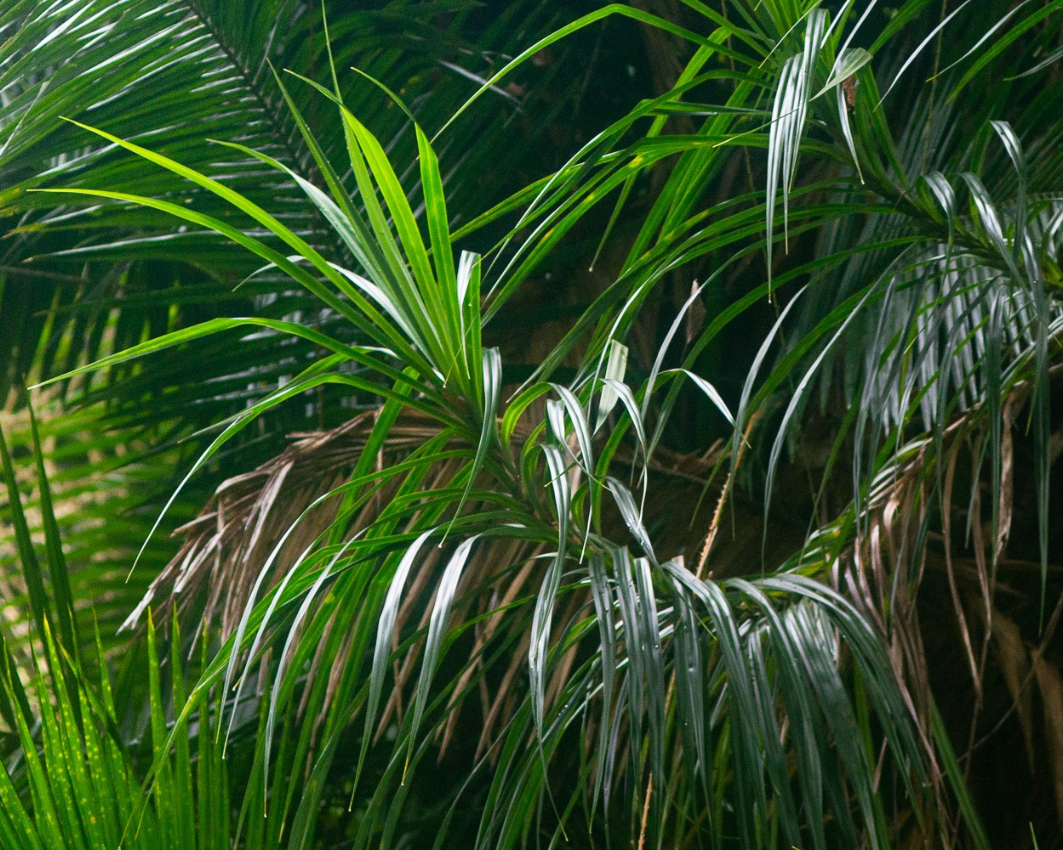
Climbing Pandanus (Freycinetia percostata) Image: Steven Nowakowski
The inflorescence is characterised by large orange bracts measuring about 19–35 cm in length. The infructescence is approximately 15–18 cm long and 5 cm wide, on a stalk that is 3–4 cm long. Individual fruits are approximately 20 x 8 mm in size, and the seeds measure 1–1.2 x 0.3 mm, with one side ribbed. The embryo is narrowly ovoid and about 0.2–0.3 mm long. Additionally, the vine has adventitious roots present on most parts of the stem, and the lower surface of the leaf blades is glabrous with a midrib armed with teeth.
Fun Fact: Unlike true pandanus trees, this species climbs rainforest trunks using aerial roots, allowing it to reach light in the canopy.
Distribution
The Climbing Pandanus is found in Australia, New Guinea, and the Solomon Islands. In Australia, it has been recorded in the Northern Territory, specifically on Bathurst Island and the Arafura Swamp. It thrives in well-developed lowland and upland rainforests at altitudes ranging from near sea level to 450 meters. This species prefers moist, shaded environments typically found in these rainforest habitats.
Growth and threats
The species is dioecious, meaning that male and female flowers are borne on separate plants. This species shows promise for inclusion in tropical gardens. The plants should be guided to climb a robust tree. While the flowers themselves are small, they are enveloped by striking red bracts that are visually impressive.
The effect of feral animals on this species remains unclear, though large numbers of pigs are likely to impact recruitment through either disturbance or grazing. Inland localities on the Tiwi Islands would be vulnerable to severe cyclonic events. Potential threats to the species and its habitat include excessive groundwater drawdown, grassy weed invasion, and intensified fire regimes due to increased land use in nearby areas. Land development for horticulture close to known locations would increase the demand for groundwater for irrigation, potentially affecting rainforest patches.
A connected rainforest is essential for healthy ecosystems. You can help protect vital habitat in the Daintree here.