Habitat: Well-developed lowland and upland rainforests
Distribution: Endemic to Northeast Queensland, restricted to the area north of Townsville and south of Princess Charlotte Bay.
Scientific name: Beilschmiedia castrisinensis
Common names: China Camp Laurel, Cape Tribulation walnut
About
The China Camp Laurel (Beilschmiedia castrisinensis) is a tree species belonging to the Lauraceae family, endemic to northeastern Queensland, Australia. The species was first described by B.P.M. Hyland in 1989 and is recognised for its unique botanical characteristics.
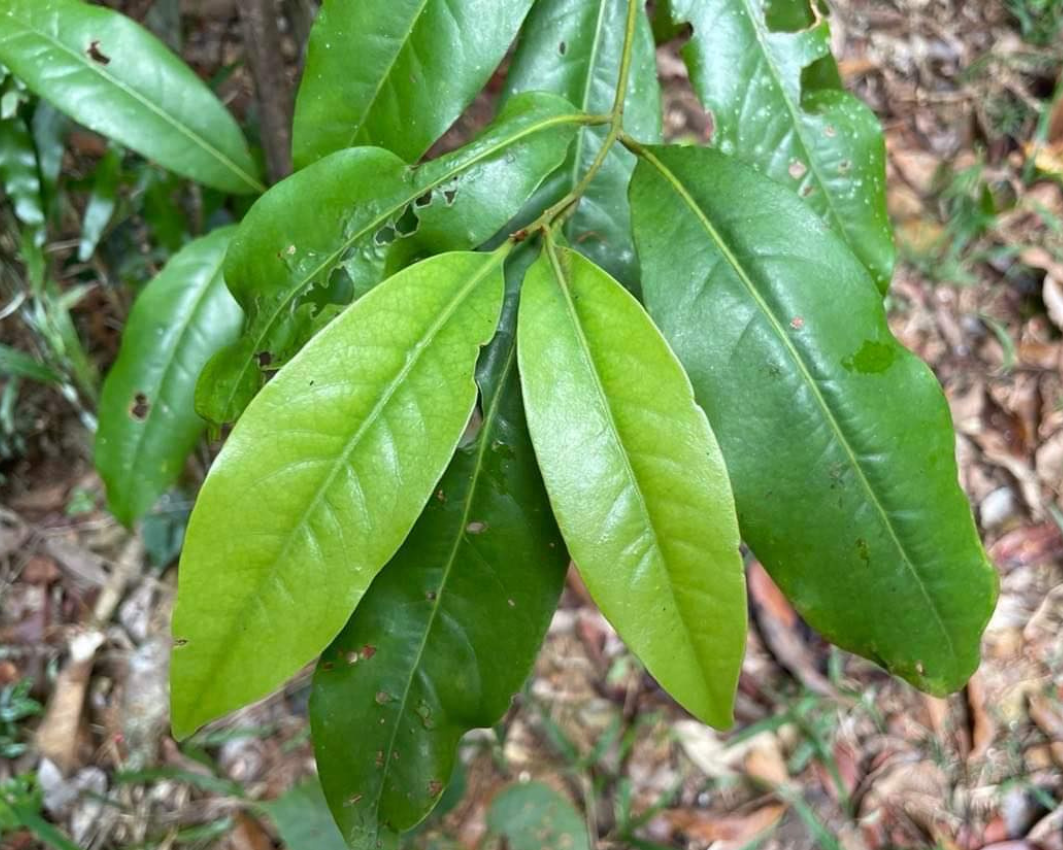
Leaves of China Camp Laurel (Beilschmiedia castrisinensis)
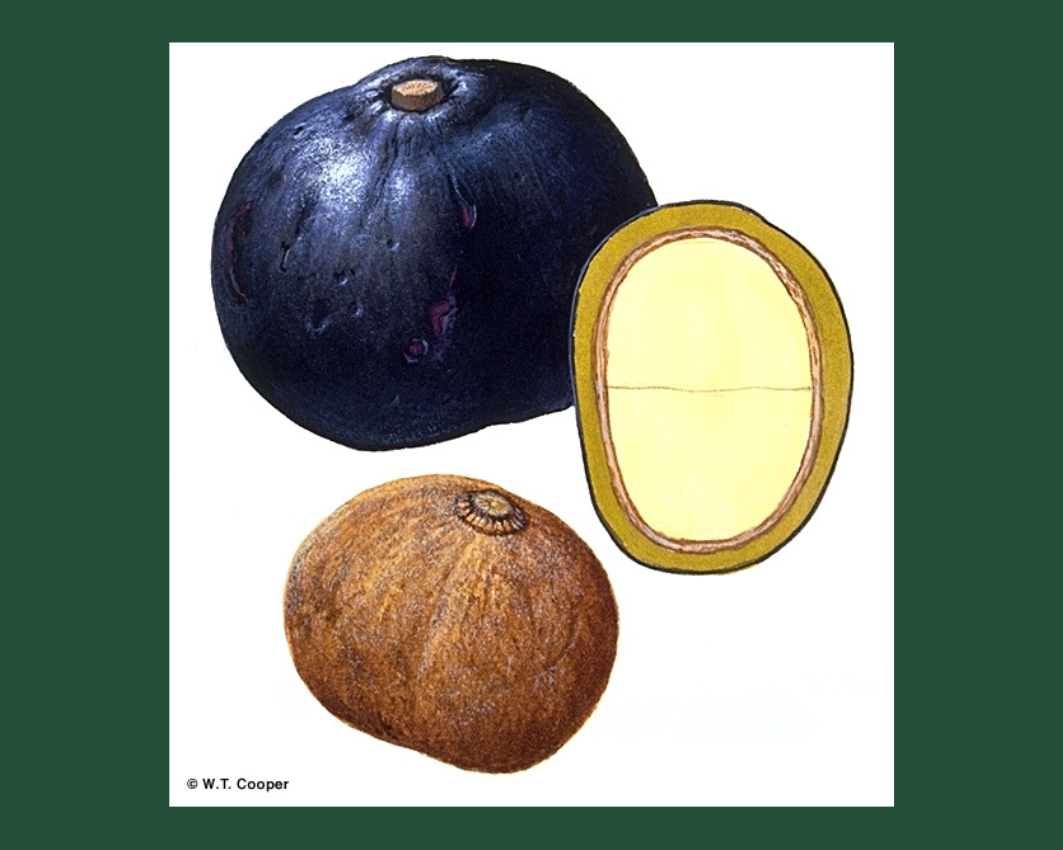
Fruit, side view, cross-section and seed. Image: W. T. Cooper
Fun Fact: This species exhibits hypogeal germination, where the cotyledons remain below ground instead of emerging above the soil surface. This adaptation helps protect developing seedlings from herbivores and environmental stressors.
Distribution
Beilschmiedia castrisinensis is found only between Bloomfield and the Daintree River in northeastern Queensland. It grows in well-developed lowland and upland rainforests, from sea level to around 660 metres, generally on soils derived from metamorphic rocks. It depends on consistently high rainfall, humidity, and deep, fertile rainforest soils.
Ecologically, this species contributes to the structural complexity of the rainforest and provides fruit for wildlife, which aids in seed dispersal. Its hypogeal germination strategy enhances seedling survival in competitive and disturbance-prone environments.
Growth and threats
The China Camp Laurel exhibits growth primarily in well-developed lowland and upland rainforests. The species thrives in the wet tropical biome, benefiting from the high rainfall and humidity typical of these regions. The tree's growth is characterised by its hypogeal germination, where the cotyledons remain underground, protecting young seedlings from herbivores and environmental stressors.
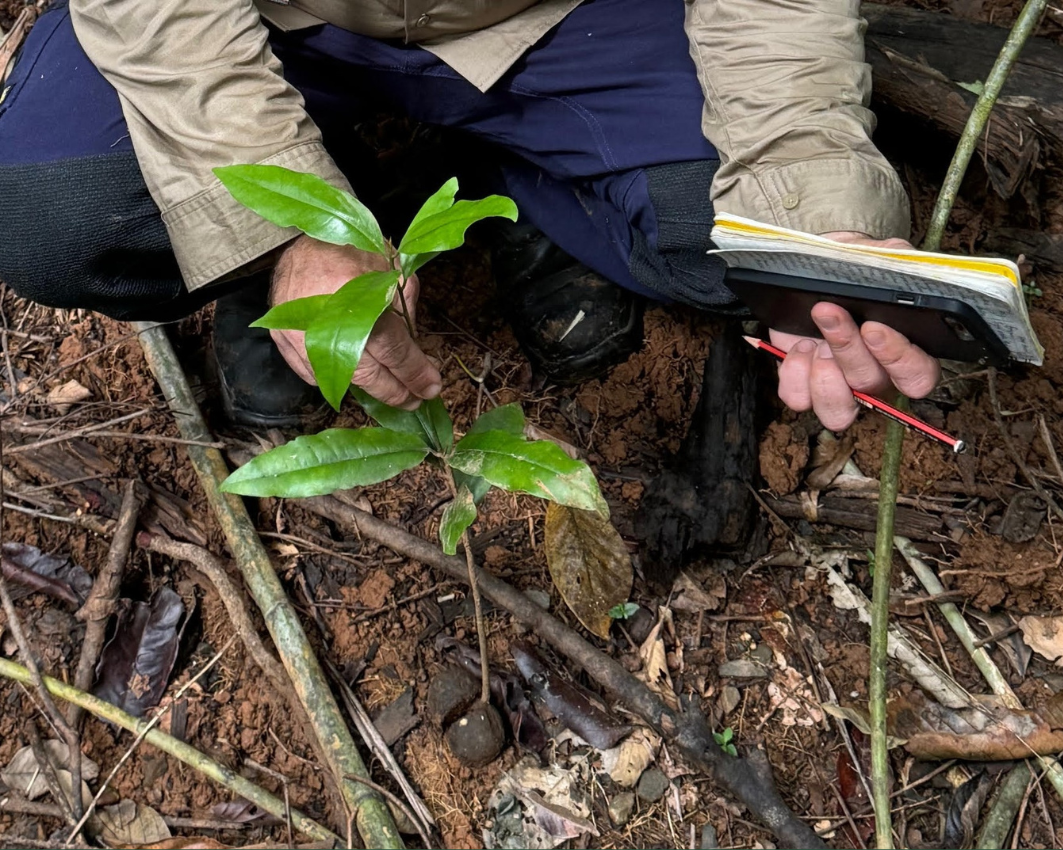
China Camp Laurel (Beilschmiedia castrisinensis)
However, it faces several threats that impact its survival. Habitat loss due to deforestation and land conversion for agriculture and development poses a significant risk to this species. Additionally, climate change and its associated effects, such as altered rainfall patterns and increased frequency of extreme weather events, further threaten the tree's habitat and growth conditions.
Conservation efforts are crucial for protecting this species and its habitat, ensuring the preservation of its ecological role in the rainforest ecosystem.
A connected rainforest is essential for healthy ecosystems. You can help protect vital habitat in the Daintree here.