Habitat: Lowland monsoon rainforests and isolated patches of hill forest
Distribution: Coastal north-east Queensland, from the Torres Strait and Cape York Peninsula south to the Wet Tropics region, Papua New Guinea, Indonesia
Lifespan: Around 9 years in the wild
Scientific name: Tanysiptera sylvia
Conservation status: Listed as Least Concern on the IUCN Red List
Main threats: Habitat loss and land clearing in New Guinea could potentially impact breeding populations in Australia
About
The Buff-breasted Paradise Kingfisher (Tanysiptera sylvia) is a striking bird known for their vibrant plumage and long tail streamers. They feature a bright blue back, wings, and tail, with contrasting buff to creamy underparts. The head is adorned with a vivid blue crown and a distinctive red bill.
In adults, the tail streamers are particularly long and elegant, often extending well beyond the body length. These streamers are a key characteristic, making the bird easily recognisable in its natural habitat.
Other than their colourful appearance, Buff-breasted Paradise Kingfishers possess several distinctive features: they have a robust, slightly curved bill, strong legs for perching, and a melodious call that is often heard during the breeding season.
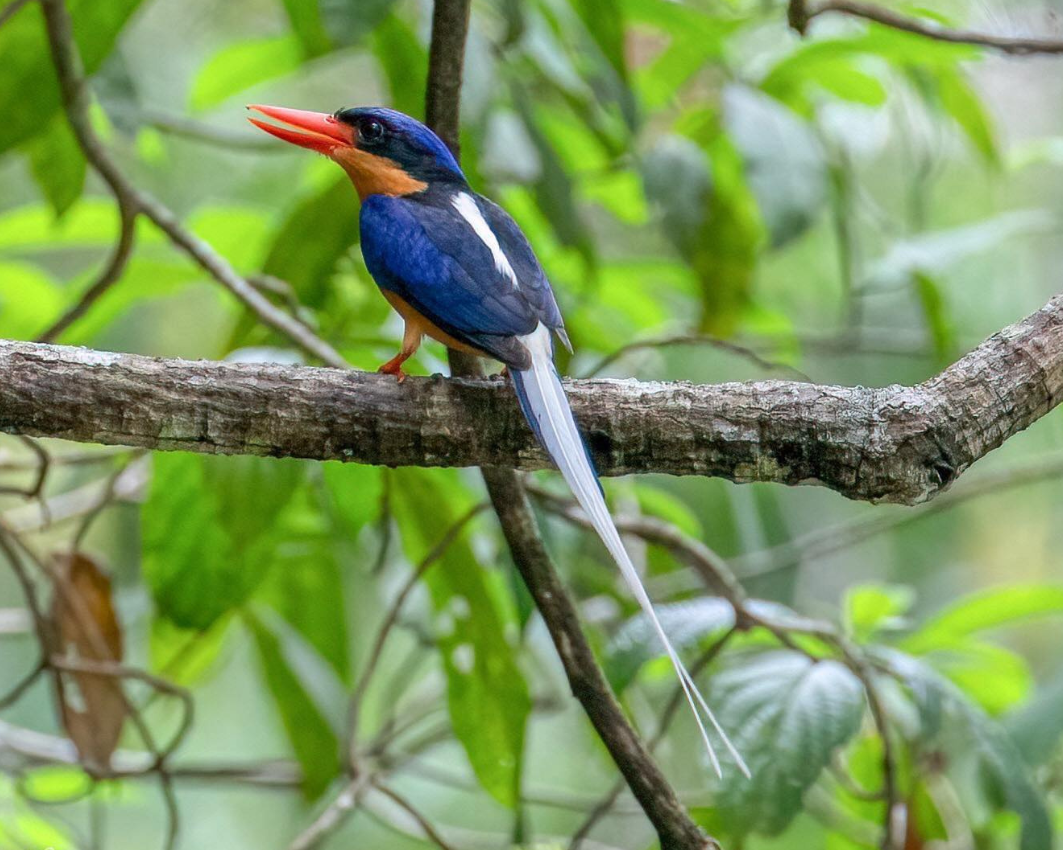
Buff-breasted Paradise Kingfisher (Tanysiptera sylvia). Image: David White
Fun fact: The Buff-breasted Paradise Kingfisher has been depicted on postage stamps in both Australia and Papua New Guinea, highlighting its cultural significance and beauty.
Behaviours
The Buff-breasted Paradise Kingfisher is a migratory bird that travels from New Guinea to North Queensland, Australia, for breeding from November to March. It is known for its distinctive call, which is often heard during the breeding season.
During the day, they can be found perching in the mid-storey and lower canopy of rainforests, often coming to the ground to feed. They hunt for a variety of prey, including insects, small reptiles, and amphibians. They are also known to feed on phasmids, earthworms, beetles, insect larvae, spiders, skinks, small frogs, and snails.
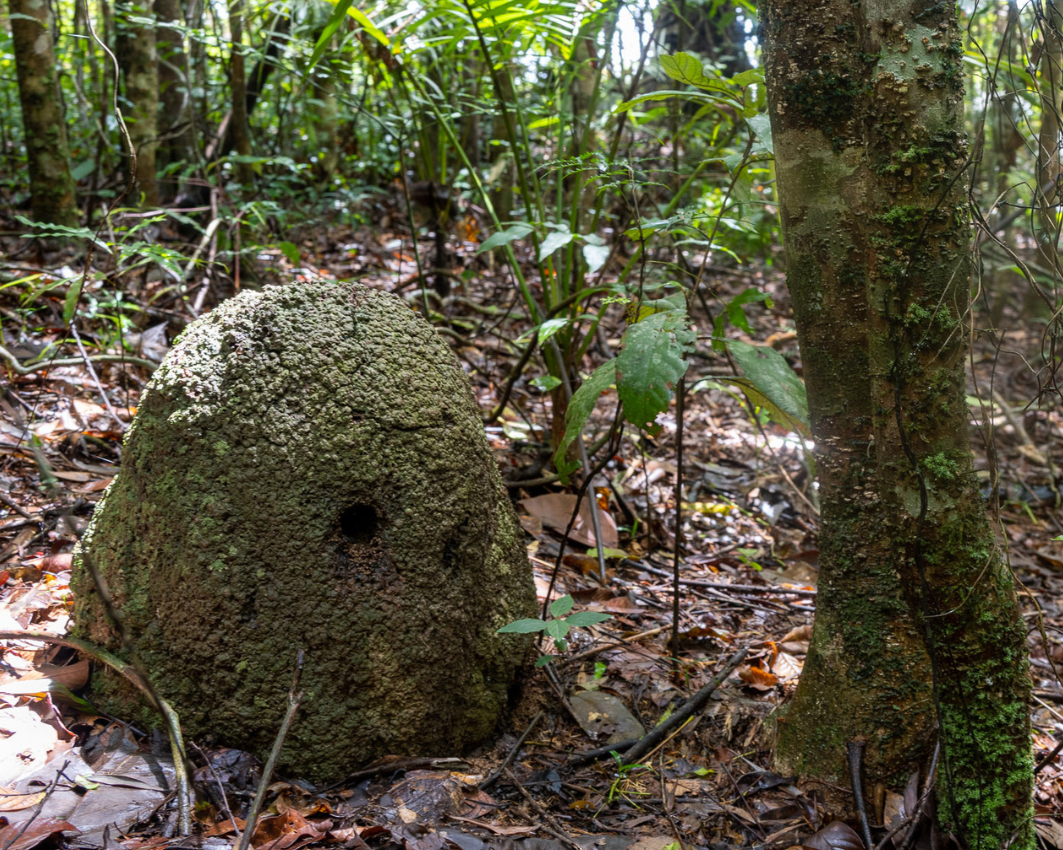
Buff-breasted Paradise Kingfisher nest in a termite mound
The Buff-breasted Paradise Kingfisher nests in termite mounds, where they excavate a burrow to lay their eggs. This unique nesting behaviour protects the eggs and chicks from predators.
It is believed that they form monogamous pairs during the breeding season. The female typically lays two to three eggs per clutch, and both parents are involved in incubating the eggs and feeding the chicks.
These kingfishers are also known for their territorial behaviour during the breeding season. Males often engage in aerial displays and vocalisations to defend their territory from intruders. This territoriality ensures that they have sufficient resources to raise their young successfully.
A connected rainforest is essential for healthy ecosystems. You can help protect vital habitat in the Daintree here.