Habitat: Wet Tropics of QLD
Distribution: Coastal woodlands and mangroves between Cooktown and Ingham, QLD
Conservation status: Listed as "Vulnerable" under both Queensland’s Nature Conservation Act 1992 and the Commonwealth’s Environment Protection and Biodiversity Conservation Act 1999
Scientific name: Myrmecodia beccarii
Common names: Ant-house Plant, Ant-Plant, or Ant-house Epiphyte
About
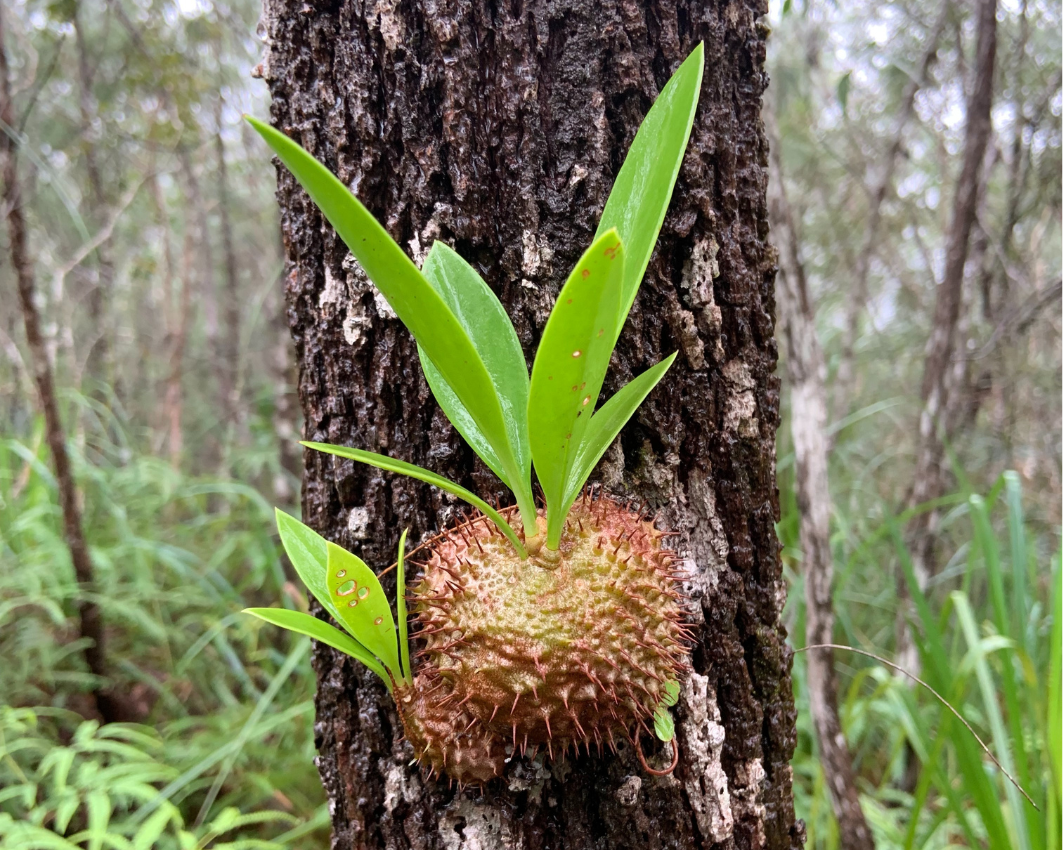
The Myrmecodia beccarii, known as the ant plant, is an epiphytic plant that grows on Melaleuca trees and other trees with spongy bark in the wetlands and mangroves of tropical north Queensland, Australia, from Cooktown to Mission Beach. Its prickly and swollen caudex forms natural hollows that are colonised by the golden ant (Philidris cordatus) in a mutualistic relationship — a type of symbiosis where both species benefit. The ants patrol the plant to remove leaf-eaters, and the plant absorbs their waste as a source of nutrients.
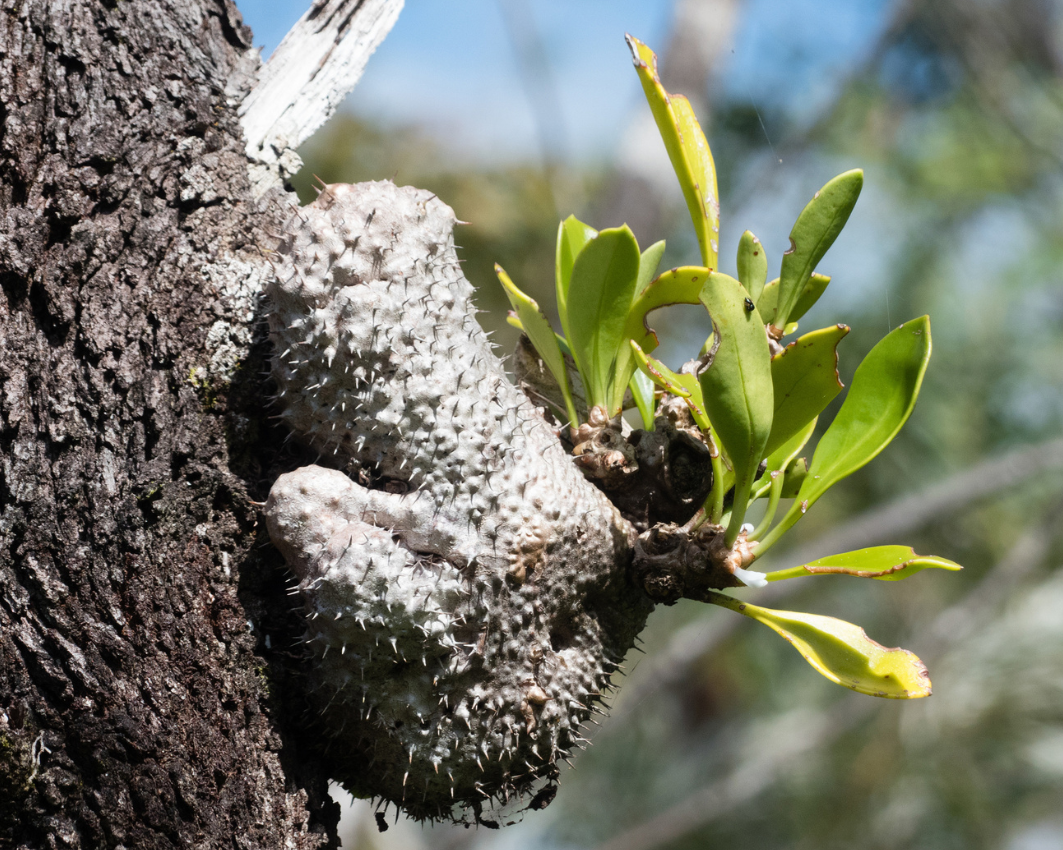
Ant Plant (Myrmecodia beccarii)
This plant produces white, tubular flowers up to 10 mm in length, and its white or translucent fruits contain a single seed. These seeds are dispersed to other trees by the mistletoebird (Dicaeum hirundinaceum), also known as the Australian Flowerpecker.
Fun Fact: The plant's swollen, prickly caudex develops natural hollows that the golden ants colonise.
Distribution
The ant plant is primarily found in the coastal woodlands of tropical north Queensland, Australia. Its distribution ranges from Cooktown to Ingham, encompassing a variety of habitats including open woodlands dominated by Melaleuca viridiflora and mangroves. This species is conserved within several national parks, such as Girringun National Park, Daintree National Park, and Edmund Kennedy National Park.
The plant thrives in humid environments with consistent rainfall and temperatures typically ranging between 20°C to 30°C (68°F to 86°F).
Despite its relatively limited distribution, the ant plant has a minimum area of occupancy of 7000 square kilometres and is known from about ten locations.
Symbiosis
The Apollo jewel butterfly (Hypochrysops apollo apollo) lays its eggs on the plant, and the eggs mimic the scent of ant eggs, prompting the ants to carry them inside the plant. The butterfly lays eggs on the top of the ant plant. When the larvae hatch, the ants carry the caterpillar inside the plant, where it eats out chambers that create more space for the ant colony. In return, the caterpillar produces nutrient-rich droppings that feed the ants, while the ants protect the caterpillar. Inside, the larvae develop into butterflies. Eventually, they emerge and fly away.
Threats
The species faces threats from habitat loss due to habitat clearing, local settlement pressures, and illegal collecting by plant and butterfly enthusiasts.
Conservation efforts are crucial to protect this unique plant and its symbiotic relationships with the golden ant (Philidris cordatus) and the Apollo Jewel butterfly (Hypochrysops apollo apollo).
A connected rainforest is essential for healthy ecosystems. You can help protect vital habitat in the Daintree here.